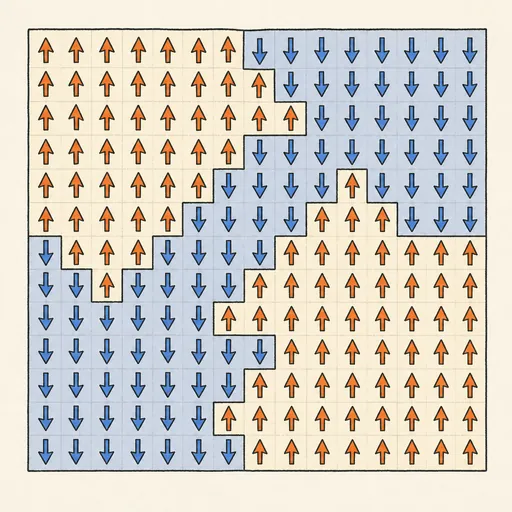
Ising Model Ferromagnet
The Ising model is the classic model of magnetism: a grid of spins, each pointing up or down, that prefer to match their neighbours. The Metropolis algorithm proposes flips and accepts them with a probability set by temperature, so the grid explores its states realistically. Cold, the spins line up into large domains and the material is magnetised; hot, thermal noise scrambles them and magnetisation vanishes. In between sits a sharp critical temperature where domains appear at every size at once. Drag the temperature and an external field, watch the spin grid recolour live, and track magnetisation and energy as they cross the phase transition.
Runs 100% in your browser — simulations are computed locally on your device.
Read the full guide to this tool
Notes
- Each spin’s energy is lower when it agrees with its four neighbours, so the system trades off order (low energy) against thermal disorder (high entropy) as temperature changes.
- Below the critical temperature (about 2.27 in 2D) the grid spontaneously magnetises into up or down domains; above it, magnetisation drops to zero — a genuine phase transition.
- Right at the critical point fluctuations appear on every length scale, giving the self-similar, scale-free patterns studied as critical phenomena.
- Runs 100% in your browser — simulations are computed locally on your device.
Related tools
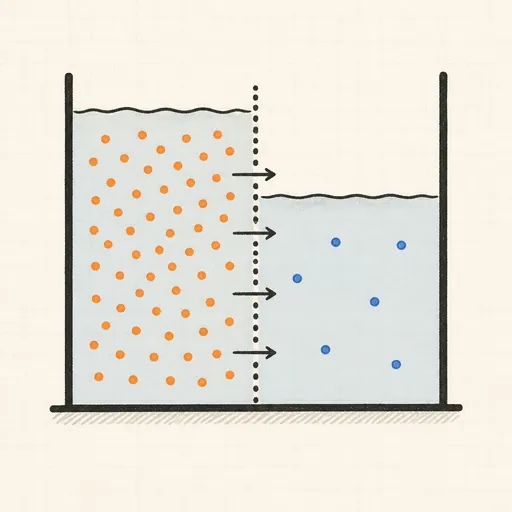
Diffusion & Osmosis
Split a tank with a semipermeable wall and watch particles diffuse and water flow to equalise concentration.
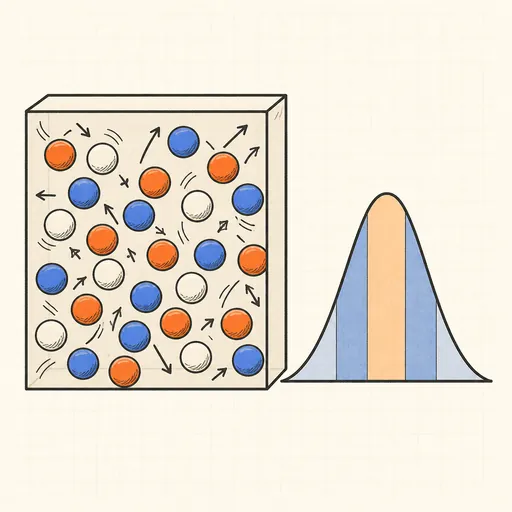
Ideal Gas & Maxwell–Boltzmann
Bounce hard-disc molecules in a box and watch their speeds settle into the Maxwell–Boltzmann distribution.
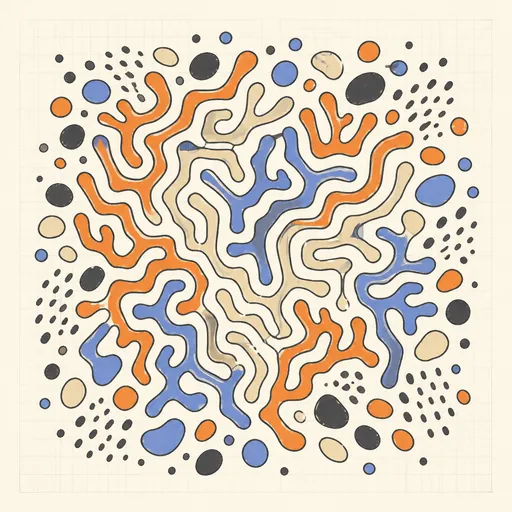
Reaction–Diffusion Patterns
Grow coral, spots and zebra stripes from two virtual chemicals with the Gray–Scott model.
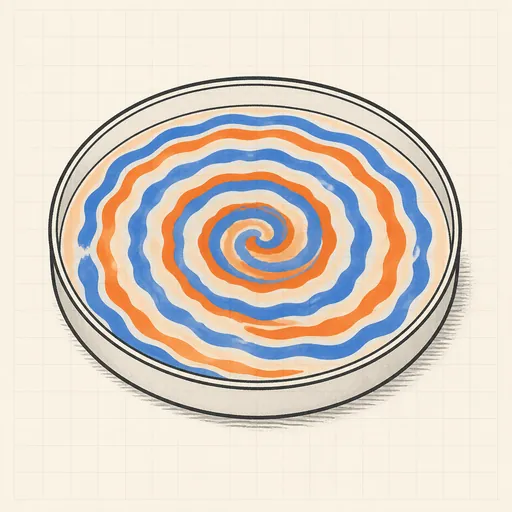
Belousov–Zhabotinsky Reaction
Watch an oscillating chemical medium organize itself into rotating spiral waves.
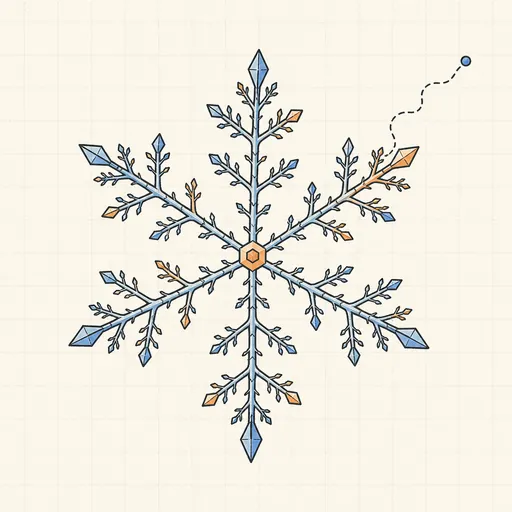
Crystal Growth Simulator
Grow branching fractal crystals one wandering particle at a time with diffusion-limited aggregation.
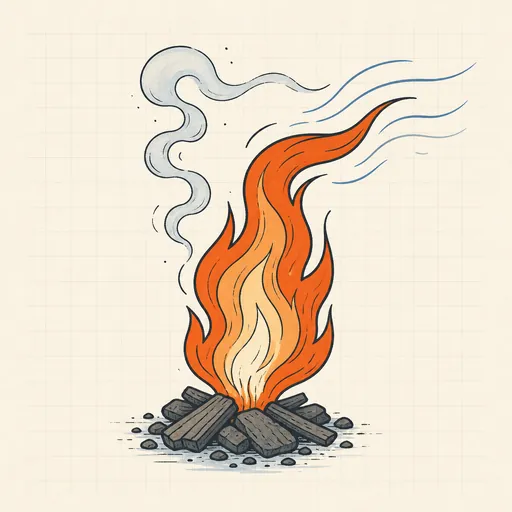
Flame Simulator
Paint fire and shape a living flame with fuel, cooling, wind and turbulence.