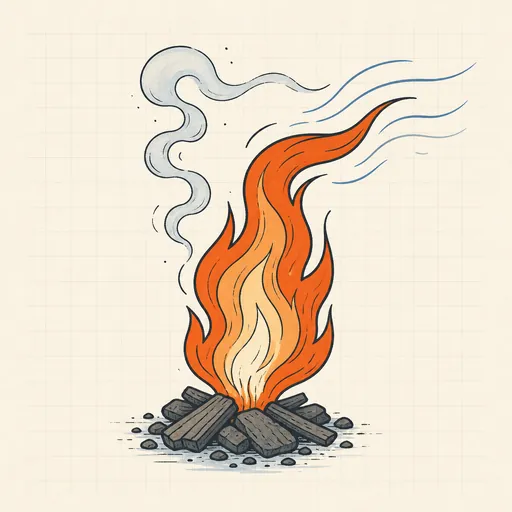
Flame Simulator
A flame is hot gas rising. This simulation keeps a temperature field on a grid, feeds heat in along a burner at the bottom whose strength flickers with low-frequency noise, and each frame advects the heat upward, spreads it sideways with turbulent jitter and drains it through a scrolling noise cooling map — the carving that splits the flame into flickering tongues. The field renders through a 256-colour blackbody palette from black through deep red, orange and yellow to white-hot, with a soft bloom pass, while glowing embers occasionally detach and drift upward with the wind. Fuel sets the burner intensity, cooling controls how quickly heat dies out, wind pushes the whole flame sideways and turbulence roughens both the spread and the flicker. Drag on the canvas to paint fire anywhere, drag along the bottom edge to carry the burner with you, and export any frame as PNG.
Runs 100% in your browser — simulations are computed locally on your device.
Read the full guide to this tool
Notes
- A candle flame’s yellow is the blackbody glow of soot particles at roughly 1,000–1,400 °C; hotter flames shift whiter and bluer, as Wien’s displacement law demands.
- Buoyancy drives the shape: hot gas expands, becomes less dense and rises, so natural convection stretches flames into teardrops. In microgravity the convection stops and flames burn as dim blue spheres, as NASA combustion experiments showed.
- The overall reaction — hydrocarbon plus oxygen to CO₂ and water — proceeds through hundreds of radical chain steps; the blue at a flame’s base is chemiluminescence of CH and C₂ radicals, not thermal glow.
- Runs 100% in your browser — simulations are computed locally on your device.
Related tools
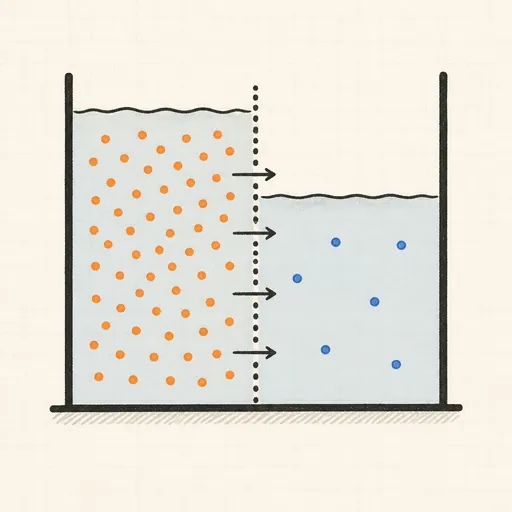
Diffusion & Osmosis
Split a tank with a semipermeable wall and watch particles diffuse and water flow to equalise concentration.
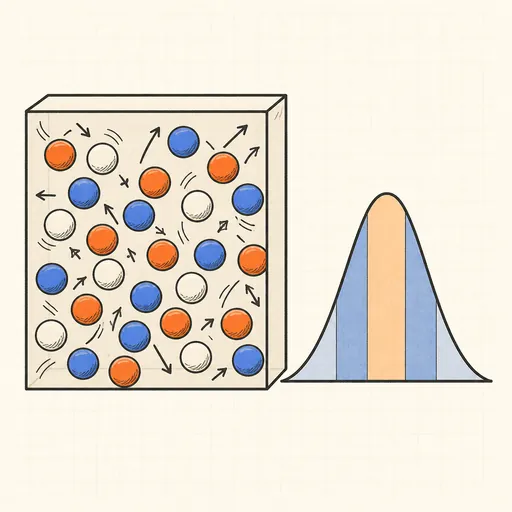
Ideal Gas & Maxwell–Boltzmann
Bounce hard-disc molecules in a box and watch their speeds settle into the Maxwell–Boltzmann distribution.
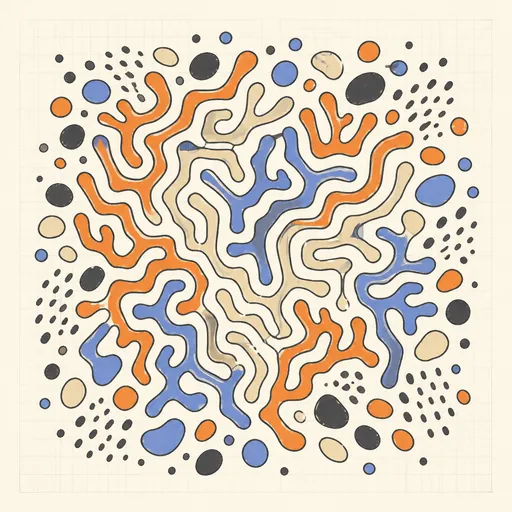
Reaction–Diffusion Patterns
Grow coral, spots and zebra stripes from two virtual chemicals with the Gray–Scott model.
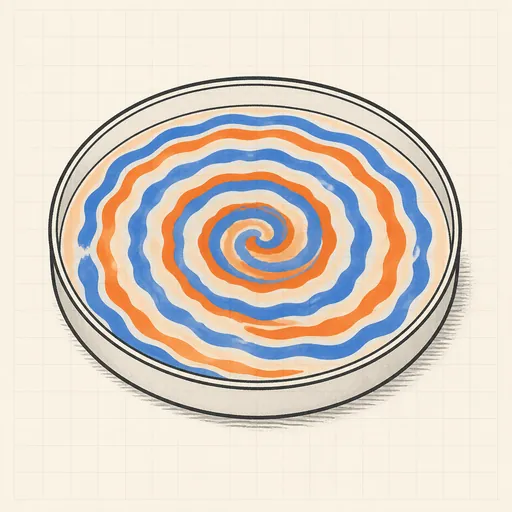
Belousov–Zhabotinsky Reaction
Watch an oscillating chemical medium organize itself into rotating spiral waves.
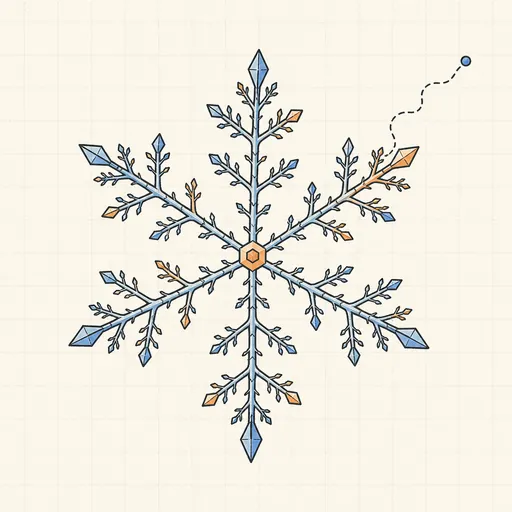
Crystal Growth Simulator
Grow branching fractal crystals one wandering particle at a time with diffusion-limited aggregation.
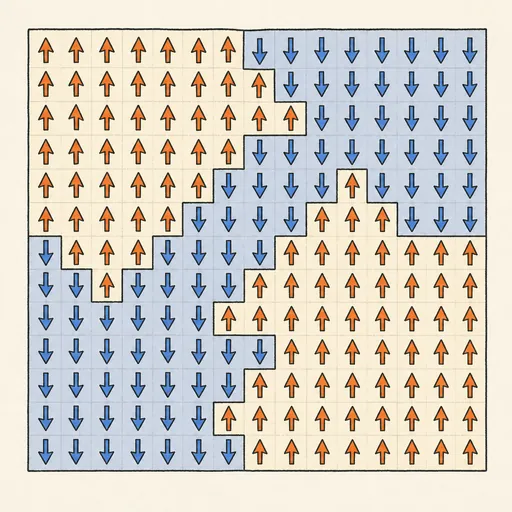
Ising Model Ferromagnet
Flip a grid of spins at any temperature and watch magnetic domains freeze in or melt at the critical point.