Sugarscape
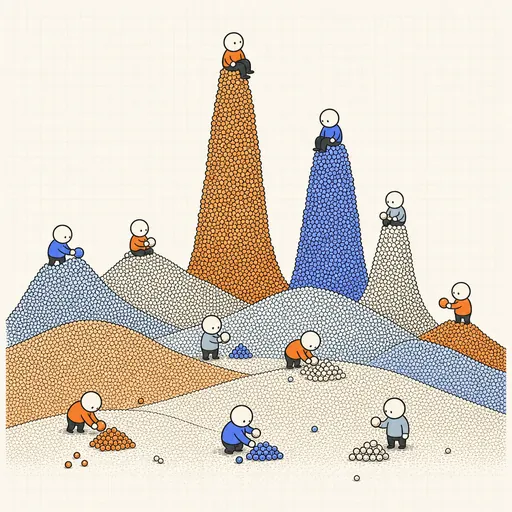
Sugarscape, from Epstein and Axtell’s Growing Artificial Societies, grows a whole economy from foraging rules. Sugar grows back on a landscape with rich peaks and poor valleys. Each agent has a vision range and a metabolism, looks around for the richest nearby cell, moves there and eats, burning sugar each step and dying if its store runs out. No one trades or plans, yet the population sorts into a few wealthy agents and many poor ones, and the wealth histogram settles into the same skewed shape economists see in real societies. Drag the regrowth rate, vision, metabolism and starting population, and watch the wealth distribution and its inequality (a Gini coefficient) form live.
Runs 100% in your browser — simulations are computed locally on your device.
Read the full guide to this tool
Notes
- Agents follow one greedy rule — move to the richest cell you can see and eat — with no trading or foresight, yet a structured society emerges from it.
- Even when agents start equal, small differences in vision, metabolism and luck of birthplace compound into a highly unequal wealth distribution, close to the skewed curves found in real economies.
- It is a foundational agent-based model: it shows that macro patterns like inequality can arise from micro rules alone, without any central design.
- Runs 100% in your browser — simulations are computed locally on your device.
Related tools
Gerrymandering Sandbox
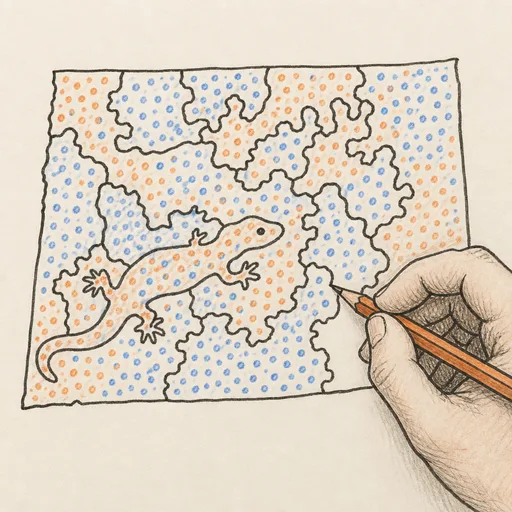
Draw the districts yourself and watch the same voters produce opposite election results.
Pareto Frontier Evolution
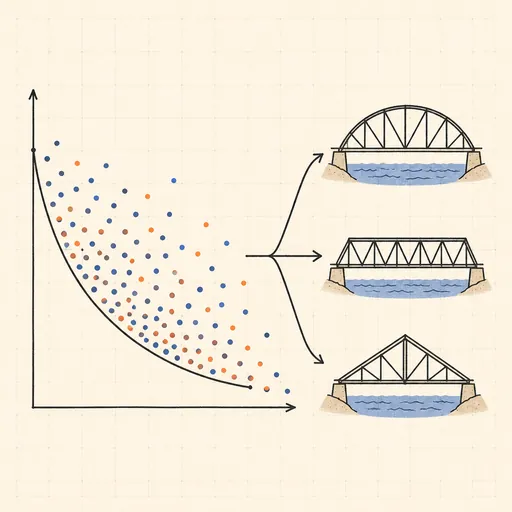
Watch a genetic algorithm breed bridge designs and trace out the weight-vs-stiffness Pareto frontier, generation by generation.
SIR Epidemic Simulator
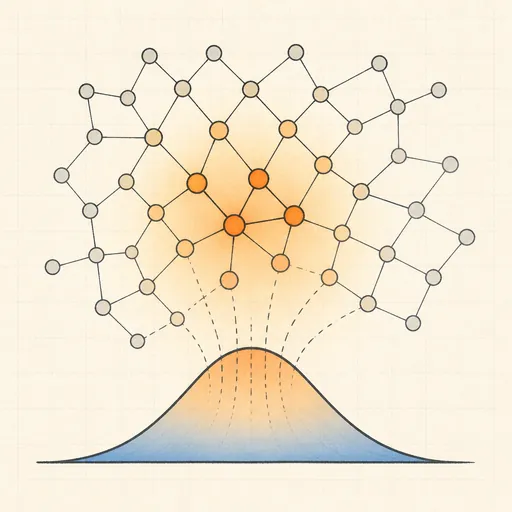
Watch an epidemic spread and burn out with the classic susceptible–infected–recovered model.

Sailing & Tacking Simulator
Sail a boat against the wind — trim to the polar diagram, ride the shifts and race the optimal route.
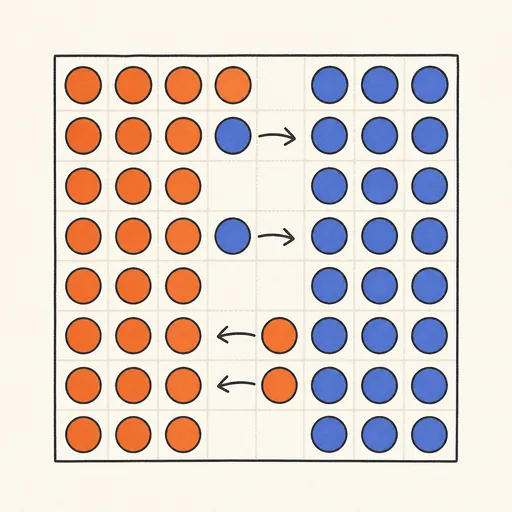
Schelling’s Segregation Model
Give agents a mild preference for similar neighbours and watch a mixed city sort itself into stark blocks.
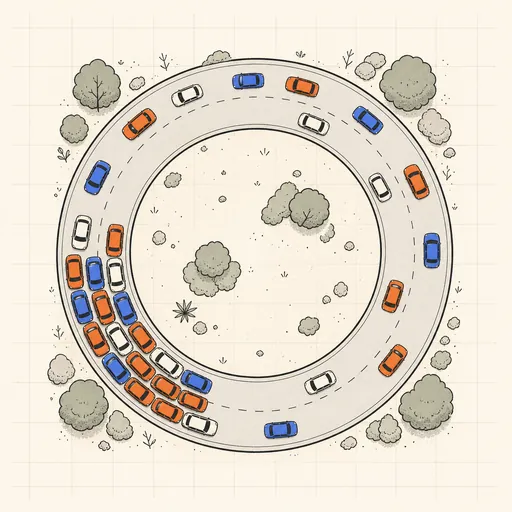
Traffic Jam Simulator
See phantom traffic jams appear from nothing on a ring road with the Nagel–Schreckenberg model.