Pareto Frontier Evolution
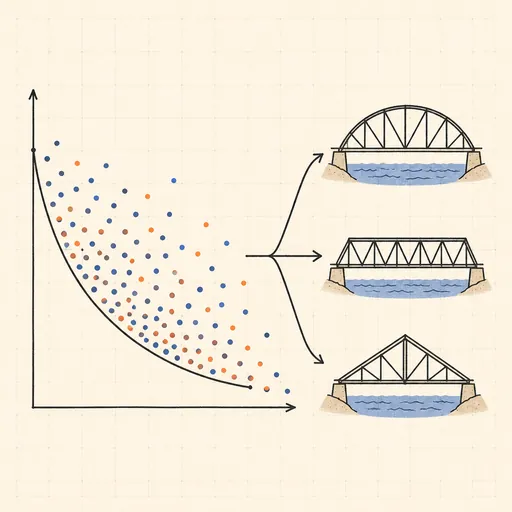
Most design problems have no single best answer — a lighter bridge bends more, a stiffer one weighs more. The set of designs where you cannot improve one goal without hurting the other is the Pareto frontier, and this simulator makes one evolve in front of you. A population of bridge trusses is bred with NSGA-II, the classic multi-objective genetic algorithm: each genome encodes the truss shape and every member’s thickness, each design is solved with a real finite-element analysis (direct stiffness method) to get its weight and its deflection under load, and selection favours designs that are non-dominated and spread out. The objective-space scatter shows the population sweeping down and left, past frontiers fading behind it like contrails, while the current best trade-offs are drawn as an orange front. Click any dot to see that actual bridge — members coloured by tension and compression, thickness to scale — or let it follow the balanced “knee” design as it improves. Benchmark problems (ZDT1, ZDT3, Kursawe) with known true frontiers are included so you can watch the algorithm find convex, disconnected and non-convex fronts.
Runs 100% in your browser — simulations are computed locally on your device.
Read the full guide to this tool
Notes
- A design is Pareto-optimal (non-dominated) when no other design is at least as good in both objectives and strictly better in one; the frontier is the set of all such designs, and evolution pushes the whole population toward it.
- NSGA-II works by fast non-dominated sorting (rank designs into successive frontiers) plus crowding distance (prefer designs in sparse regions), with simulated binary crossover and polynomial mutation breeding each new generation.
- Every bridge is a genuine 2D truss: the genome sets five top-chord heights and 25 member cross-sections, loads hang from the deck, and the stiffness matrix is assembled and solved each evaluation — weight is total material, the other objective is the worst deck deflection.
- Runs 100% in your browser — simulations are computed locally on your device.
Explore the idea
Related tools
Gerrymandering Sandbox
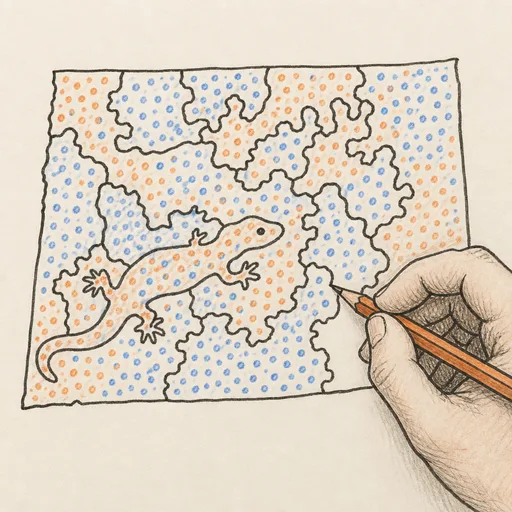
Draw the districts yourself and watch the same voters produce opposite election results.
SIR Epidemic Simulator
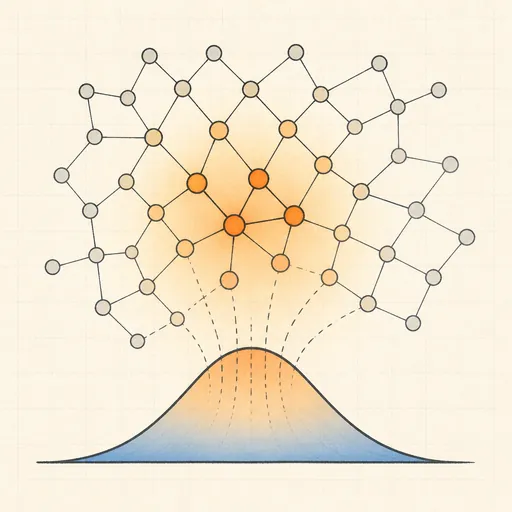
Watch an epidemic spread and burn out with the classic susceptible–infected–recovered model.
Sailing & Tacking Simulator
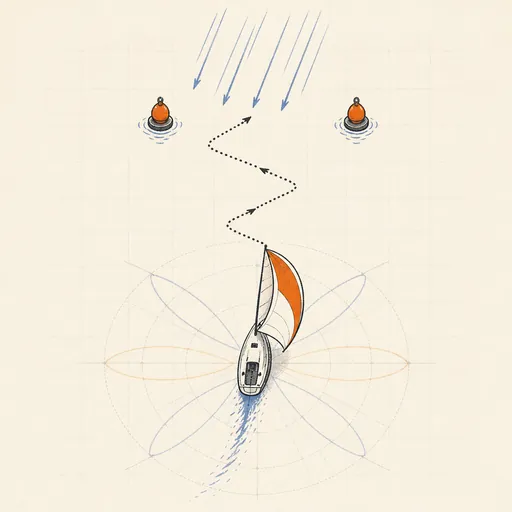
Sail a boat against the wind — trim to the polar diagram, ride the shifts and race the optimal route.
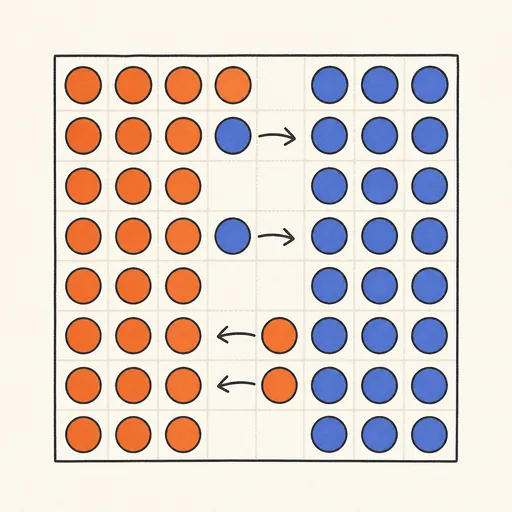
Schelling’s Segregation Model
Give agents a mild preference for similar neighbours and watch a mixed city sort itself into stark blocks.
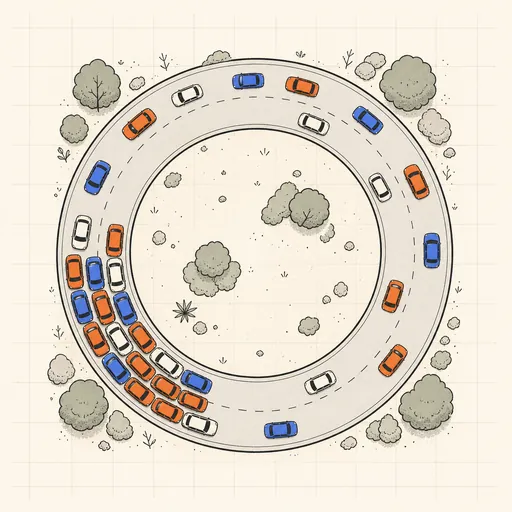
Traffic Jam Simulator
See phantom traffic jams appear from nothing on a ring road with the Nagel–Schreckenberg model.
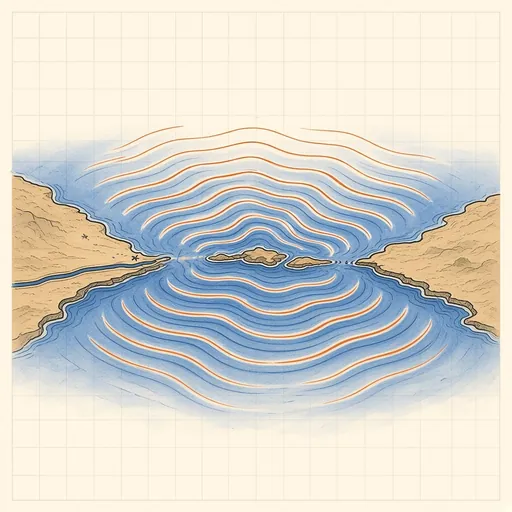
Tsunami Simulator
Set off an undersea earthquake anywhere and watch the tsunami cross real ocean floors — with arrival times at tide gauges around the world.