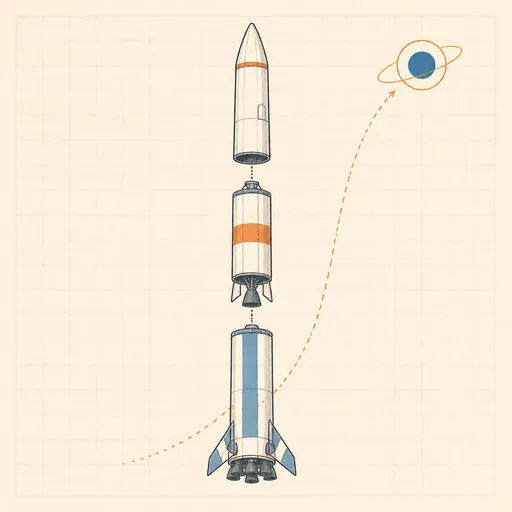
Rocket Designer & Staging Lab
Design a rocket stage by stage — pick engines with real-world thrust and specific impulse, size the propellant tanks, set the payload — and the lab computes what your design can do: delta-v per stage from the Tsiolkovsky rocket equation, thrust-to-weight ratios, and whether the total budget clears low Earth orbit, a geostationary transfer, the Moon or Mars. Then press launch: a full ascent integration flies your rocket through gravity and atmospheric drag with a gravity-turn trajectory, plotting altitude, velocity and acceleration while the stages drop away. Gravity losses, drag losses and the brutal exponential of the rocket equation become visible — add more fuel and watch the payoff shrink.
Runs 100% in your browser — simulations are computed locally on your device.
Read the full guide to this tool
Notes
- The rocket equation Δv = Isp · g₀ · ln(m₀/m₁) is merciless: doubling propellant does not double delta-v, which is why staging — shedding dead mass mid-flight — is the only way chemical rockets reach orbit.
- Real ascent loses 1–2 km/s to gravity (thrusting upward while gravity pulls down) and a few hundred m/s to drag; the simulation integrates both, so a design with 9.4 km/s of vacuum delta-v can still fall short of orbit.
- Thrust-to-weight below 1 means the rocket cannot leave the pad; much above ~1.5 at liftoff wastes structure mass and batters the payload with g-forces — real first stages sit in a narrow band.
- Runs 100% in your browser — simulations are computed locally on your device.
Related tools
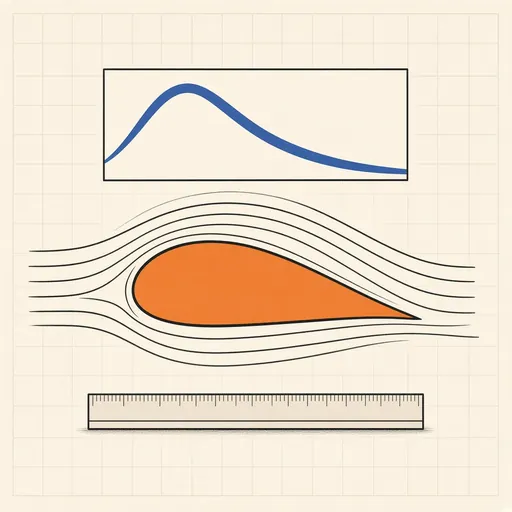
Airfoil Designer & Analyzer
Shape a NACA airfoil, see its pressure distribution and plot lift and drag polars, XFOIL-style, in the browser.
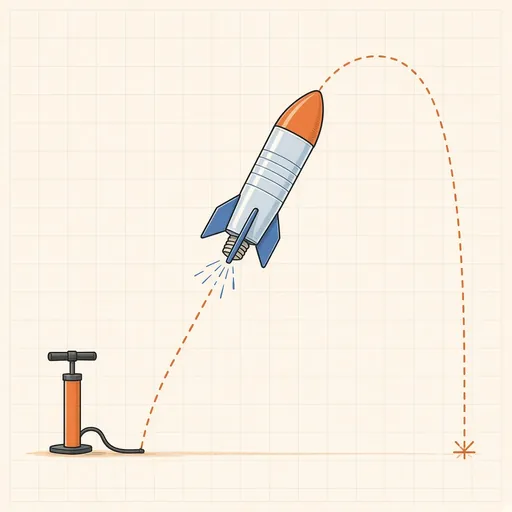
Bottle Rocket Simulator
Fill a soda-bottle water rocket, pump it up and launch it: find the water level, pressure and fins that fly highest.
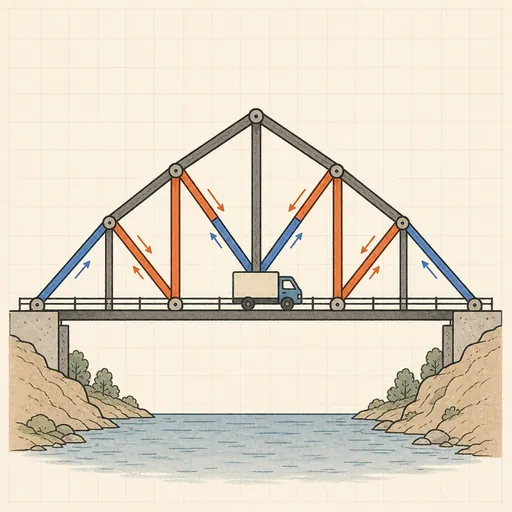
Bridge Builder & Truss Simulator
Design a truss bridge, send a truck across and watch every member strain, buckle or snap under load.
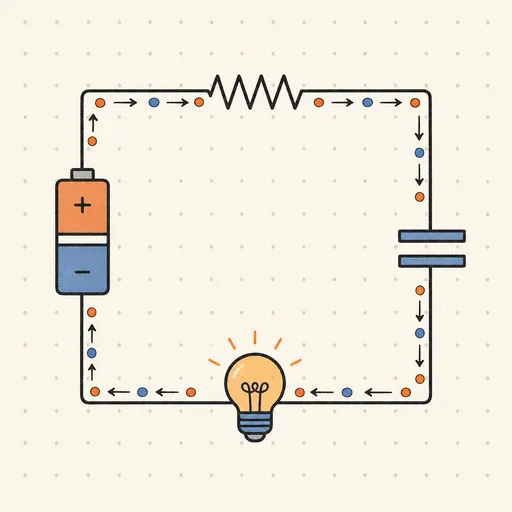
Circuit Simulator
Build analog circuits on a grid and watch current flow live — batteries, resistors, capacitors, LEDs and more.
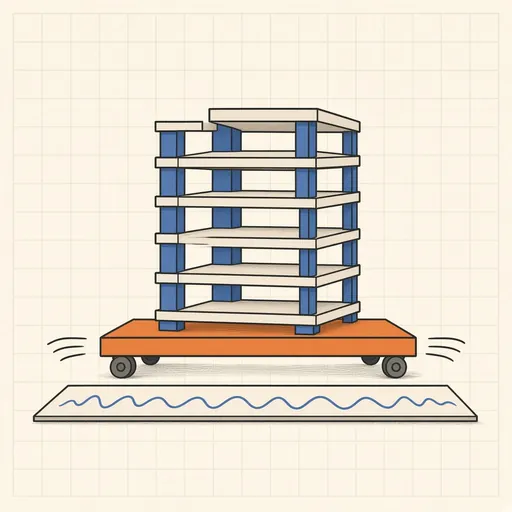
Earthquake Shake Table Simulator
Shake a multi-story building with an earthquake and watch it sway, crack or survive, with base isolation and dampers.
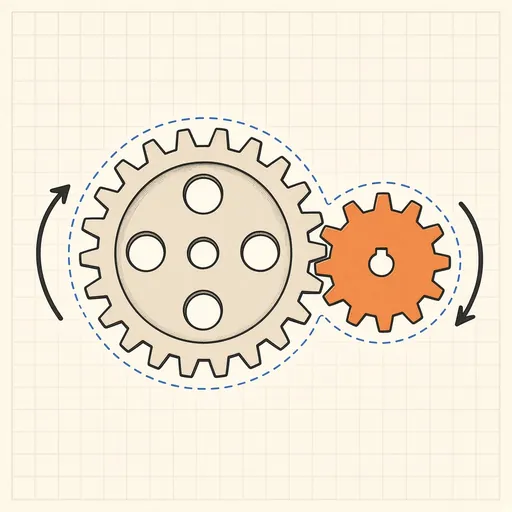
Gear Generator
Design involute spur gears, racks and planetary sets, watch them mesh and export SVG or DXF for laser cutting.