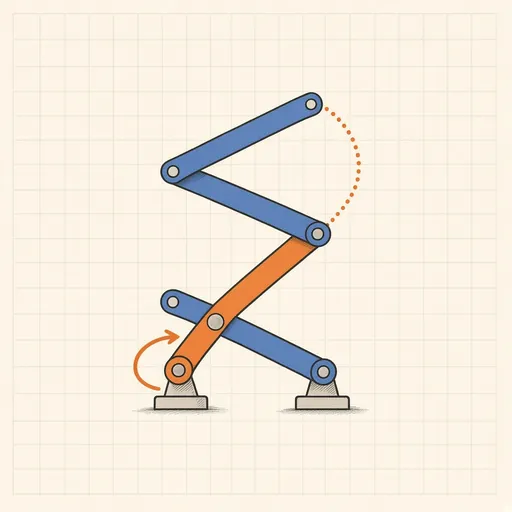
Linkage & Mechanism Simulator
A planar mechanism workbench. Place ground pivots and pin joints, connect them with rigid links, add a slider on a straight guide and make one link the motor-driven crank, then press play and the solver moves every joint to keep the links rigid. Mark any joint to trace its path and watch coupler curves, straight-line motions and walking gaits appear. Presets load the classics: four-bar crank-rocker and double-crank, the piston crank-slider, Watt’s and Chebyshev’s straight-line linkages, the Peaucellier–Lipkin inversor, a pantograph and Theo Jansen’s Strandbeest leg. A Grashof check, the transmission angle and an input-output plot show why some designs turn all the way round and others lock up. Edit link lengths directly and export the mechanism and its traces as SVG.
Runs 100% in your browser — simulations are computed locally on your device.
Notes
- Each frame the solver turns the crank by a small step and runs Newton iterations on the link-length constraints, starting from the previous pose so the mechanism stays on the same assembly branch.
- Grashof’s rule decides whether a four-bar can rotate fully: with s and l the shortest and longest links and p, q the others, some link turns all the way round only if s + l ≤ p + q.
- The transmission angle between coupler and output link measures how well force gets through; designers keep it above about 40°, because near 0° the mechanism jams.
- Runs 100% in your browser — simulations are computed locally on your device.
Related tools
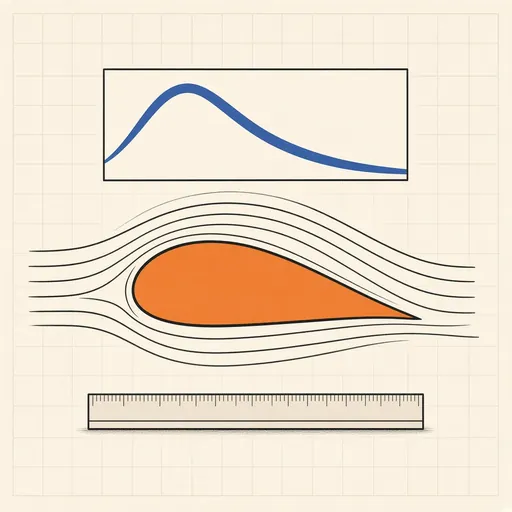
Airfoil Designer & Analyzer
Shape a NACA airfoil, see its pressure distribution and plot lift and drag polars, XFOIL-style, in the browser.
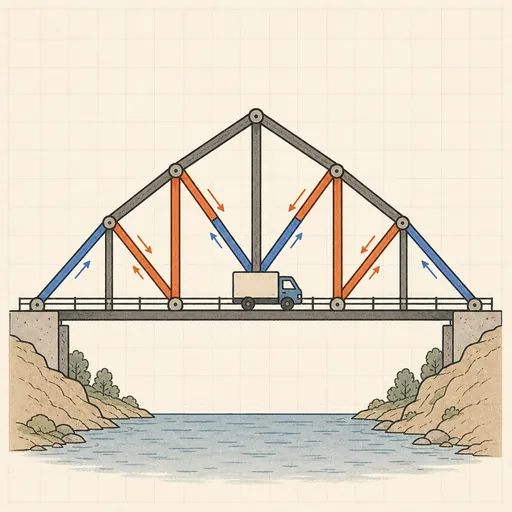
Bridge Builder & Truss Simulator
Design a truss bridge, send a truck across and watch every member strain, buckle or snap under load.
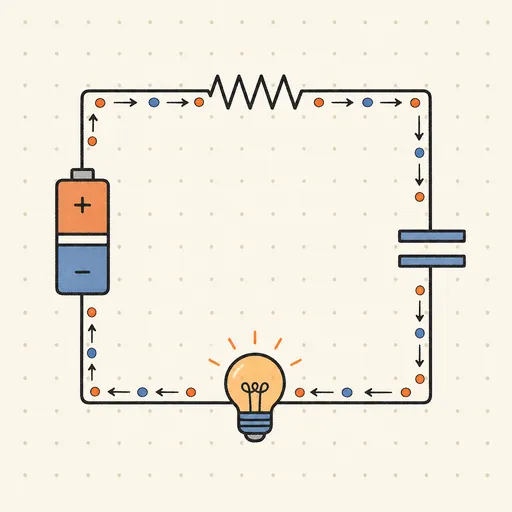
Circuit Simulator
Build analog circuits on a grid and watch current flow live — batteries, resistors, capacitors, LEDs and more.
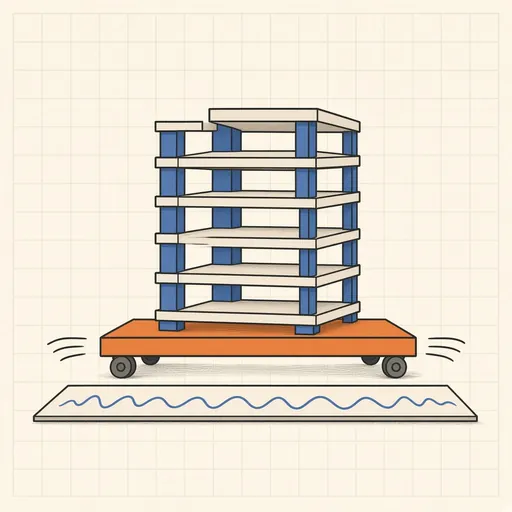
Earthquake Shake Table Simulator
Shake a multi-story building with an earthquake and watch it sway, crack or survive, with base isolation and dampers.
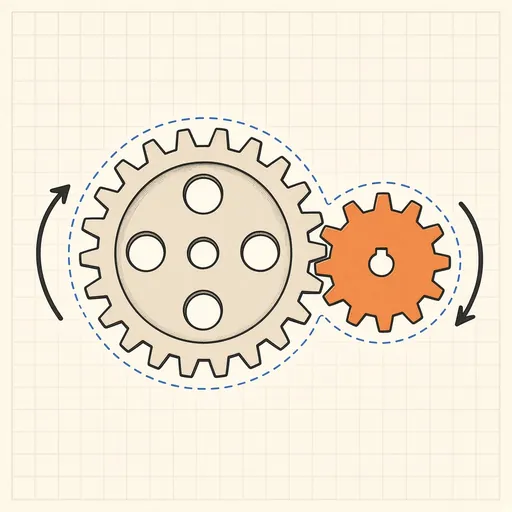
Gear Generator
Design involute spur gears, racks and planetary sets, watch them mesh and export SVG or DXF for laser cutting.
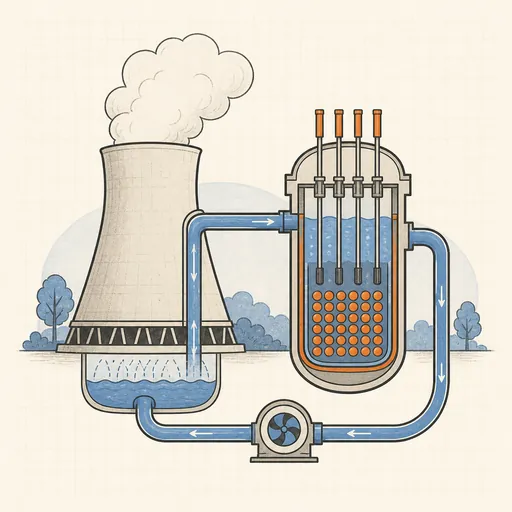
Nuclear Reactor Simulator
Run a pressurized-water reactor: pull control rods, manage xenon and temperature — or SCRAM before it overheats.