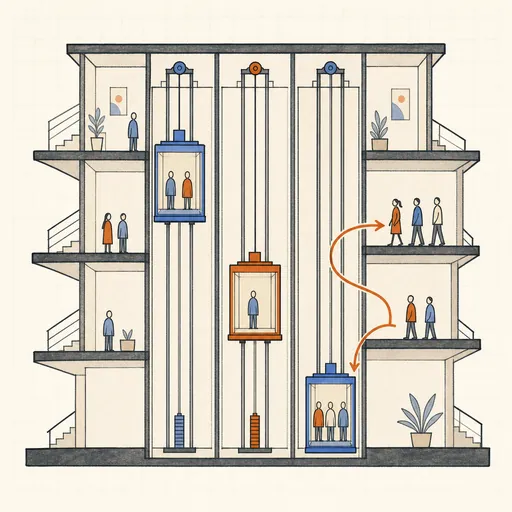
Elevator Dispatch Simulator
A cutaway office tower, a bank of elevators, and a growing crowd in the lobby. Passengers arrive in realistic traffic patterns — morning up-peak, lunchtime chaos, evening down-peak — and the dispatch algorithm decides which car answers which call. Race the classic collective control (the up-and-down sweep every old building uses) against nearest-car assignment and modern destination dispatch, where you key in your floor before boarding and the system groups passengers by destination. Live histograms track waiting time and time-to-destination, and queue lengths make bad algorithms visible at a glance. Tune the building — floors, cars, arrival rate — and find where each strategy breaks down.
Runs 100% in your browser — simulations are computed locally on your device.
Read the full guide to this tool
Notes
- Elevator dispatch is a queueing-theory problem: passengers arrive stochastically, service capacity is limited, and above a critical arrival rate queues grow without bound no matter the algorithm.
- Collective control (SCAN) is the elevator version of the disk-scheduling algorithm: sweep up answering every call, then sweep down — simple, fair, and wasteful in up-peak traffic.
- Destination dispatch gains its edge by batching: grouping passengers with the same destination cuts the number of stops per trip, which is why it dominates in tall buildings during rush hour.
- Runs 100% in your browser — simulations are computed locally on your device.
Related tools
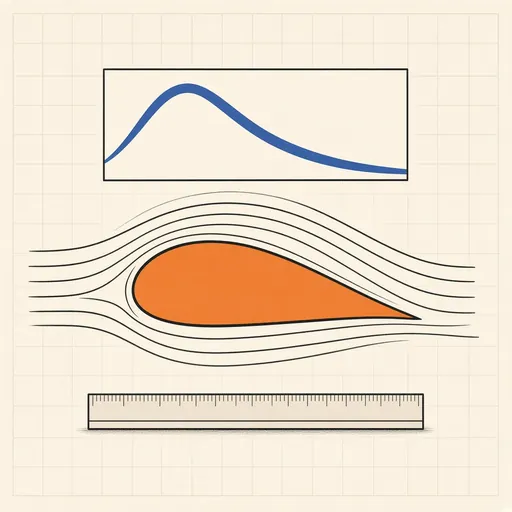
Airfoil Designer & Analyzer
Shape a NACA airfoil, see its pressure distribution and plot lift and drag polars, XFOIL-style, in the browser.

Bottle Rocket Simulator
Fill a soda-bottle water rocket, pump it up and launch it: find the water level, pressure and fins that fly highest.
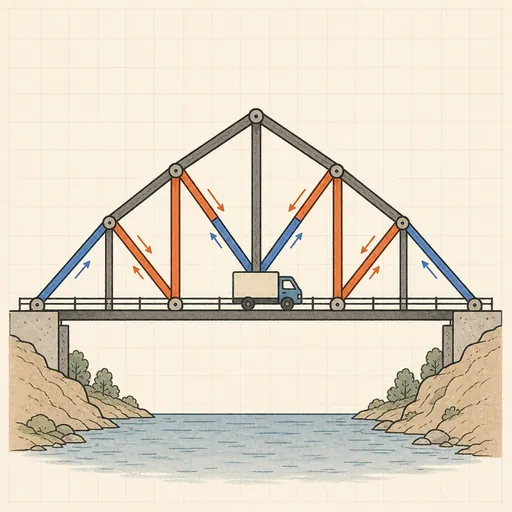
Bridge Builder & Truss Simulator
Design a truss bridge, send a truck across and watch every member strain, buckle or snap under load.
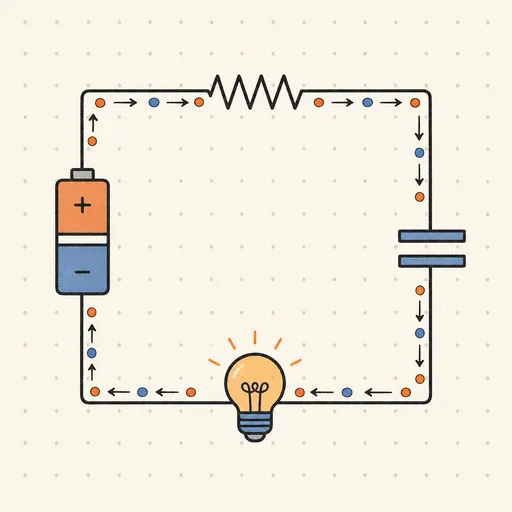
Circuit Simulator
Build analog circuits on a grid and watch current flow live — batteries, resistors, capacitors, LEDs and more.
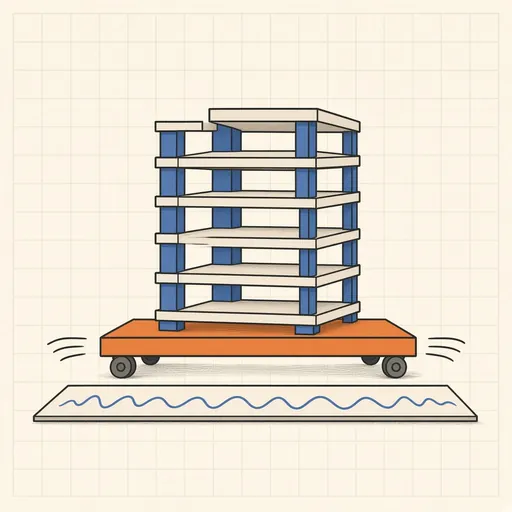
Earthquake Shake Table Simulator
Shake a multi-story building with an earthquake and watch it sway, crack or survive, with base isolation and dampers.
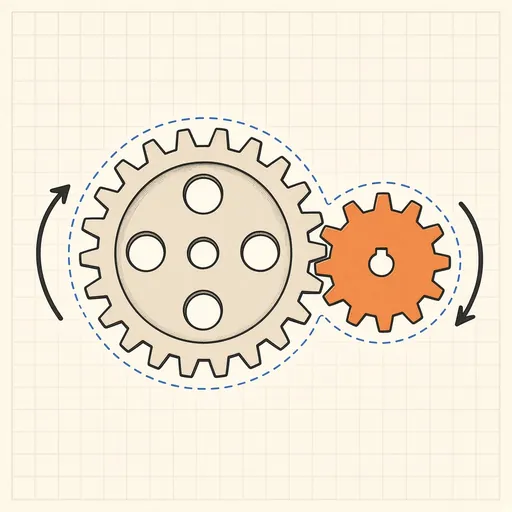
Gear Generator
Design involute spur gears, racks and planetary sets, watch them mesh and export SVG or DXF for laser cutting.