
Tragedy of the Commons
A fishery is the textbook commons: the fish stock renews itself by logistic growth, every boat profits from catching more, and nobody owns the consequences. Here N boats choose their fishing effort each season. Under open access each boat greedily raises effort while there is profit to be had — and the fleet drives the stock below its most productive size and often to collapse. Switch the policy to a fixed total quota or a tax on effort and the same greedy boats settle into a sustainable harvest. Charts track the stock and the total catch over time against the maximum sustainable yield reference line, and sliders for the number of boats, the fish price and the cost of effort let you find exactly where rational self-interest turns into ruin.
Runs 100% in your browser — simulations are computed locally on your device.
Read the full guide to this tool
Notes
- Logistic growth peaks at half the carrying capacity — the maximum sustainable yield rK/4 — so a healthy fishery deliberately keeps the stock at K/2, not at its maximum.
- Open access equilibrates where profit hits zero, not where yield is greatest: effort rises until revenue equals cost, typically far past the MSY effort (Gordon, 1954).
- Collapse is sharpest when price is high relative to cost — cheap fishing effort is what protected pre-industrial fisheries, and engine power is what killed the Grand Banks cod.
- Quotas cap the catch directly; an effort tax fixes the incentive instead, making each boat feel the cost it imposes on the others — economists call it pricing the externality.
- Runs 100% in your browser — simulations are computed locally on your device.
Related tools
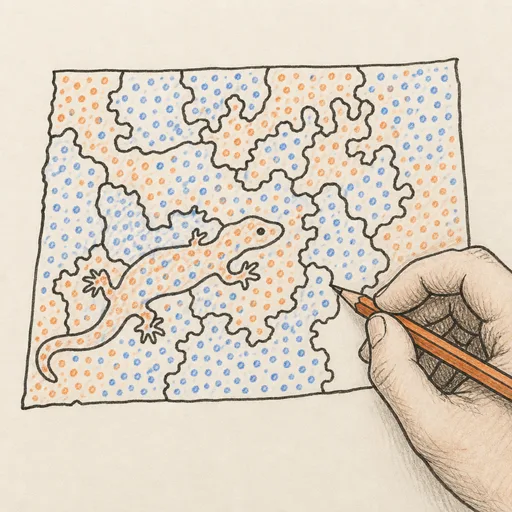
Gerrymandering Sandbox
Draw the districts yourself and watch the same voters produce opposite election results.
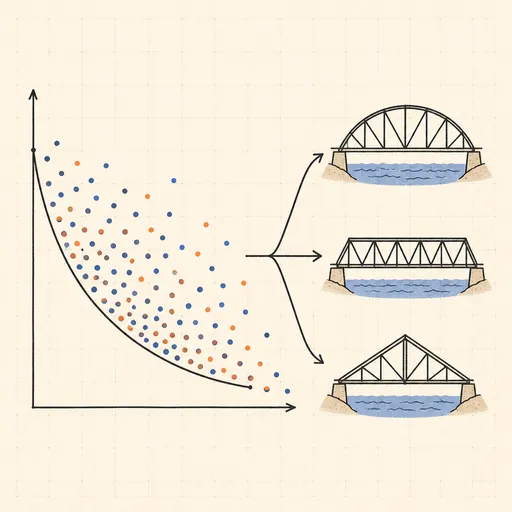
Pareto Frontier Evolution
Watch a genetic algorithm breed bridge designs and trace out the weight-vs-stiffness Pareto frontier, generation by generation.
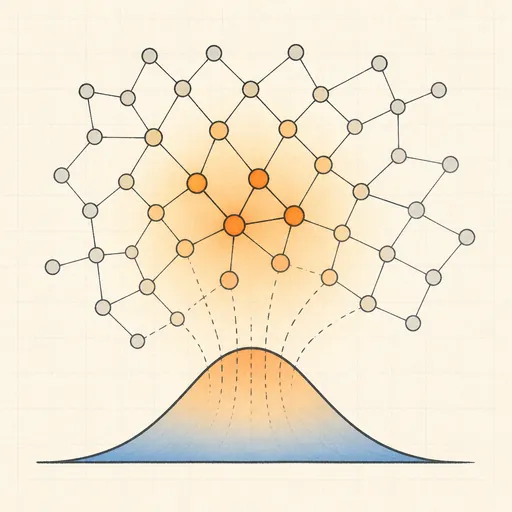
SIR Epidemic Simulator
Watch an epidemic spread and burn out with the classic susceptible–infected–recovered model.

Sailing & Tacking Simulator
Sail a boat against the wind — trim to the polar diagram, ride the shifts and race the optimal route.
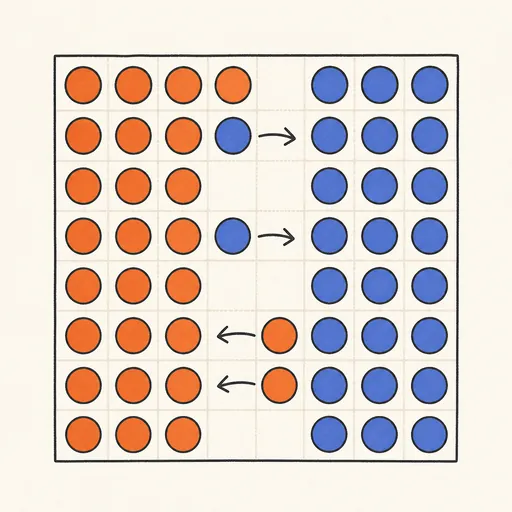
Schelling’s Segregation Model
Give agents a mild preference for similar neighbours and watch a mixed city sort itself into stark blocks.
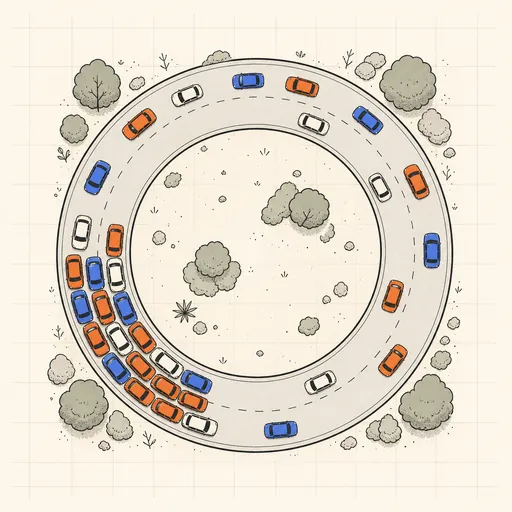
Traffic Jam Simulator
See phantom traffic jams appear from nothing on a ring road with the Nagel–Schreckenberg model.