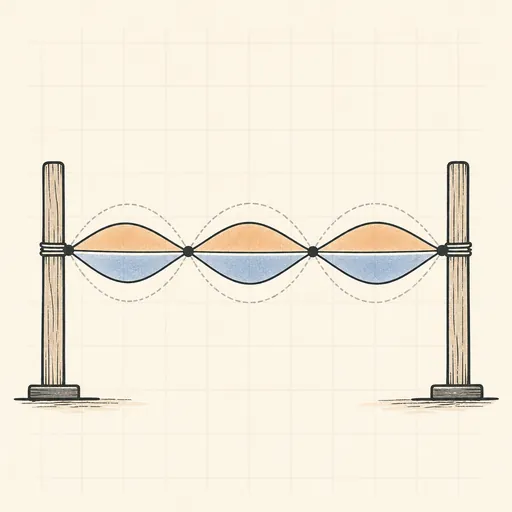
Standing Waves on a String
A string fixed at both ends can only vibrate in whole numbers of half-waves, and this tool lets you find those modes by ear and eye. Model the string as a row of masses linked by springs, drive one end at a frequency you choose, and most of the time the string just wobbles weakly. Hit a natural frequency and the reflections from the fixed ends line up with the driving, energy piles in, and a clean standing wave appears with still nodes and wildly swinging antinodes. Sweep the frequency to climb from the fundamental through the higher harmonics, and adjust tension, damping and the number of segments to move the resonances around.
Runs 100% in your browser — simulations are computed locally on your device.
Read the full guide to this tool
Notes
- A standing wave is two identical travelling waves moving in opposite directions: the incoming drive and its reflection off the fixed end add to give fixed nodes and antinodes instead of a moving crest.
- The string resonates only at fₙ = n·f₁, integer multiples of the fundamental, because only those frequencies fit a whole number of half-wavelengths between the two fixed ends.
- At resonance the amplitude is limited only by damping, so a lightly damped string builds a huge swing from a gentle drive — the same effect that lets a singer shatter a glass.
- Runs 100% in your browser — simulations are computed locally on your device.
Related tools
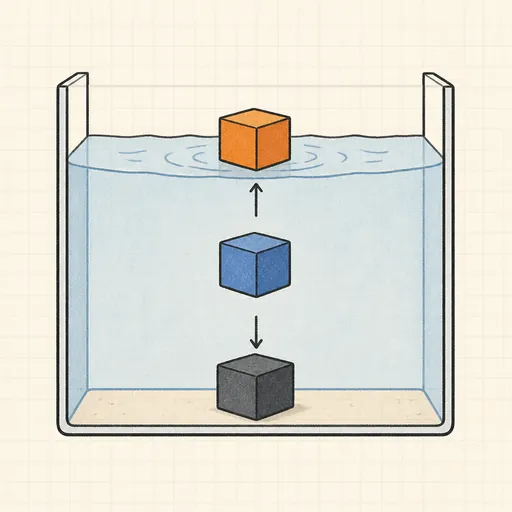
Buoyancy Tank
Drop blocks of different density into water and watch Archimedes decide what floats, sinks or hovers.
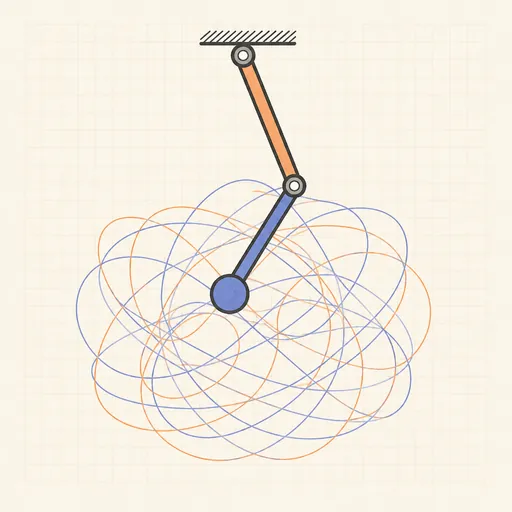
Double Pendulum
Swing a chaotic double pendulum and split it into a rainbow swarm to watch nearby starts diverge.
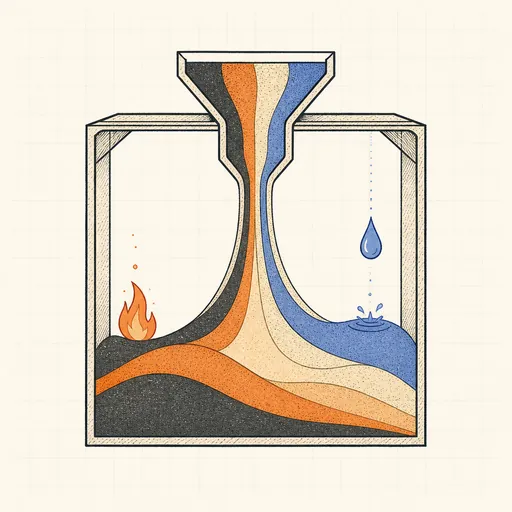
Falling-Sand Playground
Paint sand, water, oil, fire and more and watch them pour, settle, burn and react pixel by pixel.
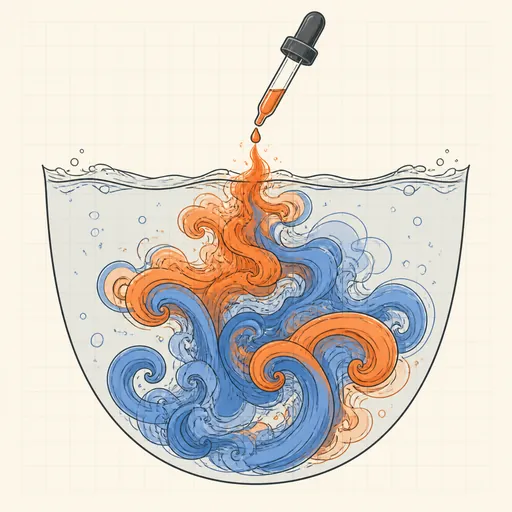
Fluid Flow Simulator
Stir glowing dye through a real-time GPU fluid simulation.
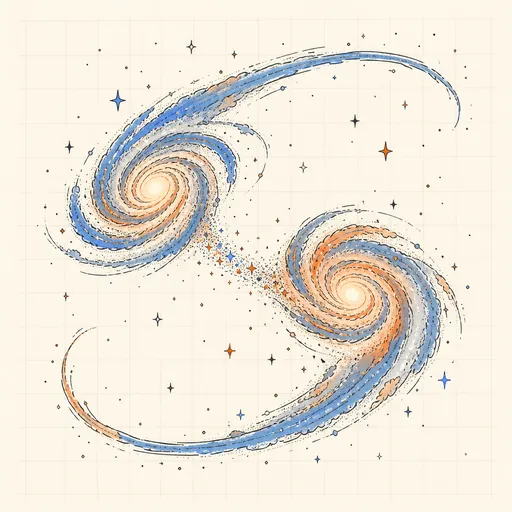
Galaxy Collision Simulator
Smash two spiral galaxies together and watch tidal tails and bridges form.
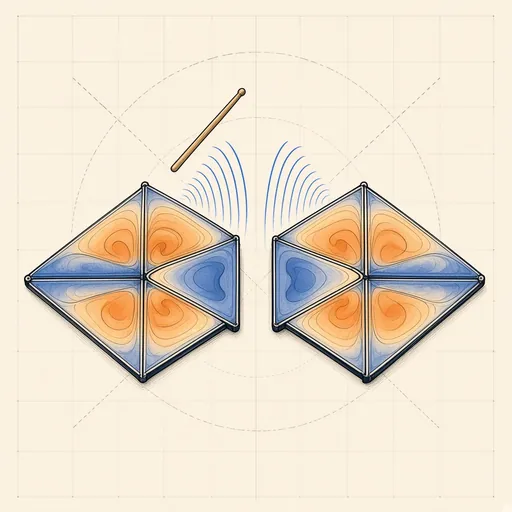
Hear the Shape of a Drum
Draw any drum and hear its true vibration modes — then meet two different drums that sound exactly the same.