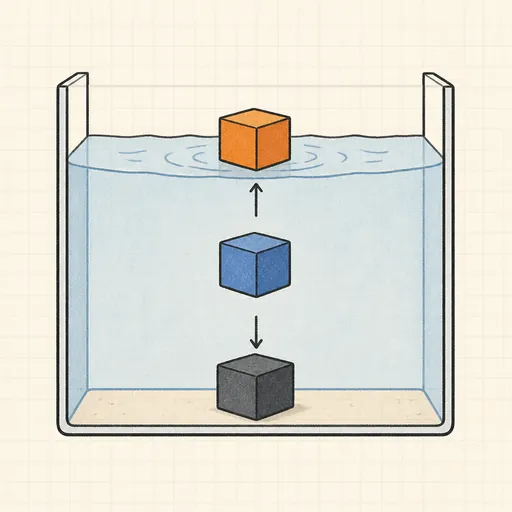
Buoyancy Tank
Buoyancy comes down to one rule from Archimedes: an object is pushed up by the weight of the fluid it displaces. This tank lets you drop blocks of chosen density and size into a liquid whose density you also control, then watch them bob down and settle at the depth where the upward buoyant force balances gravity. A block lighter than the fluid floats with just enough of itself submerged to displace its own weight; one denser than the fluid sinks to the bottom; one matched to the fluid hangs in neutral equilibrium. The waterline, the submerged fraction and the competing weight and buoyant-force arrows are drawn live, and you can switch the fluid between oil, water and brine to see the same block ride at different levels.
Runs 100% in your browser — simulations are computed locally on your device.
Read the full guide to this tool
Notes
- Archimedes’ principle: the buoyant force equals ρ_fluid · g · V_displaced. A block floats when its average density is below the fluid’s, and the fraction submerged equals the ratio of the two densities.
- Ice is about 0.92 the density of water, so 92% of an iceberg sits below the surface — the same 8%-showing ratio you can reproduce here with a light block on water.
- Raise the fluid density (fresh water to brine) and a block that just barely sank can start to float: this is why swimmers float more easily in the Dead Sea than in a lake.
- Runs 100% in your browser — simulations are computed locally on your device.
Related tools
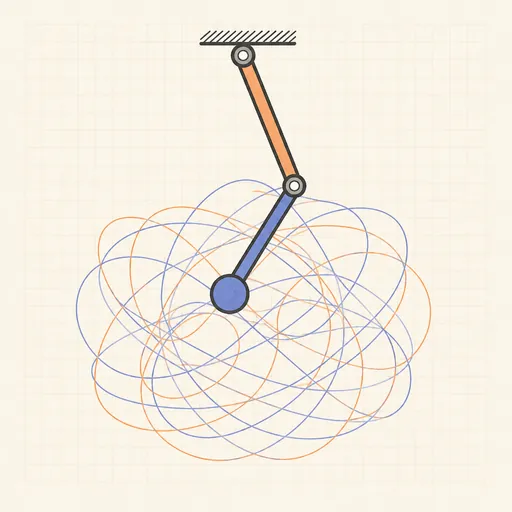
Double Pendulum
Swing a chaotic double pendulum and split it into a rainbow swarm to watch nearby starts diverge.
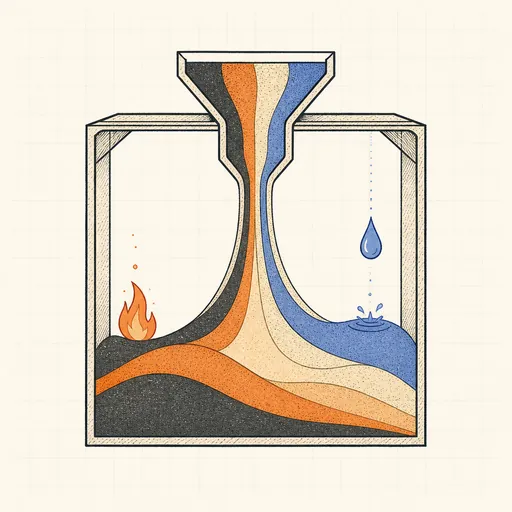
Falling-Sand Playground
Paint sand, water, oil, fire and more and watch them pour, settle, burn and react pixel by pixel.
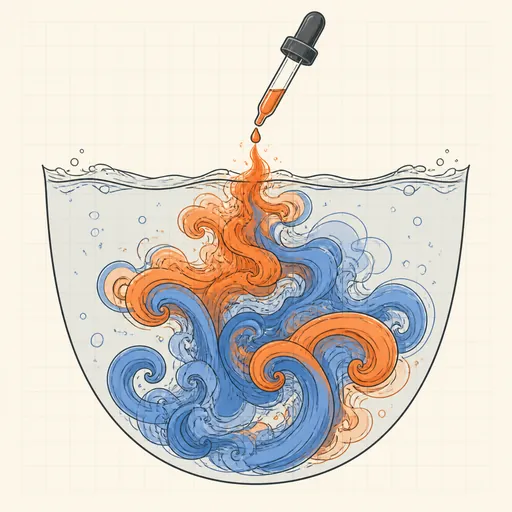
Fluid Flow Simulator
Stir glowing dye through a real-time GPU fluid simulation.
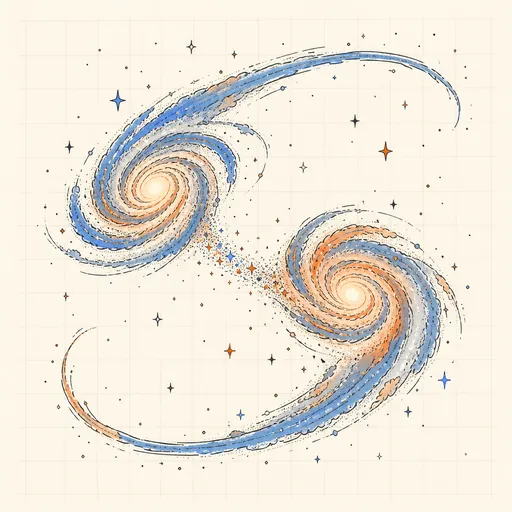
Galaxy Collision Simulator
Smash two spiral galaxies together and watch tidal tails and bridges form.
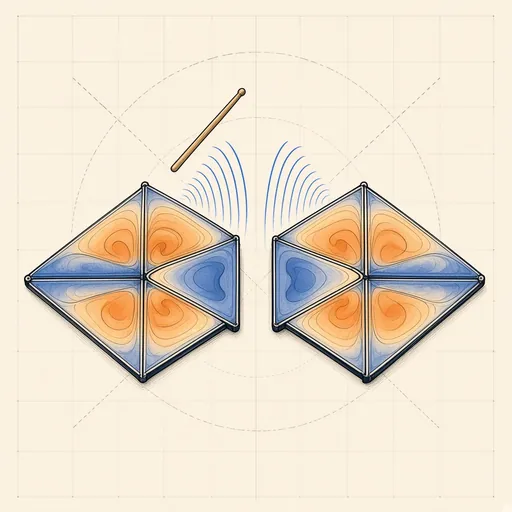
Hear the Shape of a Drum
Draw any drum and hear its true vibration modes — then meet two different drums that sound exactly the same.
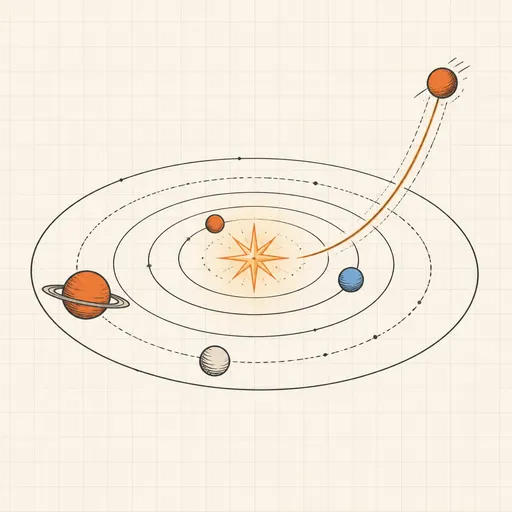
Orbit Sandbox
Fling planets around a star and watch Newtonian gravity draw ellipses, slingshots and chaotic dances.