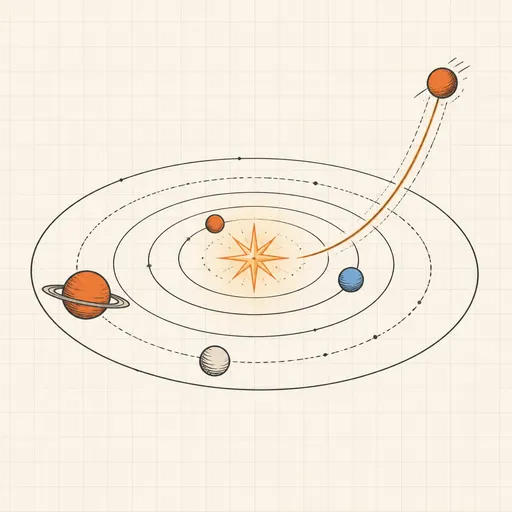
Orbit Sandbox
This is a gravity sandbox: bodies attract each other by Newton’s inverse-square law and you set the initial conditions. Drag from a body to launch it with a velocity shown as an arrow, and the simulator integrates the motion with a symplectic step that conserves energy well enough to keep orbits stable for a long time. A heavy central star anchors the scene by default, but you can add more masses to build binary stars, moons and full many-body systems. Each body leaves a fading trail so ellipses, hyperbolic flybys and slow precession are easy to see, and the total energy and momentum read out live.
Runs 100% in your browser — simulations are computed locally on your device.
Read the full guide to this tool
Notes
- Gravity here follows F = G m₁ m₂ / r², the same law that governs real planets; a single small body around a heavy star traces the ellipse Kepler described, sweeping equal areas in equal times.
- With three or more comparable masses the motion is generally chaotic: tiny changes to a launch send the system onto a completely different path, which is why the three-body problem has no closed-form solution.
- A light body swinging close behind a moving planet steals a little of its momentum and speeds up — the gravitational slingshot real spacecraft use to reach the outer planets.
- Runs 100% in your browser — simulations are computed locally on your device.
Related tools
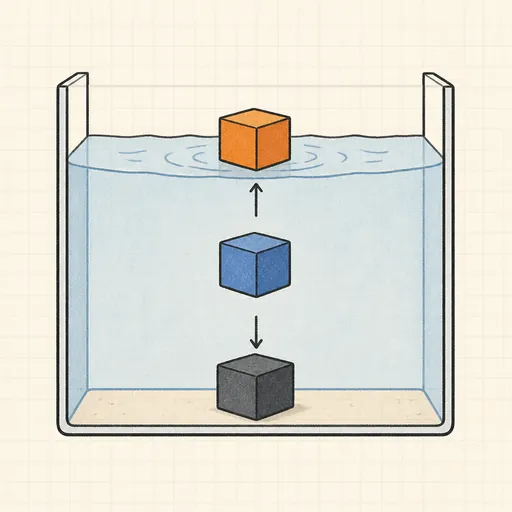
Buoyancy Tank
Drop blocks of different density into water and watch Archimedes decide what floats, sinks or hovers.
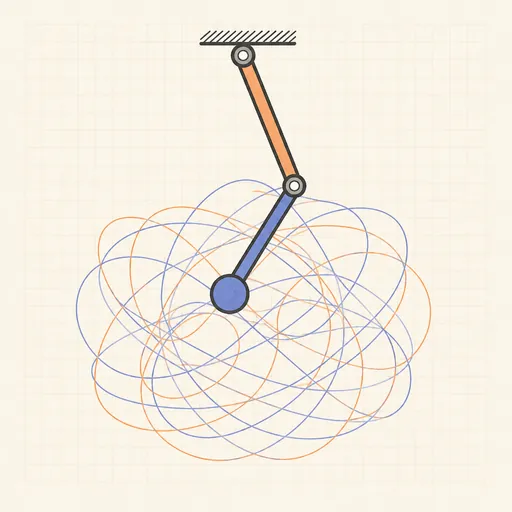
Double Pendulum
Swing a chaotic double pendulum and split it into a rainbow swarm to watch nearby starts diverge.
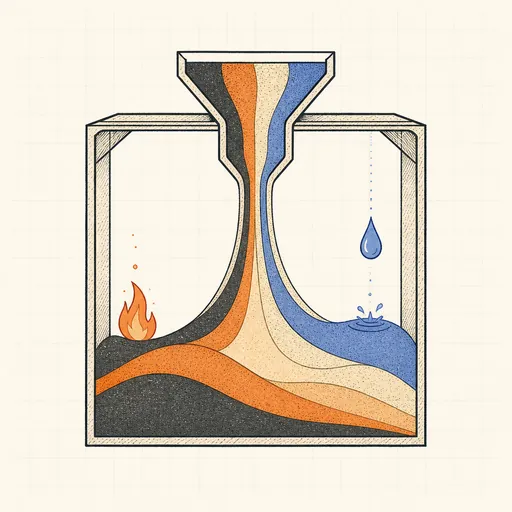
Falling-Sand Playground
Paint sand, water, oil, fire and more and watch them pour, settle, burn and react pixel by pixel.
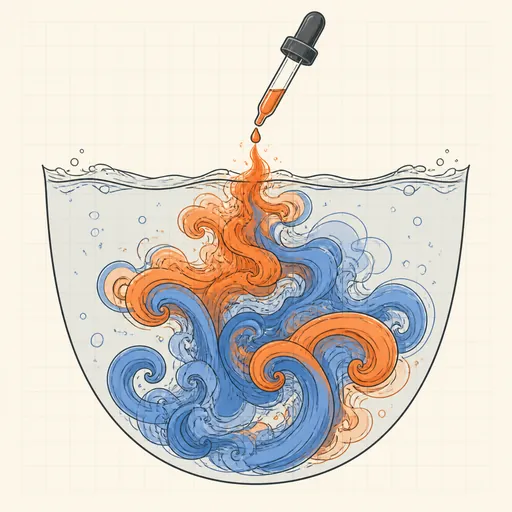
Fluid Flow Simulator
Stir glowing dye through a real-time GPU fluid simulation.
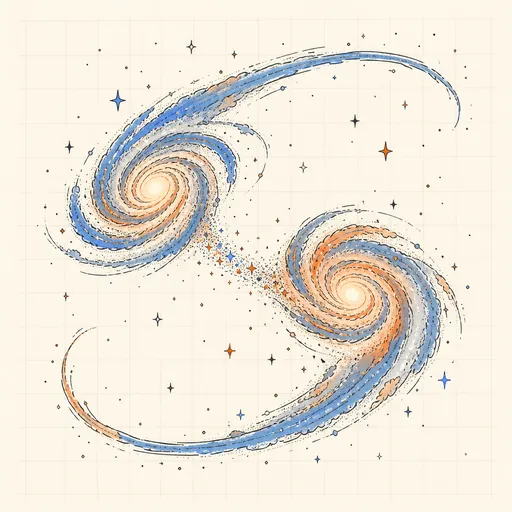
Galaxy Collision Simulator
Smash two spiral galaxies together and watch tidal tails and bridges form.
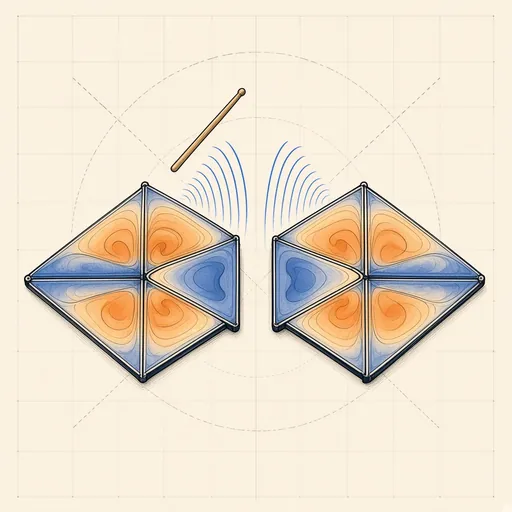
Hear the Shape of a Drum
Draw any drum and hear its true vibration modes — then meet two different drums that sound exactly the same.