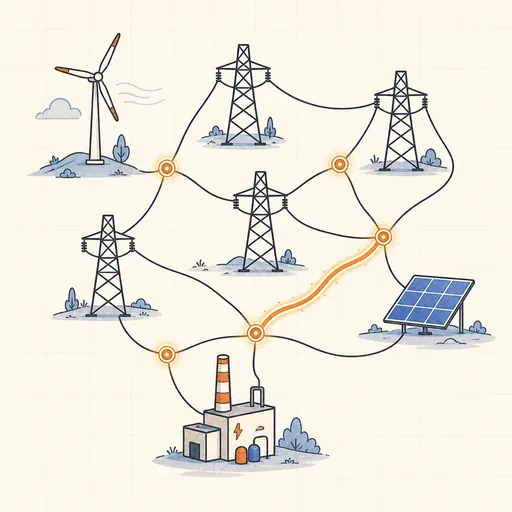
Power Grid Simulator
You are the grid operator. A small country wakes up: demand climbs toward the morning peak while you dispatch coal, gas, nuclear, hydro, wind and solar to meet it. The grid frequency is your heartbeat — every imbalance between generation and load drags it away from 50 Hz, and protection relays start tripping if you let it drift. Clouds roll over the solar farms, the wind dies down, a plant trips offline without warning, and a heat wave pushes demand to records. Transmission lines overload and fail, and one failure can chain into the next — the cascade mechanics behind every great blackout. Batteries and load shedding are your last resorts. Survive the day with the lights on and the cost curve low.
Runs 100% in your browser — simulations are computed locally on your device.
Read the full guide to this tool
Notes
- Frequency follows the swing equation: surplus generation spins the grid faster, deficit slows it down, and inertia from heavy rotating machines buys you seconds to react — the reason renewable-heavy grids add synthetic inertia.
- Cascading failure is the signature grid disaster: one overloaded line trips, its power reroutes over neighbours, overloading them in turn — the 2003 Northeast blackout took 55 million people offline this way.
- Dispatch order mirrors real merit-order markets: cheap inflexible baseload runs flat out, expensive fast peakers fill the spikes, and storage arbitrages between the two.
- Runs 100% in your browser — simulations are computed locally on your device.
Related tools
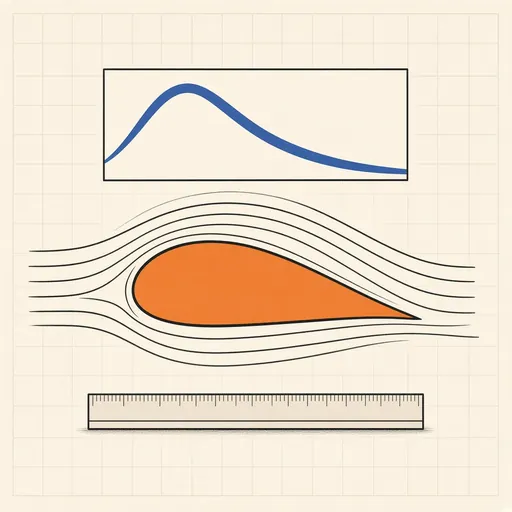
Airfoil Designer & Analyzer
Shape a NACA airfoil, see its pressure distribution and plot lift and drag polars, XFOIL-style, in the browser.
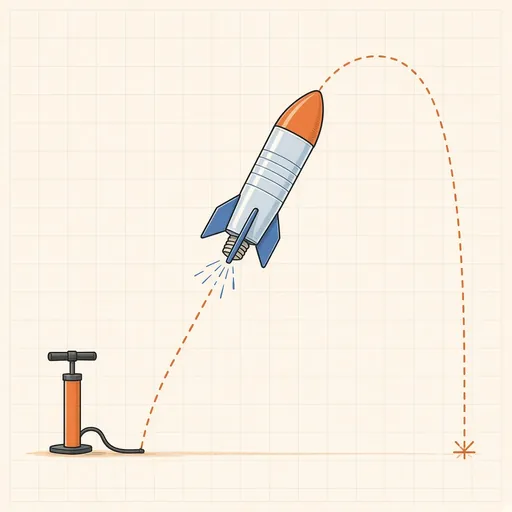
Bottle Rocket Simulator
Fill a soda-bottle water rocket, pump it up and launch it: find the water level, pressure and fins that fly highest.
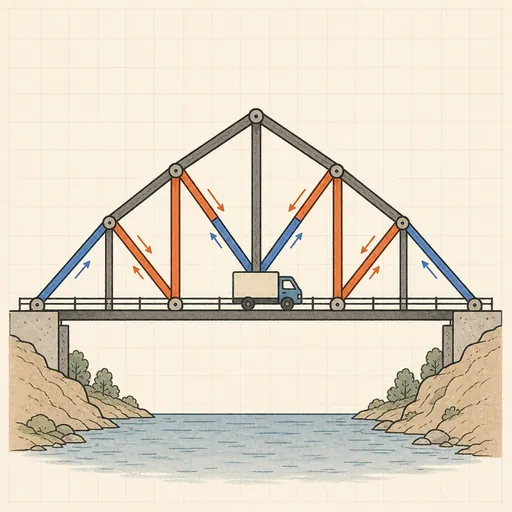
Bridge Builder & Truss Simulator
Design a truss bridge, send a truck across and watch every member strain, buckle or snap under load.
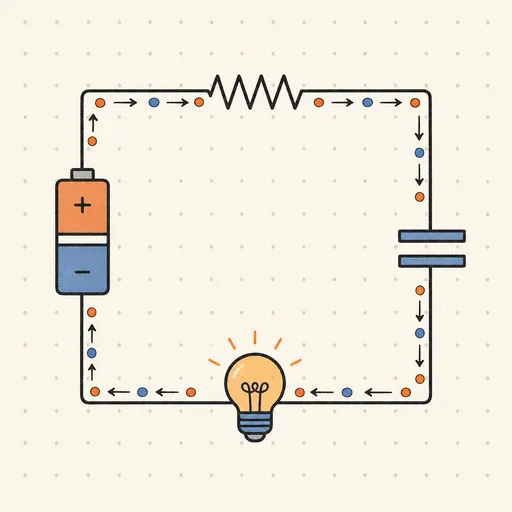
Circuit Simulator
Build analog circuits on a grid and watch current flow live — batteries, resistors, capacitors, LEDs and more.
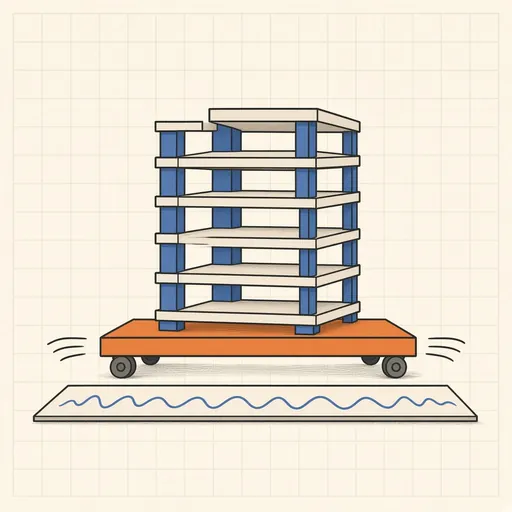
Earthquake Shake Table Simulator
Shake a multi-story building with an earthquake and watch it sway, crack or survive, with base isolation and dampers.
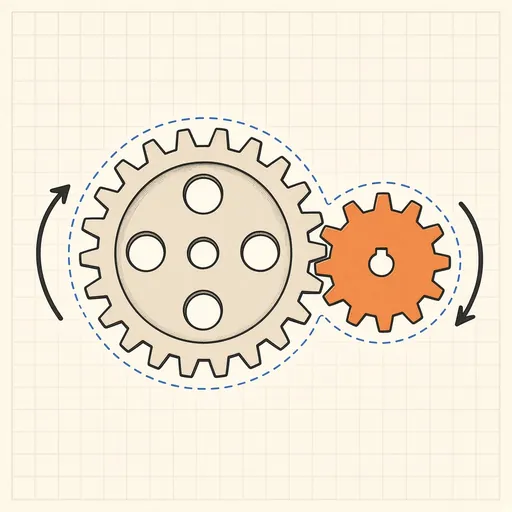
Gear Generator
Design involute spur gears, racks and planetary sets, watch them mesh and export SVG or DXF for laser cutting.