Opinion Spread
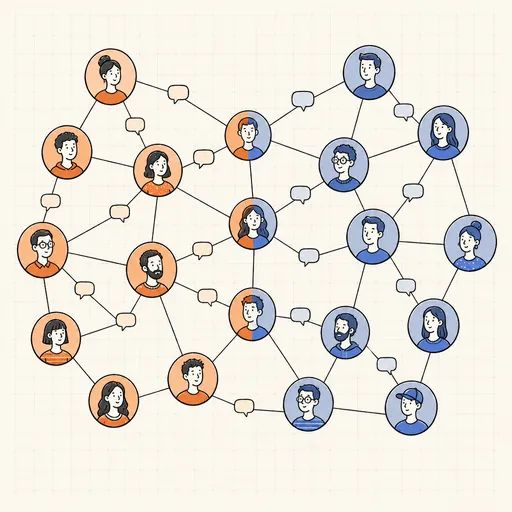
How does a population end up agreeing, splitting into camps or fragmenting into cliques? This model spreads opinions across a network of agents. Each agent holds a position, meets a neighbour and nudges its view toward theirs — but only if they are already close enough to bother listening, a "bounded confidence" rule. Set that confidence threshold and the outcome flips: a wide threshold pulls everyone to a single consensus, a narrow one freezes the crowd into several isolated clusters that will never agree. Add a dose of stubbornness or a few fixed zealots and watch echo chambers harden. Colours track each agent’s opinion so the clusters are visible as they form, and a histogram shows the distribution collapsing toward its final peaks.
Runs 100% in your browser — simulations are computed locally on your device.
Read the full guide to this tool
Notes
- The Deffuant–Weisbuch bounded-confidence rule: two agents only influence each other when their opinions differ by less than a threshold ε; above it they simply ignore each other.
- A large ε drives global consensus, while a small ε leaves roughly 1/(2ε) separate clusters — mild closed-mindedness alone is enough to fracture a population into permanent factions.
- Zealots who never change their minds can capture a whole network far out of proportion to their number, the mechanism behind committed-minority tipping points in real opinion dynamics.
- Runs 100% in your browser — simulations are computed locally on your device.
Related tools
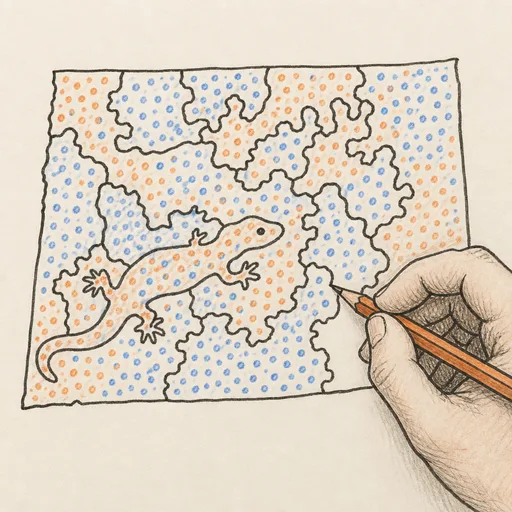
Gerrymandering Sandbox
Draw the districts yourself and watch the same voters produce opposite election results.
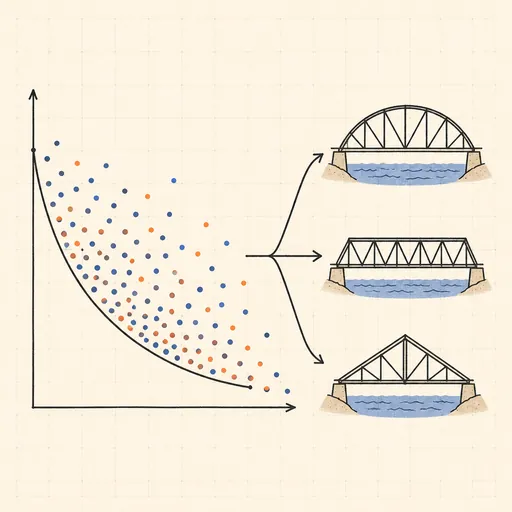
Pareto Frontier Evolution
Watch a genetic algorithm breed bridge designs and trace out the weight-vs-stiffness Pareto frontier, generation by generation.
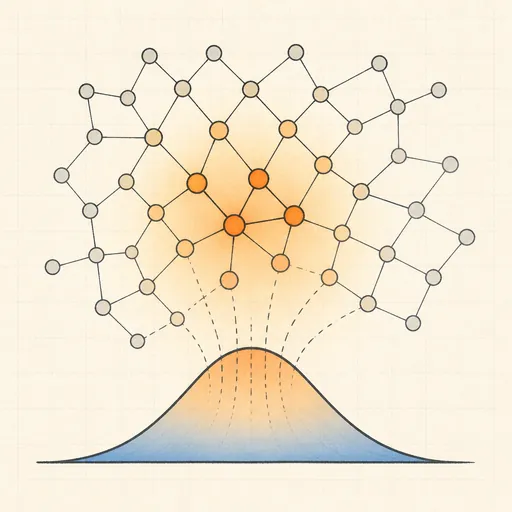
SIR Epidemic Simulator
Watch an epidemic spread and burn out with the classic susceptible–infected–recovered model.

Sailing & Tacking Simulator
Sail a boat against the wind — trim to the polar diagram, ride the shifts and race the optimal route.
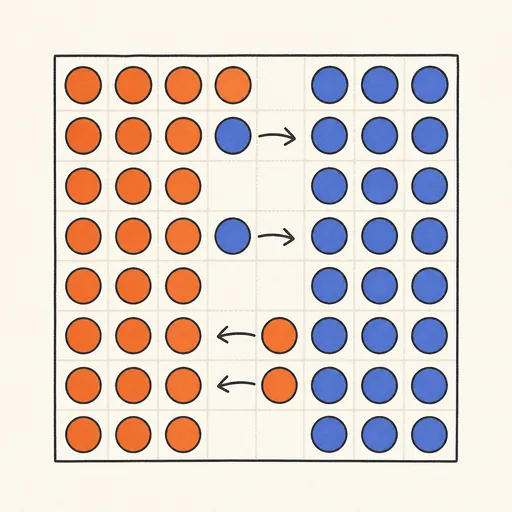
Schelling’s Segregation Model
Give agents a mild preference for similar neighbours and watch a mixed city sort itself into stark blocks.
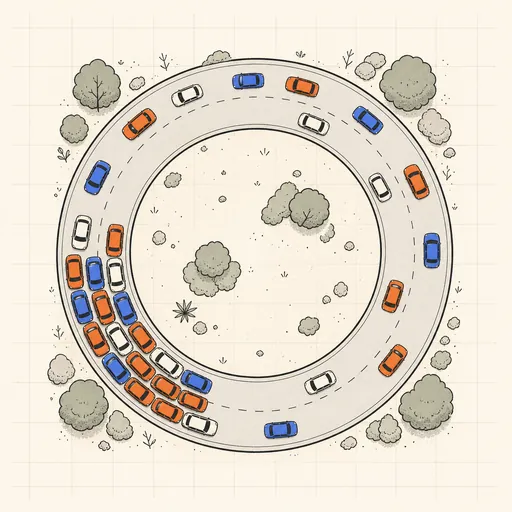
Traffic Jam Simulator
See phantom traffic jams appear from nothing on a ring road with the Nagel–Schreckenberg model.