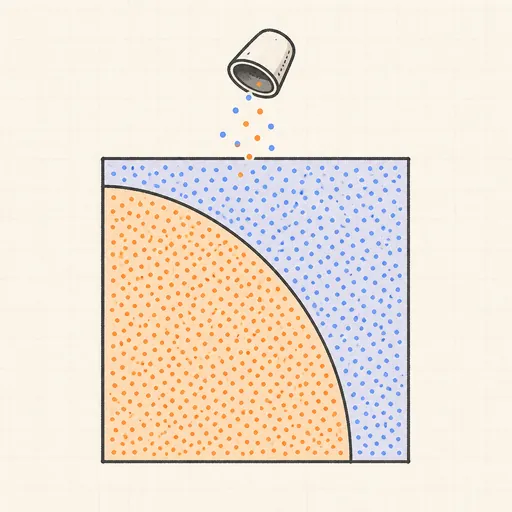
Monte Carlo Playground
One method, five demonstrations. Monte Carlo means answering a question by sampling at random and averaging, and this playground shows the same engine at work everywhere: darts rain onto a square to estimate π from the fraction landing in the circle, Buffon’s needles drop onto a lined floor and estimate π from the crossings, random points measure the area under a curve no formula is needed for, a thousand simulated market paths fan out to price the risk of a retirement portfolio, and a Monte Carlo tree search grows a visible game tree over six little games — tic-tac-toe and its treacherous misère twin, deep-and-narrow Nim, trap-laden Connect 3, dice-driven Pig and drawless Hex — with UCB spending playouts where they matter and exact solvers checking every verdict. Every mode drives the same pair of charts: the running estimate homing in on the true value, and the error falling on a log-log plot along the theoretical 1/√N line — quadruple the samples, halve the error.
Runs 100% in your browser — simulations are computed locally on your device.
Read the full guide to this tool
Notes
- The law of large numbers makes every panel work: the average of independent random samples converges to the expected value, so counting hits estimates any probability and averaging values estimates any integral.
- Monte Carlo error shrinks as 1/√N regardless of the problem — the same square-root law governs darts, needles, portfolios and game playouts. That slow but dimension-independent rate is exactly why the method rules high-dimensional problems where grids are hopeless.
- The game mode runs the real Monte Carlo tree search loop behind AlphaGo: descend the tree by UCB, expand one node, play out at random, back the result up. Each game exposes a different face of the algorithm — misère tic-tac-toe shows biased rollouts, Nim grows a deep needle-in-haystack tree, Connect 3 hides shallow traps, Pig adds chance nodes and Hex shows the draw-free games where MCTS shines.
- Runs 100% in your browser — simulations are computed locally on your device.
Related tools
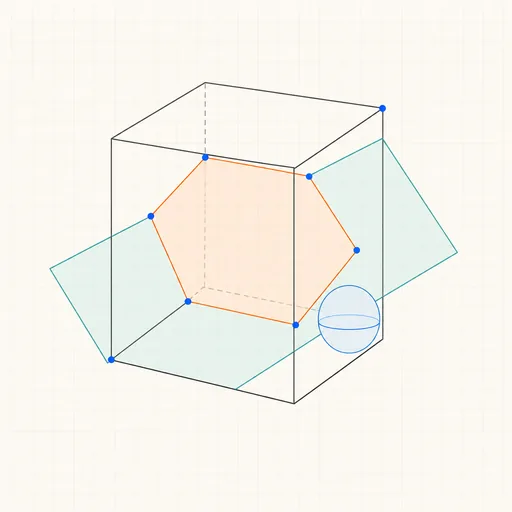
3D Geometry Board
Points, lines, planes, spheres and polyhedra on an orbiting camera — slice solids with planes, unfold nets, drop the Dandelin spheres into a cone and drag everything.
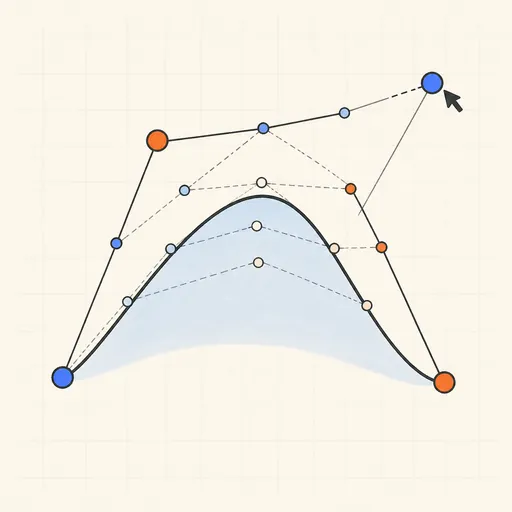
Bézier Curve Playground
Drag control points and watch De Casteljau’s algorithm construct a Bézier curve step by step.
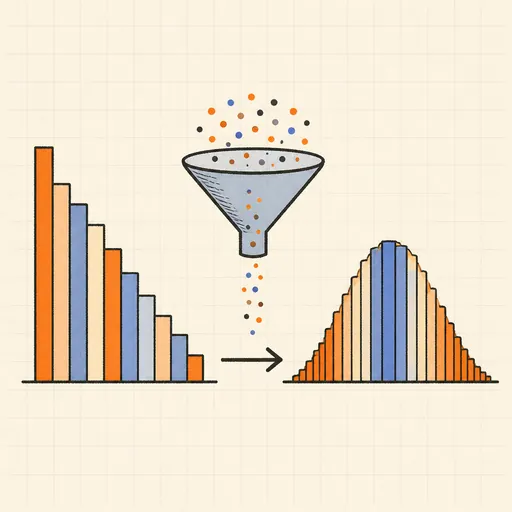
Central Limit Theorem Demo
Sample from any lopsided distribution and watch the averages pile up into a bell curve.
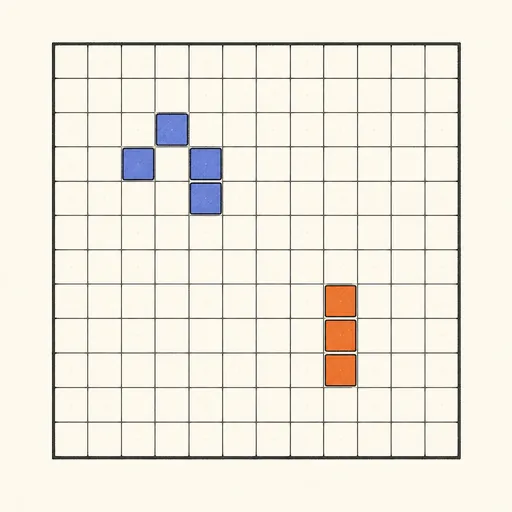
Conway’s Game of Life
Paint cells and watch Conway’s cellular automaton breed gliders, guns and oscillators.
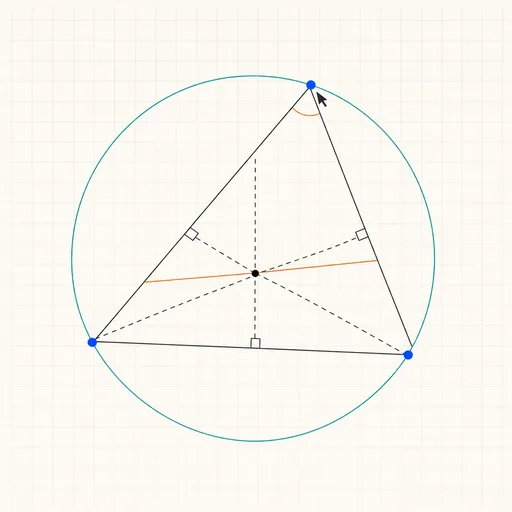
Dynamic Geometry Board
Construct with points, lines, circles and transformations, then drag anything — the construction stays true, and a checker tells you which relations are theorems.
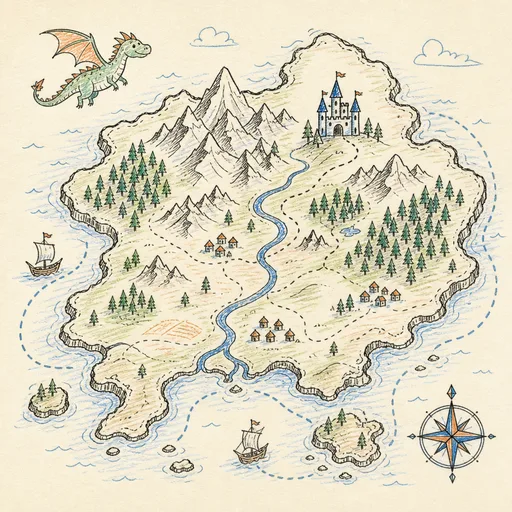
Fantasy Map Generator
Roll a seed and get a continent: coastlines, mountains, rivers, biomes and named towns, ready for your campaign.