3D Geometry Board
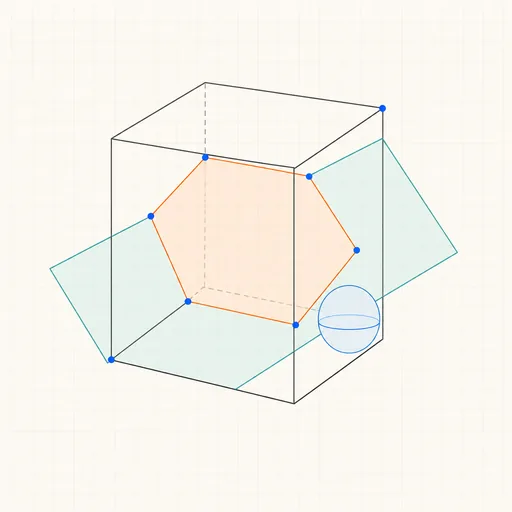
The plane geometry board lifted into space. Place points and build lines, segments, planes (through three points, perpendicular or parallel, bisecting a segment), spheres (centre and point, radius, four points), circles in space, polygons, the five Platonic solids, prisms, pyramids, cones and cylinders. Intersect anything with anything: two planes give a line, a plane and a sphere a circle, a plane and a polyhedron its cross-section, a plane and a cone a conic. The Dandelin tool inscribes the two spheres that touch a cutting plane and marks their tangent points, which are exactly the foci of the conic; put a point on the curve and watch the sum of its focal distances stay constant. A net object unfolds any convex solid along a spanning tree of its faces, driven by a slider. Reflect, rotate, translate and dilate objects, measure distances, angles between lines and planes, areas and volumes, and let the relation checker test collinearity, coplanarity, parallelism, perpendicularity and tangency under random legal moves. Orbit with the mouse, zoom with the wheel, drag free points across their horizontal plane or hold Shift to move them vertically; undo, autosave, share links and hosted embeds are built in.
Runs 100% in your browser — simulations are computed locally on your device.
Read the full guide to this tool
Notes
- The camera is orthographic: parallel lines stay parallel, spheres are drawn as true circles and lengths along any direction can be compared by eye. Drag empty space to orbit, right- or middle-drag (or Alt-drag) to pan, scroll to zoom; the Views menu snaps to top, front and side.
- Clicking on empty space puts a new point on the ground plane z = 0; clicking on a line, plane, sphere, circle or conic attaches a point to it. Use “Point by coordinates” for exact positions, with formulas allowed (0, 0, h).
- Cross-sections and nets need convex solids, which is what the built-in solids, prisms of convex polygons and pyramids are. Conics are sampled along 240 generators of the cone, so a hyperbola shows both nappes and is cut off where the generators leave the drawn part of the cone.
- The rendering is a painter’s algorithm on a 2D canvas: translucent faces are sorted by depth and drawn far to near. It handles the classroom cases well; two solids that interpenetrate can occasionally draw in the wrong order.
- Runs 100% in your browser — simulations are computed locally on your device.
Explore the idea
Related tools
Bézier Curve Playground
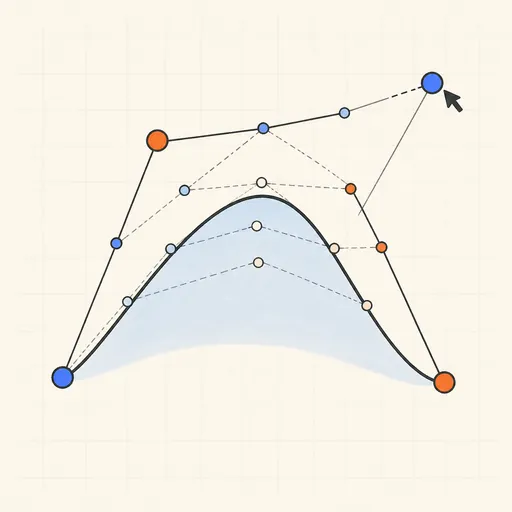
Drag control points and watch De Casteljau’s algorithm construct a Bézier curve step by step.
Central Limit Theorem Demo
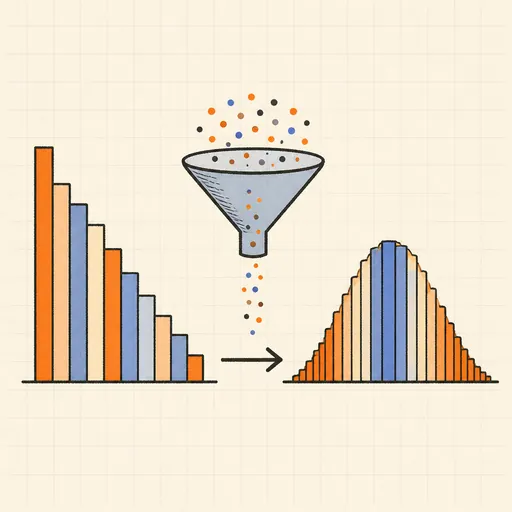
Sample from any lopsided distribution and watch the averages pile up into a bell curve.
Conway’s Game of Life
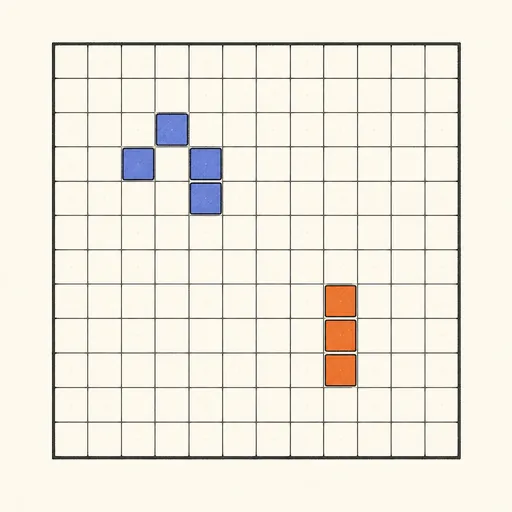
Paint cells and watch Conway’s cellular automaton breed gliders, guns and oscillators.
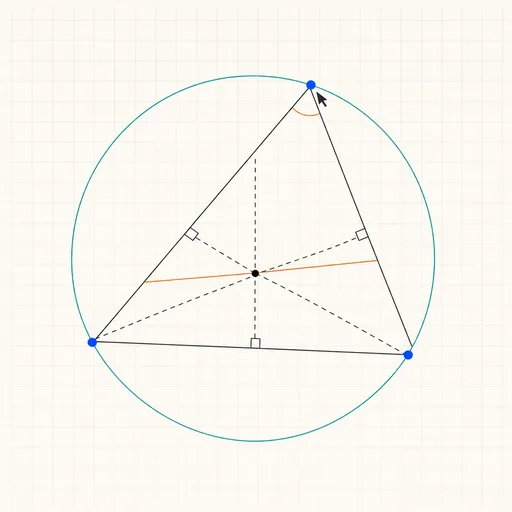
Dynamic Geometry Board
Construct with points, lines, circles and transformations, then drag anything — the construction stays true, and a checker tells you which relations are theorems.
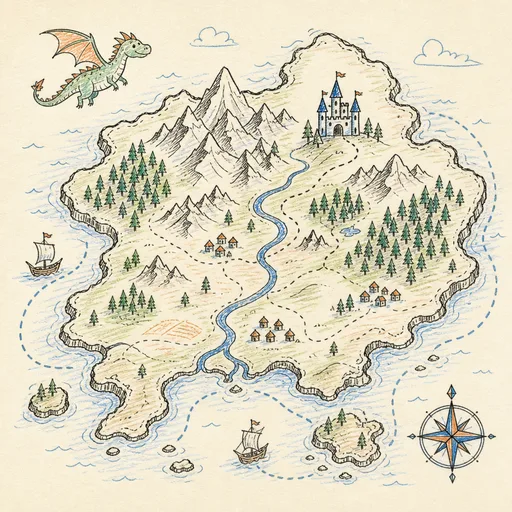
Fantasy Map Generator
Roll a seed and get a continent: coastlines, mountains, rivers, biomes and named towns, ready for your campaign.
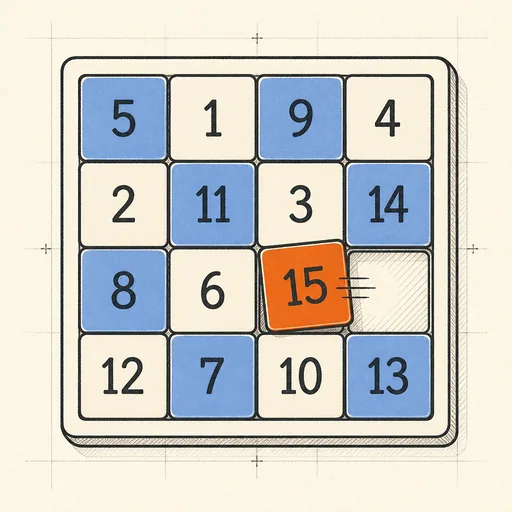
Fifteen Puzzle
Slide the tiles back into order — and learn the parity argument that makes half of all positions impossible.