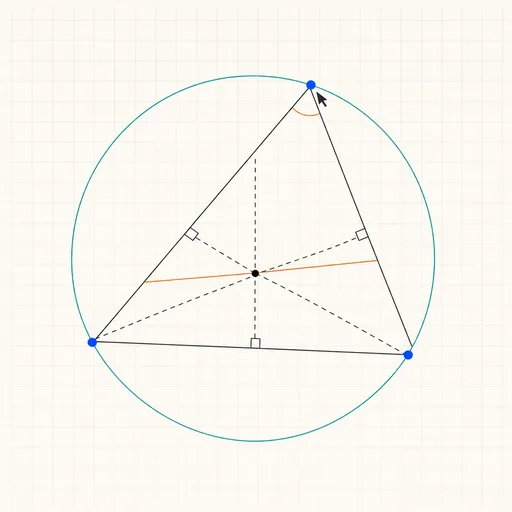
Dynamic Geometry Board
A GeoGebra-style construction board that runs in your browser. Place free points and build on them: lines, segments, rays and vectors, circles by centre and point or radius or three points, perpendiculars, parallels, bisectors and tangents, polygons and regular polygons, reflections, rotations, translations and dilations. Measure angles, lengths, areas and slopes, drive constructions with sliders and formulas, trace a point or draw its locus. Every dependent object is re-solved as you drag, so a midpoint stays a midpoint and a tangent stays tangent. Select a few objects and the relation checker tests collinearity, concurrency, parallelism, equal lengths, concyclicity and more — first in your drawing, then again under forty random legal moves of every free point, separating theorems from coincidences. The construction protocol, an algebra view with coordinates and equations, undo, autosave, shareable links and eleven classic constructions (Euler line, Simson line, Napoleon, Morley, Pappus, the ellipse as a locus) are built in.
Runs 100% in your browser — simulations are computed locally on your device.
Read the full guide to this tool
Notes
- Blue points are free and can be dragged; black points are constructed and follow their parents. Clicking on a line or circle attaches a new point to it; clicking on a crossing creates an intersection point.
- Intersections keep a fixed branch (ordered along the line, or by side of the centre line for two circles), so a construction does not flip when you drag through a tangent position — branches that vanish simply become undefined until they return.
- The relation checker is numerical: it re-solves the whole construction for random positions of the free points and compares to 10⁻⁷. That is overwhelming evidence, not a proof — but it reliably tells a theorem from a lucky drawing.
- Formulas use object names as variables: an angle α gives degrees, a segment its length, a circle its radius, a polygon its area; x(A), y(A) and dist(A,B) read points. Trigonometric functions take degrees.
- Runs 100% in your browser — simulations are computed locally on your device.
Explore the idea
Related tools
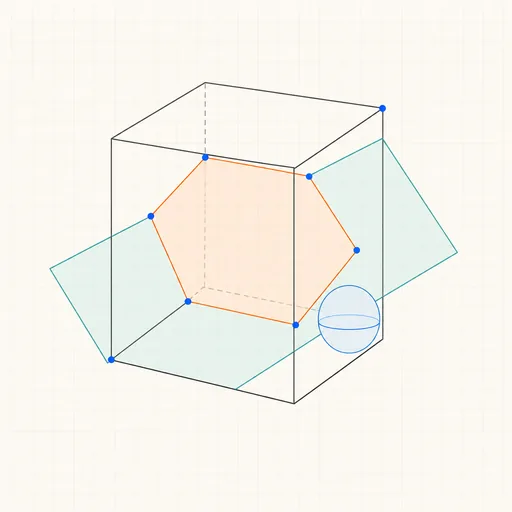
3D Geometry Board
Points, lines, planes, spheres and polyhedra on an orbiting camera — slice solids with planes, unfold nets, drop the Dandelin spheres into a cone and drag everything.
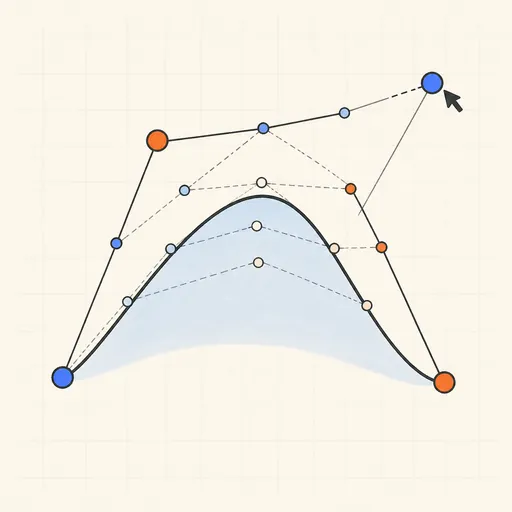
Bézier Curve Playground
Drag control points and watch De Casteljau’s algorithm construct a Bézier curve step by step.
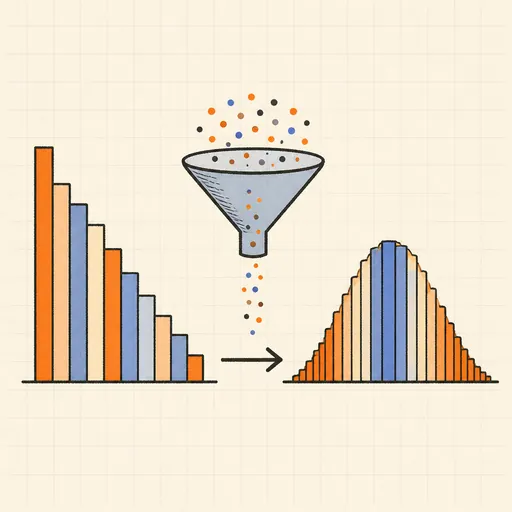
Central Limit Theorem Demo
Sample from any lopsided distribution and watch the averages pile up into a bell curve.
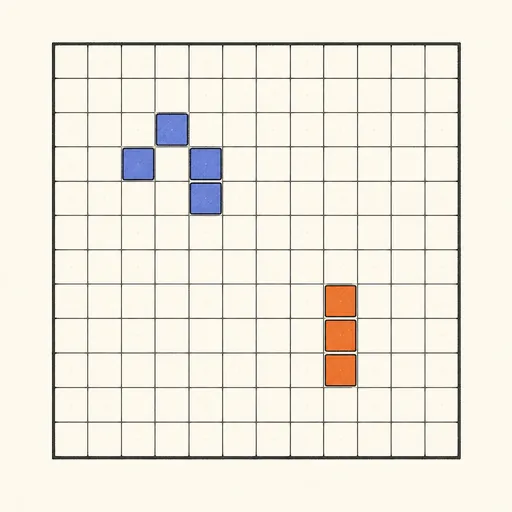
Conway’s Game of Life
Paint cells and watch Conway’s cellular automaton breed gliders, guns and oscillators.
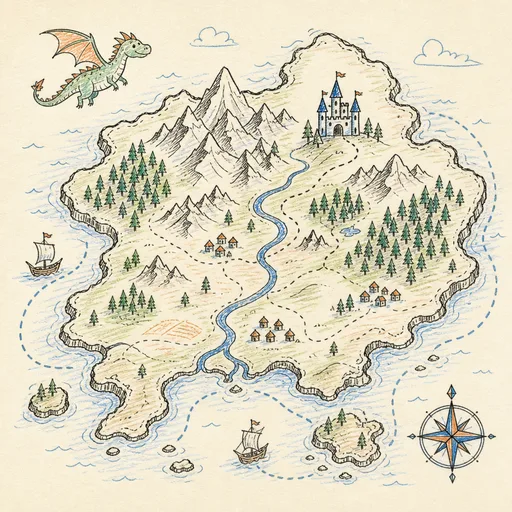
Fantasy Map Generator
Roll a seed and get a continent: coastlines, mountains, rivers, biomes and named towns, ready for your campaign.
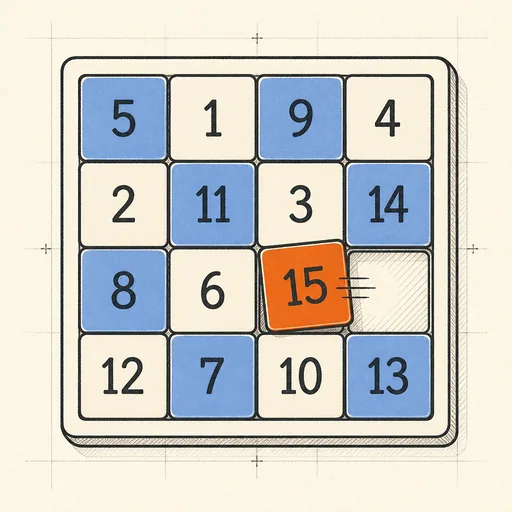
Fifteen Puzzle
Slide the tiles back into order — and learn the parity argument that makes half of all positions impossible.