Law of Large Numbers
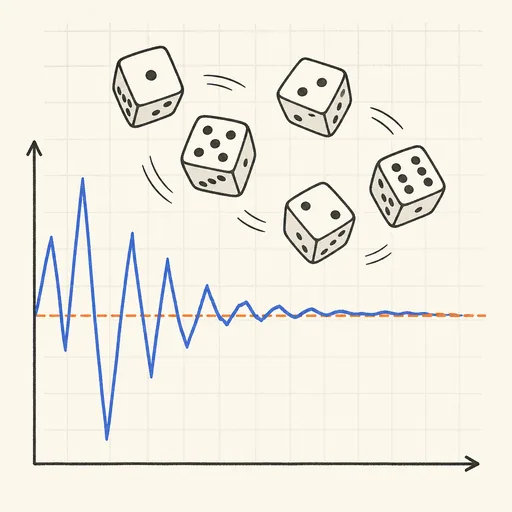
The law of large numbers says the average of many independent trials converges to the expected value. This simulator rolls a die, flips a coin or draws from a custom distribution thousands of times and plots the running mean homing in on its theoretical value, with the shrinking band around it showing how the fluctuations fall off like 1/√n. It makes the difference between the law of large numbers and the gambler’s fallacy concrete: the average settles, but the running total of heads minus tails keeps wandering.
Runs 100% in your browser — simulations are computed locally on your device.
Read the full guide to this tool
Notes
- The running mean converges to the expected value; the typical deviation from it shrinks like 1/√n.
- This is the weak law: the average is very likely close to the mean for large n, not guaranteed exactly equal.
- The gambler’s fallacy confuses this: past results never "balance out" — the count of heads minus tails can grow even as the average settles.
- Runs 100% in your browser — simulations are computed locally on your device.
Related tools
3D Geometry Board
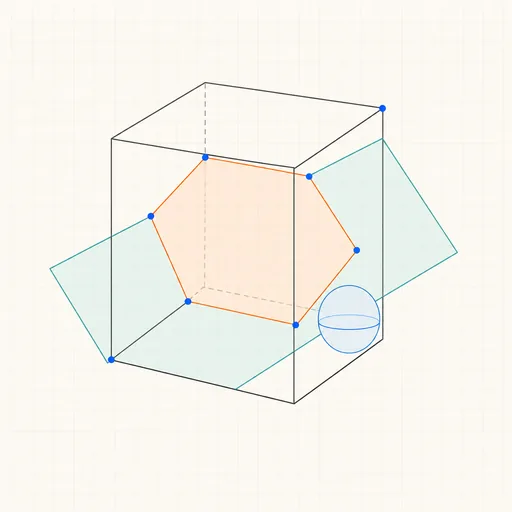
Points, lines, planes, spheres and polyhedra on an orbiting camera — slice solids with planes, unfold nets, drop the Dandelin spheres into a cone and drag everything.
Bézier Curve Playground
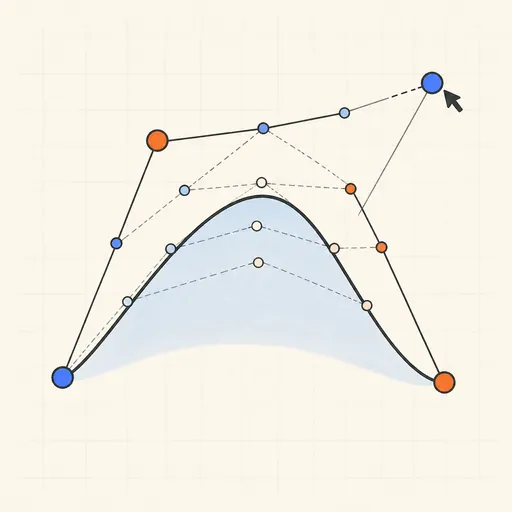
Drag control points and watch De Casteljau’s algorithm construct a Bézier curve step by step.
Central Limit Theorem Demo
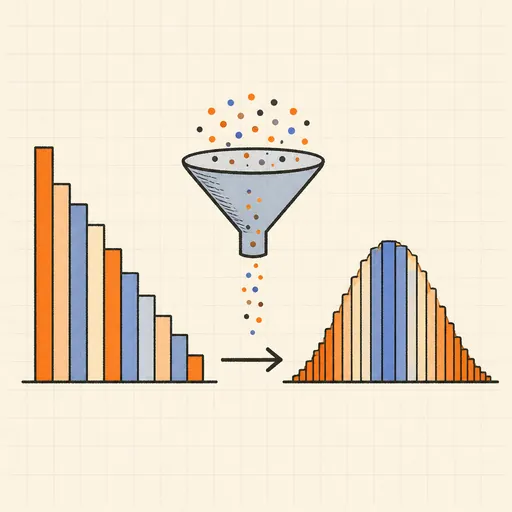
Sample from any lopsided distribution and watch the averages pile up into a bell curve.
Conway’s Game of Life
Paint cells and watch Conway’s cellular automaton breed gliders, guns and oscillators.
Dynamic Geometry Board
Construct with points, lines, circles and transformations, then drag anything — the construction stays true, and a checker tells you which relations are theorems.

Fantasy Map Generator
Roll a seed and get a continent: coastlines, mountains, rivers, biomes and named towns, ready for your campaign.