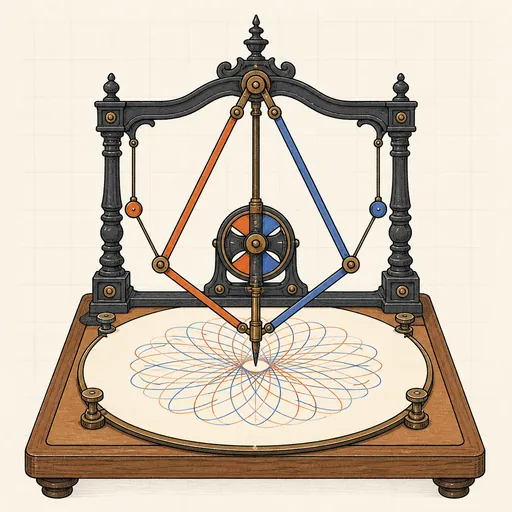
Harmonograph
The harmonograph is a Victorian drawing machine: pendulums swinging at slightly different frequencies drag a pen over paper, and friction slowly shrinks the swing so the curve spirals inwards. Here each axis is the sum of two damped sinusoids — the classic four-pendulum arrangement — and the curve draws itself stroke by stroke, glowing on dark paper with a slow hue drift along its length. Sliders set the x and y frequencies in fine steps, a detune that slides the twin frequencies apart, the two phases, the damping rate and the pen width. The Randomize button seeds pleasing near-integer frequency ratios with a whisper of detune, the current frequency ratio is reported live, Reset clears the paper and starts the drawing again, and finished figures export as a PNG.
Runs 100% in your browser — simulations are computed locally on your device.
Read the full guide to this tool
Notes
- Each coordinate follows x(t) = Σ aᵢ sin(fᵢt + φᵢ) e^(−dt); with zero damping the figures are Lissajous curves, closed whenever the frequency ratio is rational.
- A tiny detune makes the figure precess — every pass lands slightly rotated from the last, weaving the characteristic net-like shading of real harmonograph drawings.
- Devices of this kind appeared around the 1840s, usually credited to Hugh Blackburn, and became hugely popular parlour instruments for turning physics into art.
- Runs 100% in your browser — simulations are computed locally on your device.
Related tools
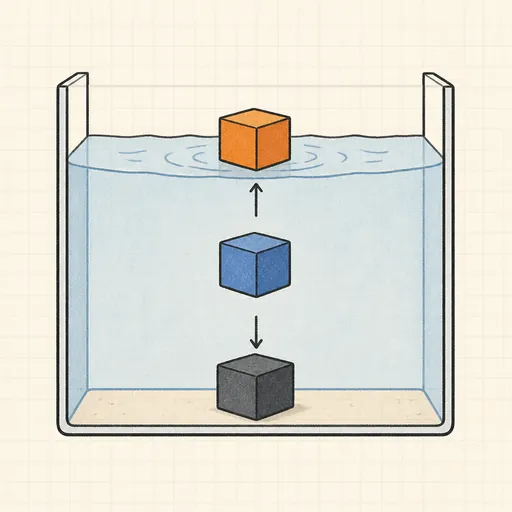
Buoyancy Tank
Drop blocks of different density into water and watch Archimedes decide what floats, sinks or hovers.
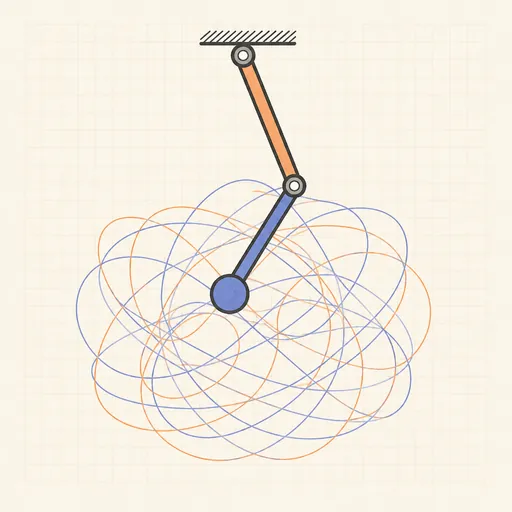
Double Pendulum
Swing a chaotic double pendulum and split it into a rainbow swarm to watch nearby starts diverge.
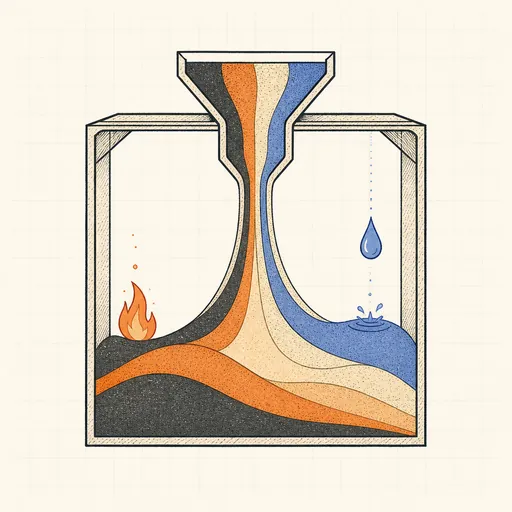
Falling-Sand Playground
Paint sand, water, oil, fire and more and watch them pour, settle, burn and react pixel by pixel.
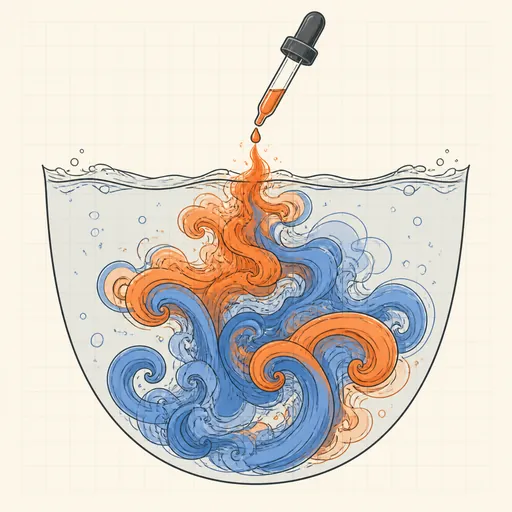
Fluid Flow Simulator
Stir glowing dye through a real-time GPU fluid simulation.
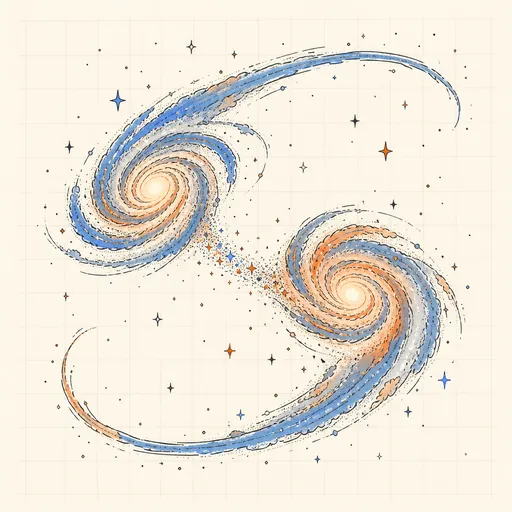
Galaxy Collision Simulator
Smash two spiral galaxies together and watch tidal tails and bridges form.
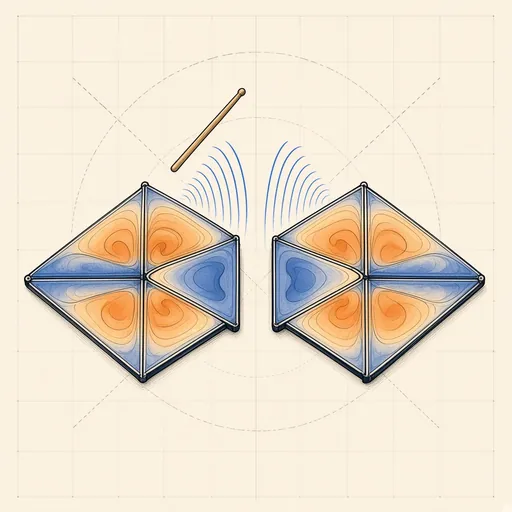
Hear the Shape of a Drum
Draw any drum and hear its true vibration modes — then meet two different drums that sound exactly the same.