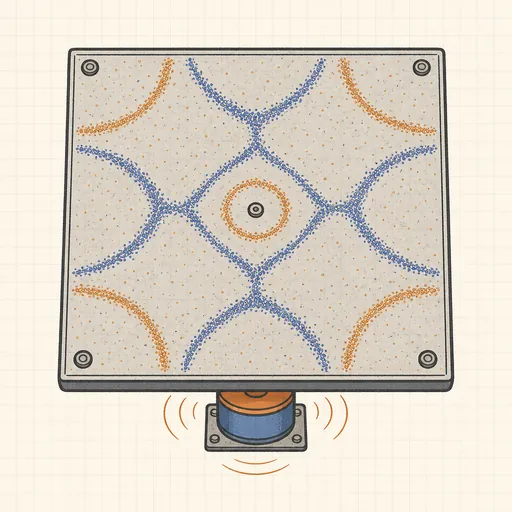
Chladni Plate Patterns
Sprinkle sand on a vibrating square plate and it collects on the nodal lines — the curves that stay still while everything around them shakes. The simulator uses the classic square-plate mode combination A(x,y) = cos(mπx)cos(nπy) − cos(nπx)cos(mπy) and lets thousands of grains random-walk with a step size proportional to the local vibration amplitude |A|, so they drift off the antinodes and settle where A = 0. Choose the mode numbers m and n with sliders, set the grain count and the vibration strength, or tick the sweep box to glide slowly through mode combinations and watch one pattern morph into the next. Warm sand-coloured grains glow on a dark plate, the current (m, n) pair is shown live, and the finished pattern exports as a PNG.
Runs 100% in your browser — simulations are computed locally on your device.
Read the full guide to this tool
Notes
- Ernst Chladni published the technique in 1787, drawing a violin bow across sand-dusted metal plates; the resulting figures made sound visible for the first time.
- On a square plate the modes (m, n) and (n, m) share a frequency, so any combination of them is also a standing wave — the minus combination used here produces the famous diagonal patterns.
- Sophie Germain won the Paris Academy prize in 1816 for the mathematics of vibrating plates, a competition prompted by Chladni’s demonstrations before Napoleon.
- Runs 100% in your browser — simulations are computed locally on your device.
Related tools
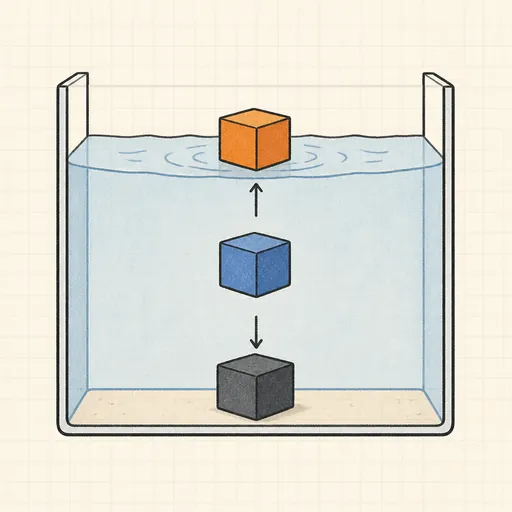
Buoyancy Tank
Drop blocks of different density into water and watch Archimedes decide what floats, sinks or hovers.
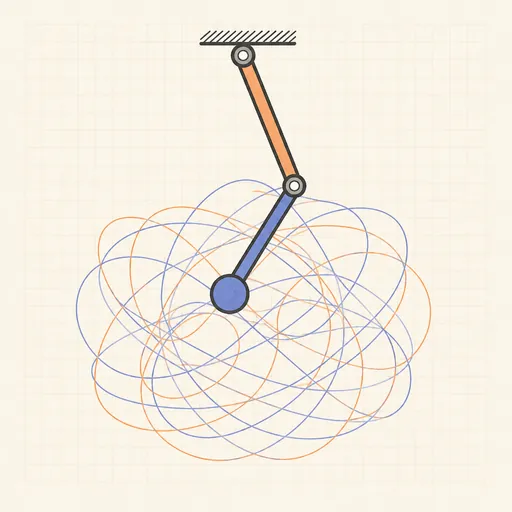
Double Pendulum
Swing a chaotic double pendulum and split it into a rainbow swarm to watch nearby starts diverge.
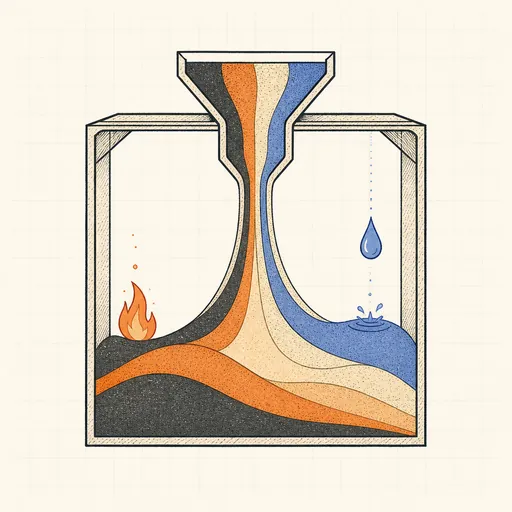
Falling-Sand Playground
Paint sand, water, oil, fire and more and watch them pour, settle, burn and react pixel by pixel.
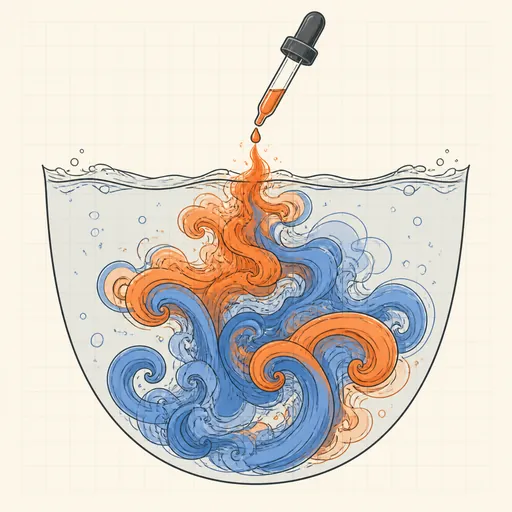
Fluid Flow Simulator
Stir glowing dye through a real-time GPU fluid simulation.
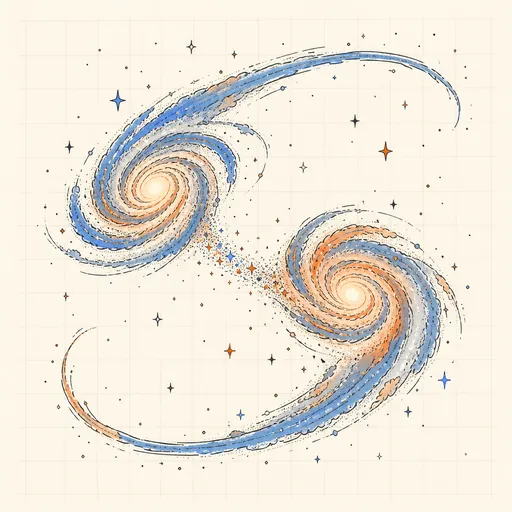
Galaxy Collision Simulator
Smash two spiral galaxies together and watch tidal tails and bridges form.
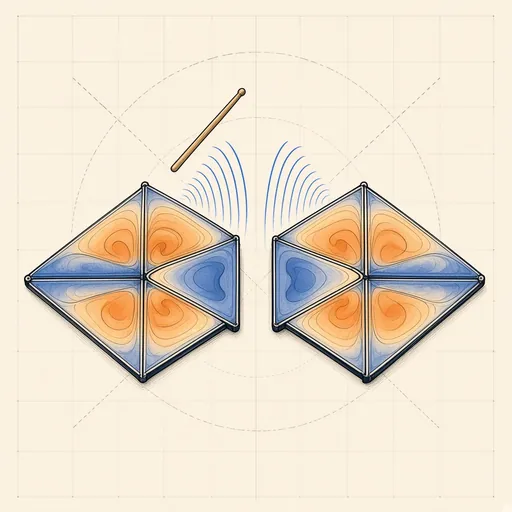
Hear the Shape of a Drum
Draw any drum and hear its true vibration modes — then meet two different drums that sound exactly the same.