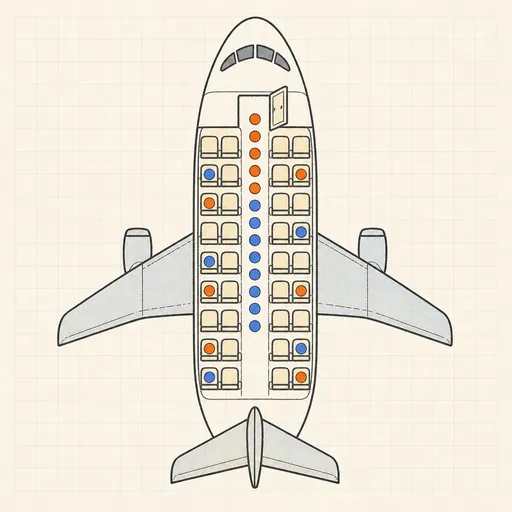
Airplane Boarding Simulator
A top-down cabin — narrowbody 3–3 or widebody 3–3–3 with two independent aisles — where passengers file in, stop to stow a bag, and trigger a seat shuffle whenever someone already seated blocks the window. Pick a boarding method (random, back-to-front blocks, front-to-back, WILMA, Steffen perfect or modified) and watch the aisle jam or flow. An aisle-block heat map shows where people stand idle longest; a luggage-stow toggle makes boarding time explode or collapse; patience/politeness slides from orderly queues into chaotic cutting. Compare races every method on the same seeded passengers and charts mean times; finish a run for a shareable result card. The result airlines keep ignoring: back-to-front is among the slowest orders, and random often beats it.
Runs 100% in your browser — simulations are computed locally on your device.
Read the full guide to this tool
Notes
- Boarding time is dominated by aisle interference: only passengers with free aisle space can stow bags in parallel, so a good order maximises simultaneous stowing, not tidiness.
- Back-to-front blocks feel organised but serialise the work — everyone in a block queues behind the same few rows while the rest of the cabin stands empty. The heat map lights up that rear-aisle jam.
- Steffen’s optimal order (back-to-front in alternate rows, window first, one side at a time) lets nearly every passenger stow luggage at once; in field trials it roughly halved boarding time.
- WILMA (window, then middle, then aisle) removes seat shuffles entirely and is the best order that survives contact with real passengers boarding in groups.
- Turning bag-stow delay off isolates pure aisle interference; turning it back on shows how luggage multiplies every jam.
- Runs 100% in your browser — simulations are computed locally on your device.
Related tools
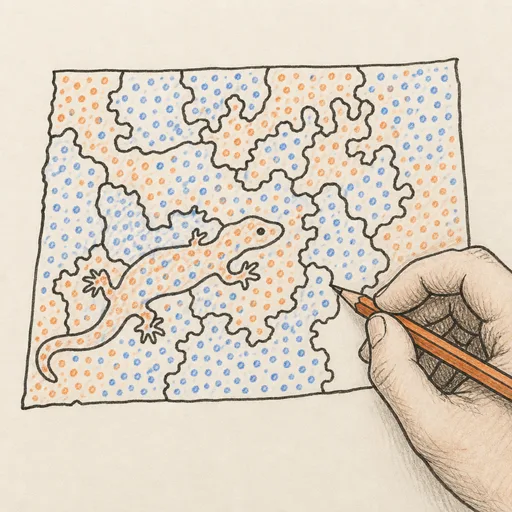
Gerrymandering Sandbox
Draw the districts yourself and watch the same voters produce opposite election results.
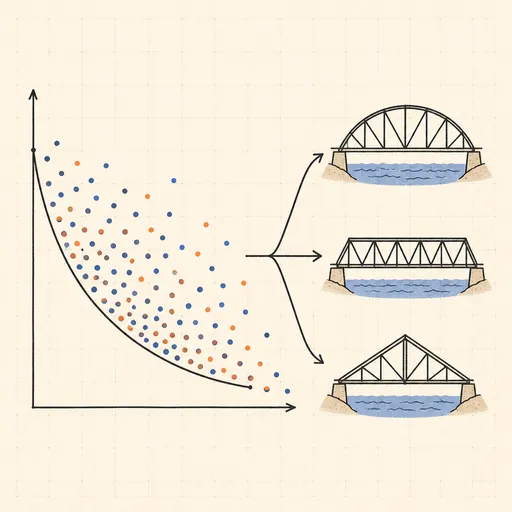
Pareto Frontier Evolution
Watch a genetic algorithm breed bridge designs and trace out the weight-vs-stiffness Pareto frontier, generation by generation.
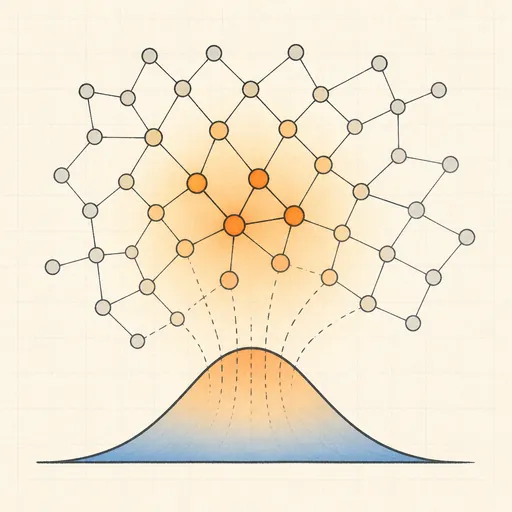
SIR Epidemic Simulator
Watch an epidemic spread and burn out with the classic susceptible–infected–recovered model.

Sailing & Tacking Simulator
Sail a boat against the wind — trim to the polar diagram, ride the shifts and race the optimal route.
Schelling’s Segregation Model
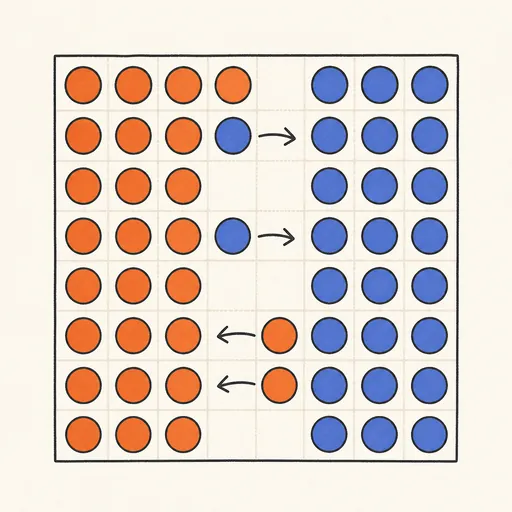
Give agents a mild preference for similar neighbours and watch a mixed city sort itself into stark blocks.
Traffic Jam Simulator
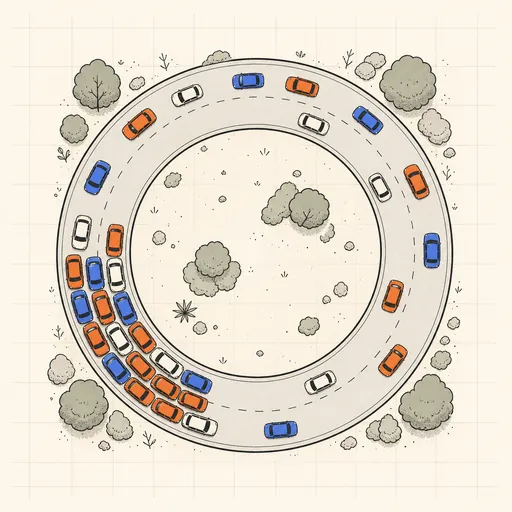
See phantom traffic jams appear from nothing on a ring road with the Nagel–Schreckenberg model.