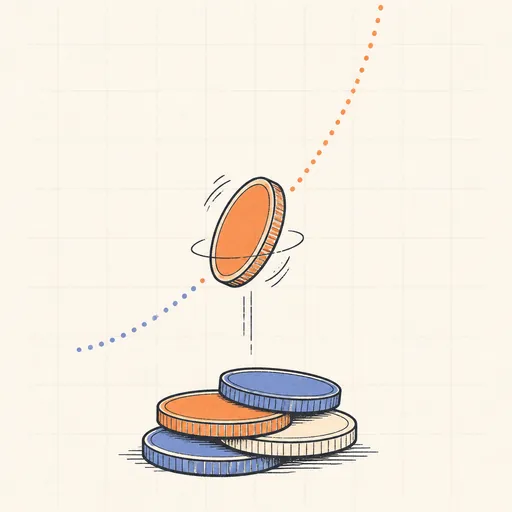
St. Petersburg Paradox
The St. Petersburg paradox is a lottery with infinite expected value that nobody would pay much to play. A fair coin is tossed until it lands heads; if the first head is on toss k the prize is 2^k. The expected prize is 1/2·2 + 1/4·4 + 1/8·8 + …, an infinite sum, yet most games pay just 2 or 4. This simulator plays the game over and over and tracks the running average payout, which drifts slowly upward without settling — growing roughly like the logarithm of the number of games — showing why expected value alone is a poor guide to what the game is worth.
Runs 100% in your browser — simulations are computed locally on your device.
Read the full guide to this tool
Notes
- The payout is 2^k when the first head appears on toss k, which happens with probability 1/2^k.
- Each term of the expected value contributes 1/2, so the sum diverges — the mean is infinite.
- The running average grows like log₂(N): the occasional huge jackpot keeps dragging it up, so it never converges.
- Runs 100% in your browser — simulations are computed locally on your device.
Related tools
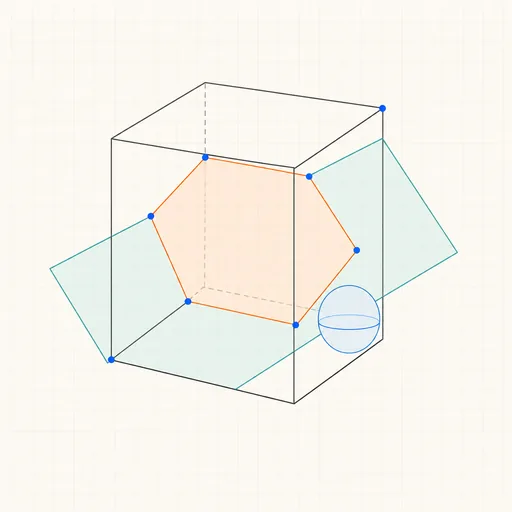
3D Geometry Board
Points, lines, planes, spheres and polyhedra on an orbiting camera — slice solids with planes, unfold nets, drop the Dandelin spheres into a cone and drag everything.
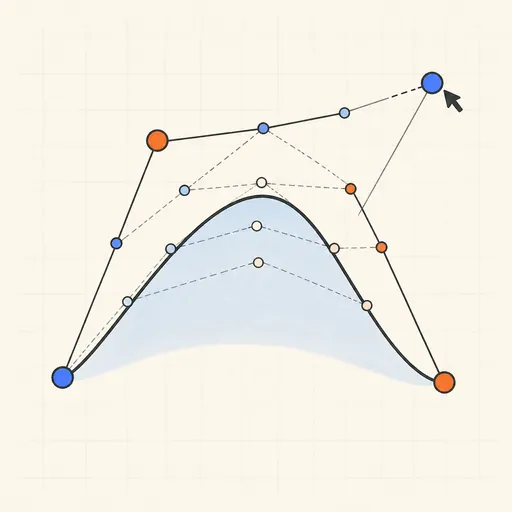
Bézier Curve Playground
Drag control points and watch De Casteljau’s algorithm construct a Bézier curve step by step.
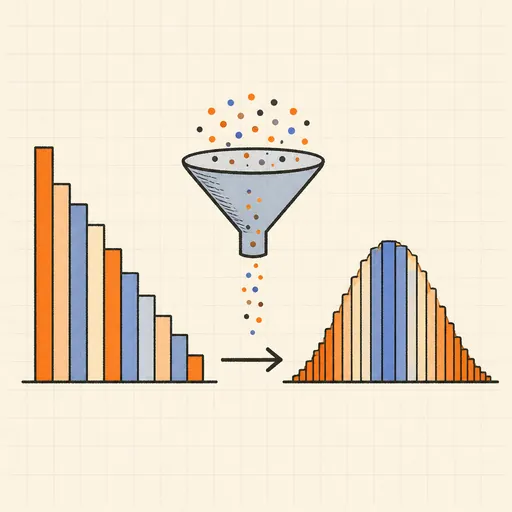
Central Limit Theorem Demo
Sample from any lopsided distribution and watch the averages pile up into a bell curve.
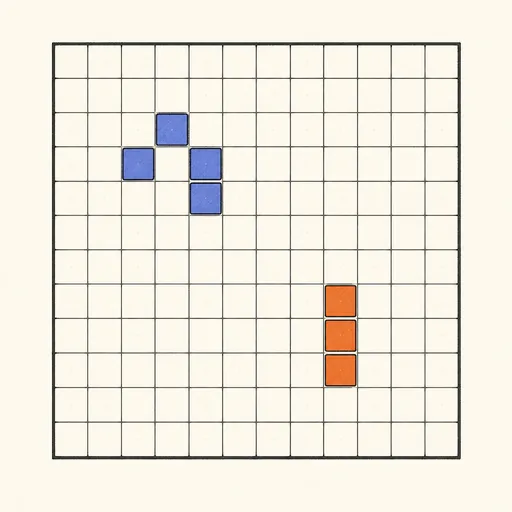
Conway’s Game of Life
Paint cells and watch Conway’s cellular automaton breed gliders, guns and oscillators.
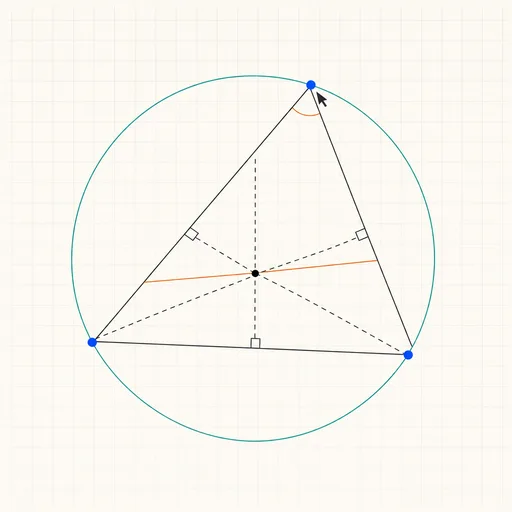
Dynamic Geometry Board
Construct with points, lines, circles and transformations, then drag anything — the construction stays true, and a checker tells you which relations are theorems.
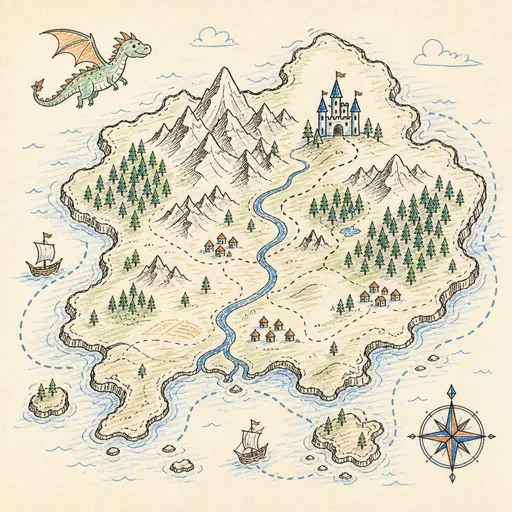
Fantasy Map Generator
Roll a seed and get a continent: coastlines, mountains, rivers, biomes and named towns, ready for your campaign.