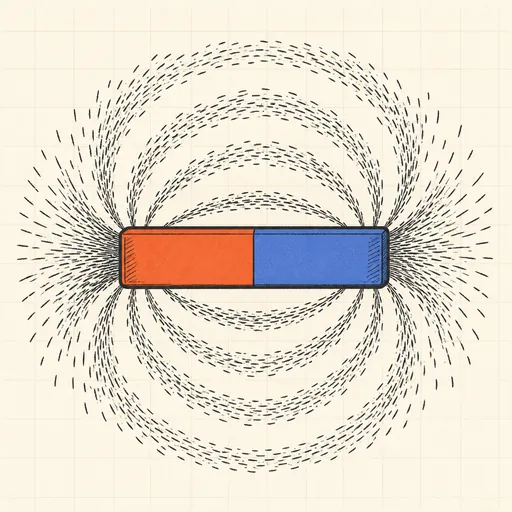
Magnetic Field Lines
Bar magnets on a dark board, visualised the way iron filings do it: thousands of tracer particles ride the local field direction — half along +B, half against it — leaving short glowing streaks that together sketch the field lines. Each magnet is a dipole modelled as a pair of opposite monopoles at its ends. Drag magnets around with the mouse or a finger and the pattern reorganises instantly; buttons add or remove a magnet and flip the polarity of the last one touched, so you can set up attraction, repulsion and multipole arrangements. Sliders set the tracer density, how quickly old streaks fade, and the field strength, which drives how fast the filings crawl. The magnets draw as red/blue N–S bars on top, and any frame exports as a PNG.
Runs 100% in your browser — simulations are computed locally on your device.
Read the full guide to this tool
Notes
- Each pole contributes a field falling off with the square of distance; superposition simply adds the vectors, so the pattern of several magnets is the sum of its parts.
- Field lines leave the north pole, enter the south and never cross; where the lines crowd together the field is strong.
- Michael Faraday introduced “lines of force” in the 1830s after studying exactly these iron-filing patterns — the concept that led Maxwell to field theory.
- Runs 100% in your browser — simulations are computed locally on your device.
Related tools
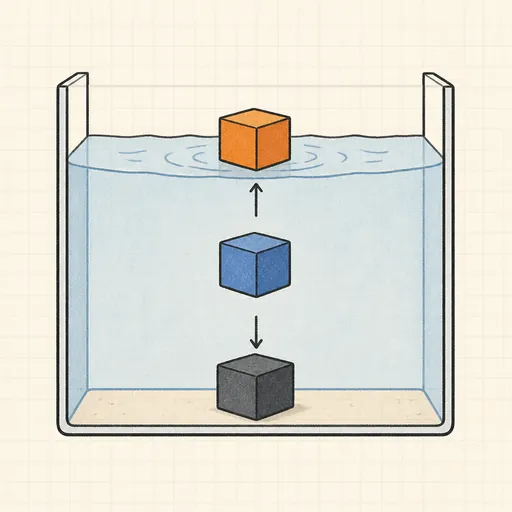
Buoyancy Tank
Drop blocks of different density into water and watch Archimedes decide what floats, sinks or hovers.
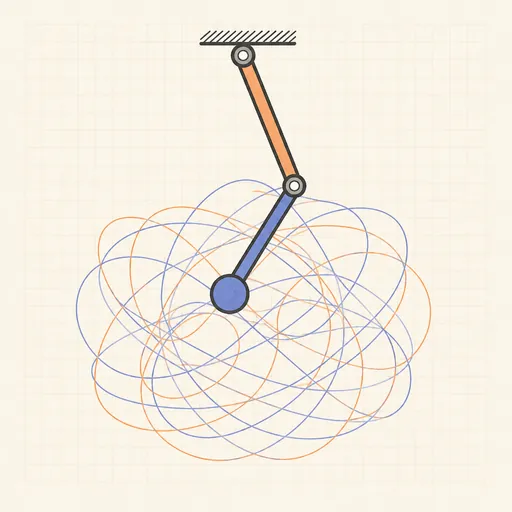
Double Pendulum
Swing a chaotic double pendulum and split it into a rainbow swarm to watch nearby starts diverge.
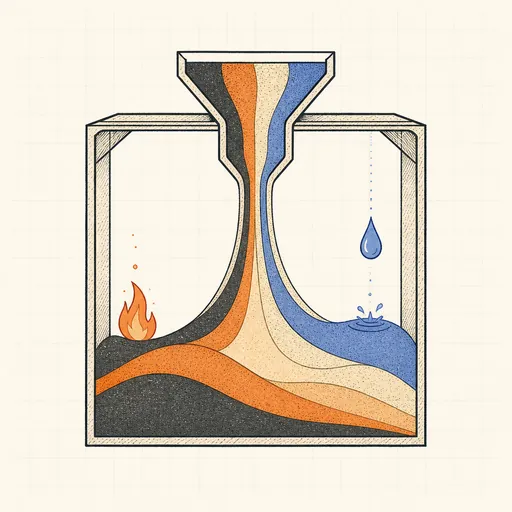
Falling-Sand Playground
Paint sand, water, oil, fire and more and watch them pour, settle, burn and react pixel by pixel.
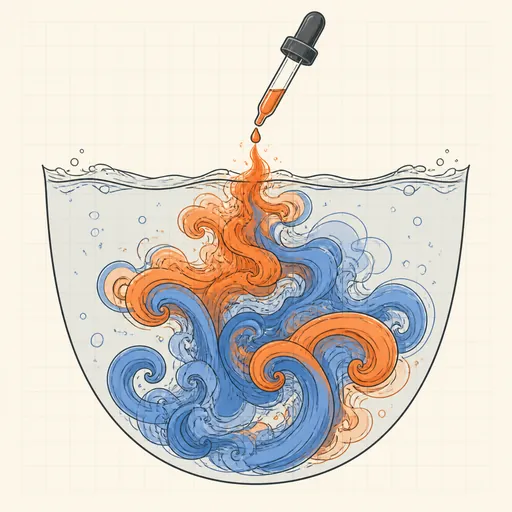
Fluid Flow Simulator
Stir glowing dye through a real-time GPU fluid simulation.
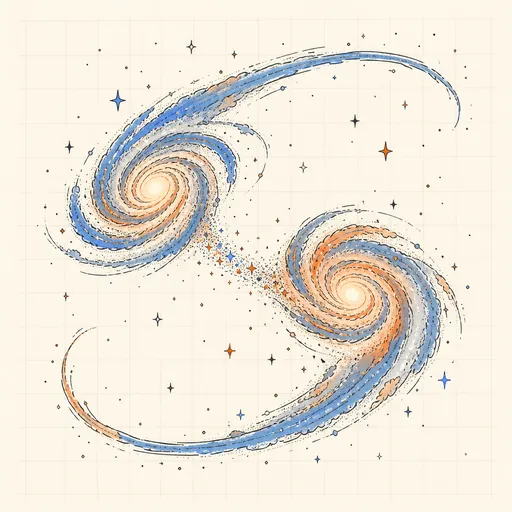
Galaxy Collision Simulator
Smash two spiral galaxies together and watch tidal tails and bridges form.
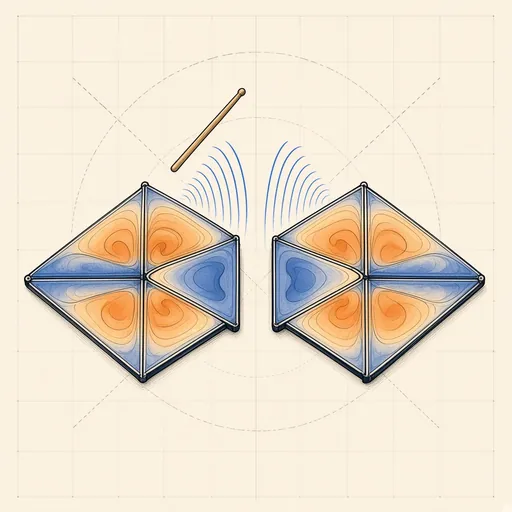
Hear the Shape of a Drum
Draw any drum and hear its true vibration modes — then meet two different drums that sound exactly the same.