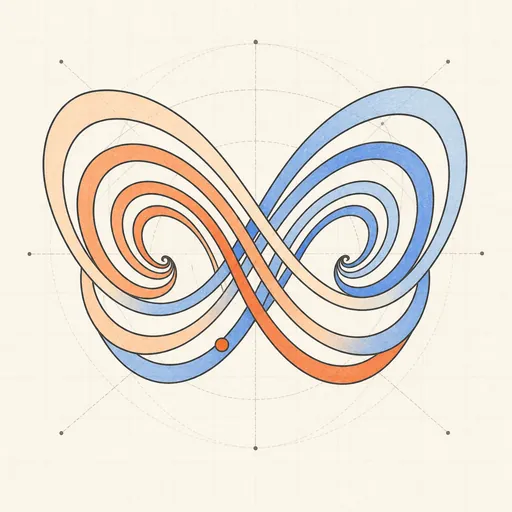
Lorenz Attractor
In 1963 Edward Lorenz stripped weather down to three equations and found something strange: the solution never repeats yet never escapes, looping forever on a butterfly-shaped surface. This tool integrates those equations and draws the trajectory as a glowing ribbon you can rotate in 3D. Release a swarm of nearby starting points and watch them track together, then peel apart onto different wings — the butterfly effect made visual. Drag the Rayleigh number ρ and the other parameters to move between a quiet fixed point and full chaos, switch to other classic attractors, and orbit the camera with the mouse.
Runs 100% in your browser — simulations are computed locally on your device.
Read the full guide to this tool
Notes
- The Lorenz system is dx/dt = σ(y − x), dy/dt = x(ρ − z) − y, dz/dt = xy − βz; with the classic σ=10, β=8/3, ρ=28 it never settles and never repeats.
- Two trajectories starting a millionth apart stay together briefly, then diverge exponentially onto opposite wings — sensitive dependence on initial conditions, the defining mark of chaos.
- The motion is deterministic and bounded yet unpredictable: it is trapped forever on the attractor but you cannot say which wing it will be on far ahead, which is why long-range weather forecasts are impossible.
- Runs 100% in your browser — simulations are computed locally on your device.
Related tools
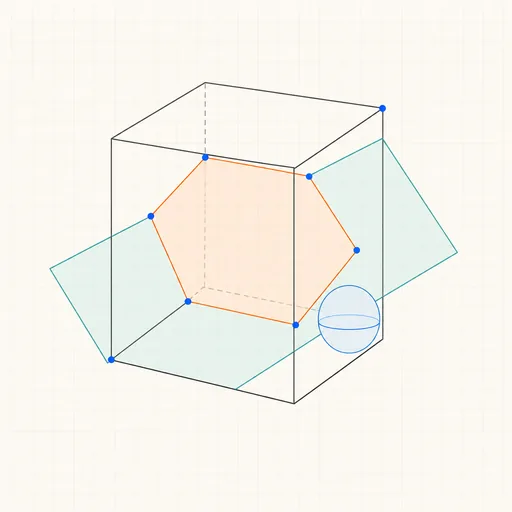
3D Geometry Board
Points, lines, planes, spheres and polyhedra on an orbiting camera — slice solids with planes, unfold nets, drop the Dandelin spheres into a cone and drag everything.
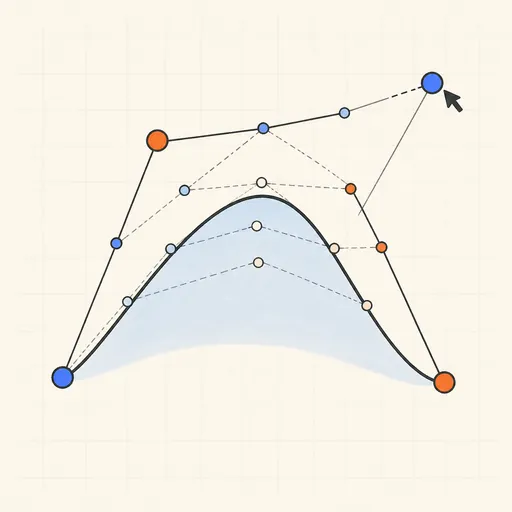
Bézier Curve Playground
Drag control points and watch De Casteljau’s algorithm construct a Bézier curve step by step.
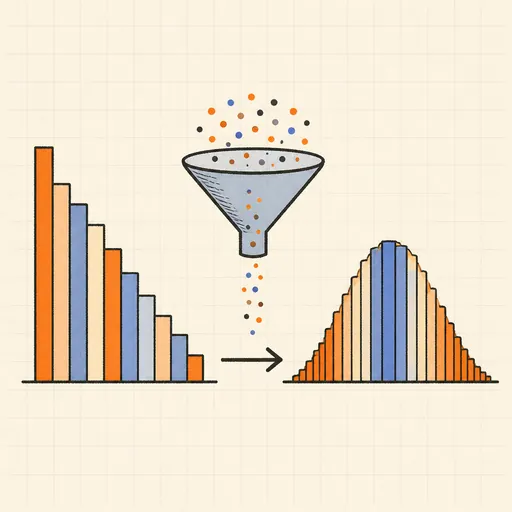
Central Limit Theorem Demo
Sample from any lopsided distribution and watch the averages pile up into a bell curve.
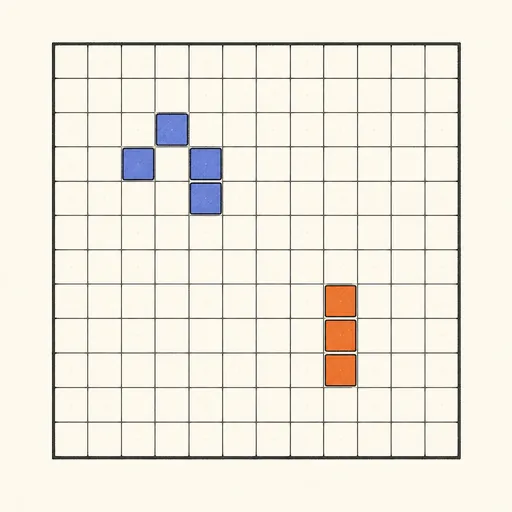
Conway’s Game of Life
Paint cells and watch Conway’s cellular automaton breed gliders, guns and oscillators.
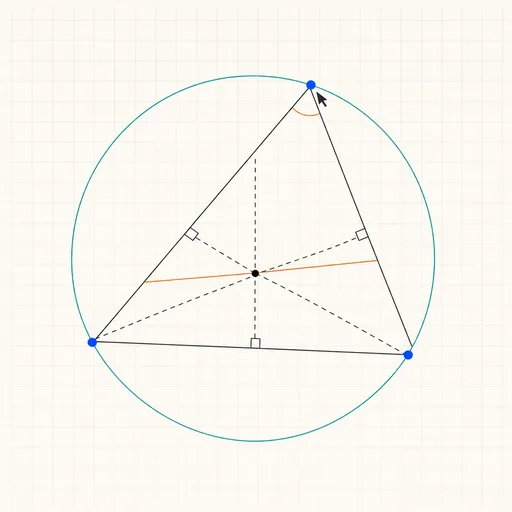
Dynamic Geometry Board
Construct with points, lines, circles and transformations, then drag anything — the construction stays true, and a checker tells you which relations are theorems.
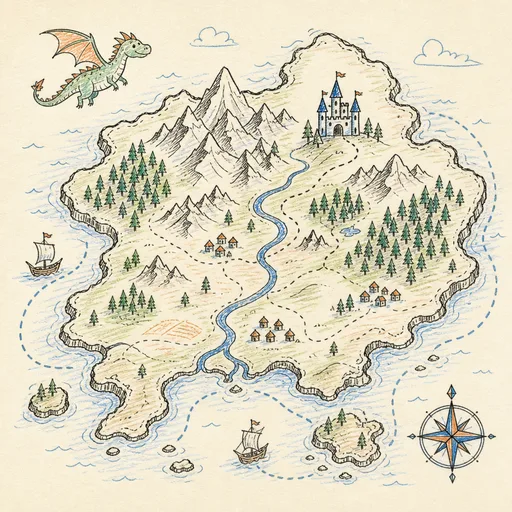
Fantasy Map Generator
Roll a seed and get a continent: coastlines, mountains, rivers, biomes and named towns, ready for your campaign.