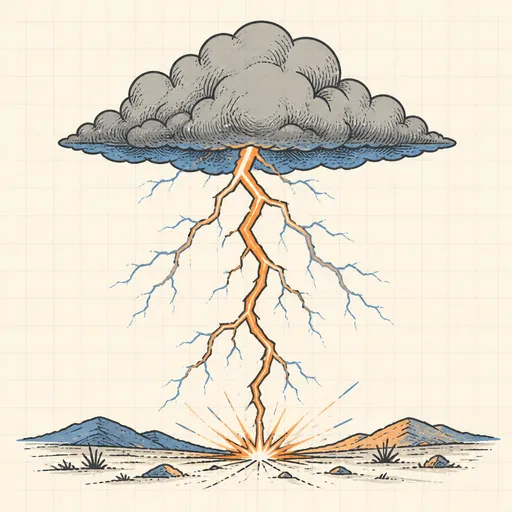
Lightning Simulator
A stepped leader creeps down from the top of the canvas the way a dielectric breakdown grows: the existing channel keeps a frontier of neighbouring candidate sites, and each growth step picks one at random, weighted by a potential-like bias toward the ground plus noise. The branchiness slider trades that bias against the noise — low values give one determined channel, high values a bushy crawling discharge. When a branch touches the ground the screen flashes, the main channel traced back to the root lights up as a brilliant return stroke, and the whole bolt afterglows and fades while a new leader starts. Growth speed, glow persistence and flash intensity are adjustable, everything renders violet-white with additive glow on near-black, and a counter tallies the strikes.
Runs 100% in your browser — simulations are computed locally on your device.
Read the full guide to this tool
Notes
- Real stepped leaders descend in ~50 m jumps at around 10⁵ m/s; the visible flash is the return stroke racing back up the ionised channel at about a third of the speed of light, carrying ~30 kA.
- The dielectric breakdown model (Niemeyer, Pietronero & Wiesmann, 1984) grows each site with probability ∝ (local field)^η; η plays the role of the branchiness control, and η = 1 gives a fractal discharge of dimension ≈ 1.7.
- A lightning channel heats to roughly 30,000 K — five times the surface of the sun — and the explosive expansion of that heated air is what we hear as thunder.
- Runs 100% in your browser — simulations are computed locally on your device.
Related tools
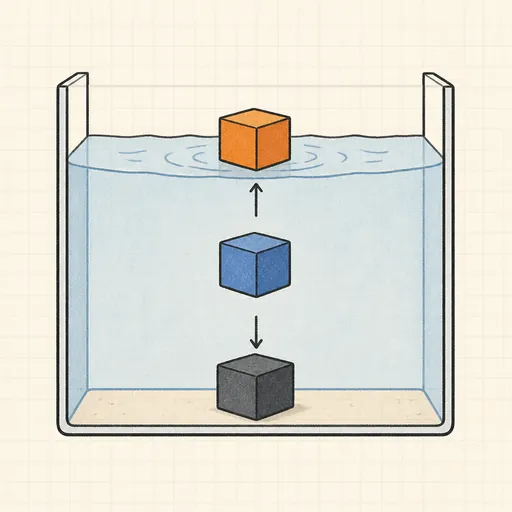
Buoyancy Tank
Drop blocks of different density into water and watch Archimedes decide what floats, sinks or hovers.
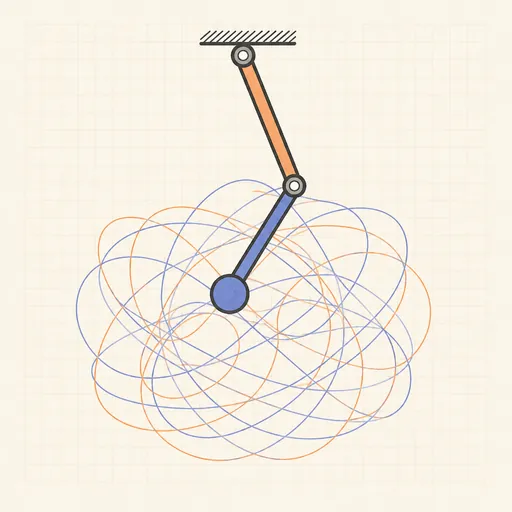
Double Pendulum
Swing a chaotic double pendulum and split it into a rainbow swarm to watch nearby starts diverge.
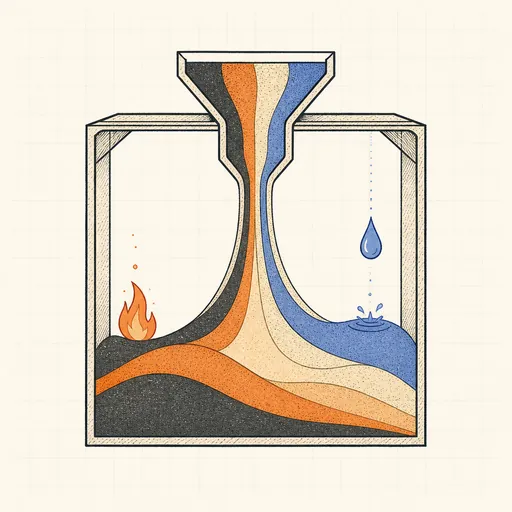
Falling-Sand Playground
Paint sand, water, oil, fire and more and watch them pour, settle, burn and react pixel by pixel.

Fluid Flow Simulator
Stir glowing dye through a real-time GPU fluid simulation.
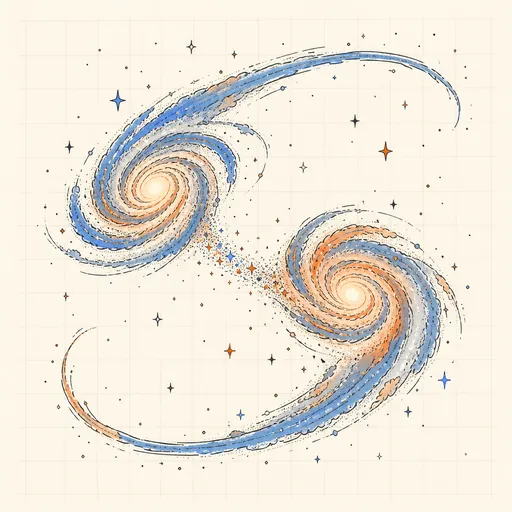
Galaxy Collision Simulator
Smash two spiral galaxies together and watch tidal tails and bridges form.
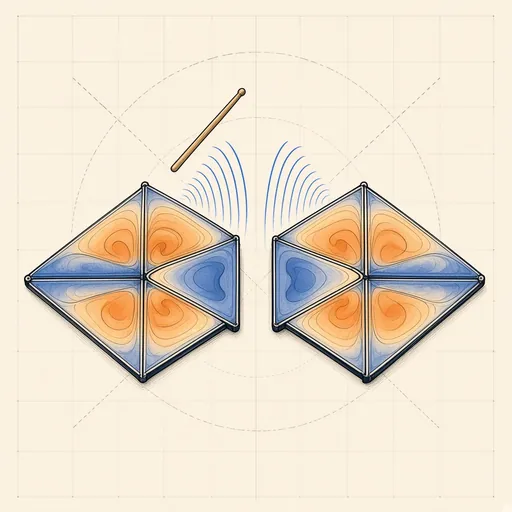
Hear the Shape of a Drum
Draw any drum and hear its true vibration modes — then meet two different drums that sound exactly the same.