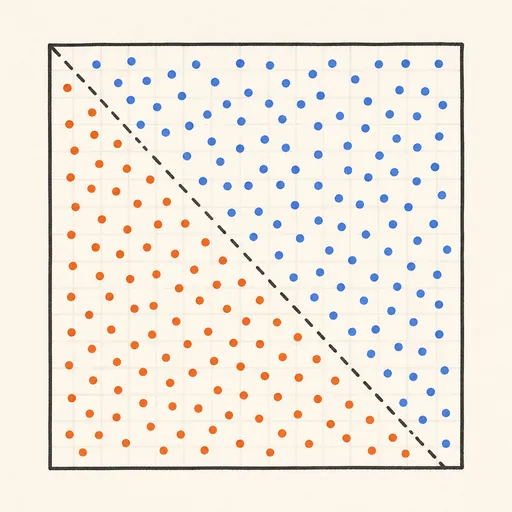
Berkson’s Paradox
Why do the handsome ones seem to be jerks? Why do hospital patients show diseases correlating that don’t correlate in the street? Berkson’s paradox: selection manufactures correlation. This simulator scatters N points with two independent traits (a slider sets the true correlation, zero by default) and applies a selection rule — keep anyone whose traits sum above a threshold, or the top k by total. Inside the selected group the correlation turns sharply negative: among those who cleared the bar, being high on one trait means the other didn’t need to be. Both correlations are displayed with their regression lines, a toggle dims the rejected points to show the world as the selector sees it, and presets tell the classic stories — the dating filter, hospital comorbidity, and talented-versus-attractive actors.
Runs 100% in your browser — simulations are computed locally on your device.
Read the full guide to this tool
Notes
- Conditioning on a collider creates dependence: if selection depends on x + y, then within the selected set knowing x is high tells you y could afford to be low — a negative correlation born entirely from the cut.
- Berkson described it in 1946 for hospital studies: two diseases that are independent in the population correlate among inpatients, because having either raises the chance of admission.
- The dating-pool version: if people must be attractive or kind enough (in sum) to date at all, then within the pool attractiveness predicts less kindness — even when the traits are independent in humanity at large.
- The cure is knowing your denominator: every dataset gathered through a filter — admissions, hiring, publication — carries built-in correlations that say more about the filter than about the world.
- Runs 100% in your browser — simulations are computed locally on your device.
Related tools
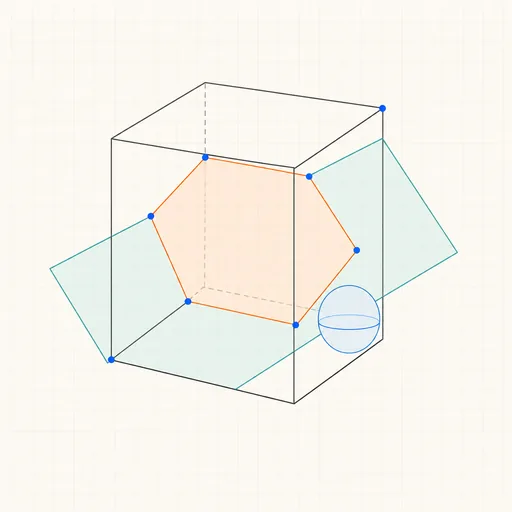
3D Geometry Board
Points, lines, planes, spheres and polyhedra on an orbiting camera — slice solids with planes, unfold nets, drop the Dandelin spheres into a cone and drag everything.
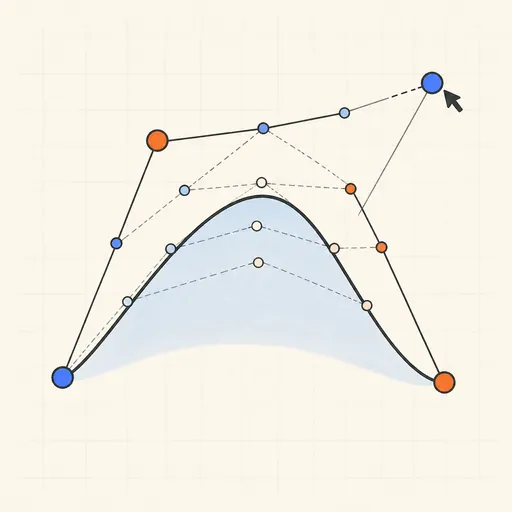
Bézier Curve Playground
Drag control points and watch De Casteljau’s algorithm construct a Bézier curve step by step.
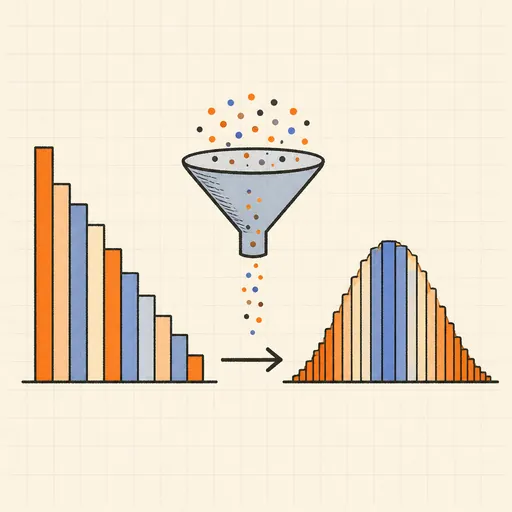
Central Limit Theorem Demo
Sample from any lopsided distribution and watch the averages pile up into a bell curve.
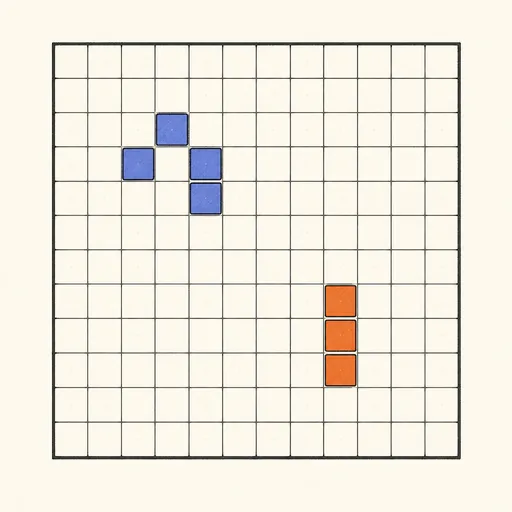
Conway’s Game of Life
Paint cells and watch Conway’s cellular automaton breed gliders, guns and oscillators.
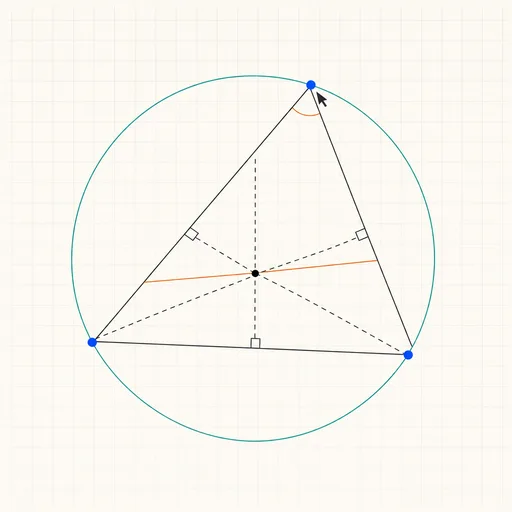
Dynamic Geometry Board
Construct with points, lines, circles and transformations, then drag anything — the construction stays true, and a checker tells you which relations are theorems.

Fantasy Map Generator
Roll a seed and get a continent: coastlines, mountains, rivers, biomes and named towns, ready for your campaign.