Free Fall, Explained
After reading this you can predict how long an object takes to fall from any height, how fast it lands, and where the simple formula stops matching reality.
Drop a stone off a 20 meter cliff. It hits the ground about 2.0 seconds later, moving at roughly 20 meters per second (72 km/h). Those two numbers come from one idea: near a planet's surface, gravity gives every falling object the same downward acceleration, regardless of its mass. A bowling ball and a marble released together land together, as long as air does not interfere.
This article shows where t and the landing speed v come from, how to run the numbers by hand, and why a real skydiver never actually reaches the speeds these formulas predict.
What free fall means
Free fall is motion under gravity alone. No thrust, no lift, no drag. The only force is the planet pulling the object down, so the object accelerates at a constant rate g.
On Earth's surface, g \approx 9.81 m/s². That number is an acceleration: every second, a falling object gains about 9.81 m/s of downward speed. After 1 second it moves at 9.81 m/s, after 2 seconds at 19.62 m/s, after 3 seconds at 29.43 m/s. The speed grows linearly with time.
- Acceleration due to gravity (g)
- How quickly downward speed increases. Earth 9.81 m/s², Moon 1.62 m/s², Mars 3.72 m/s².
- Fall height (h)
- Vertical distance from release point to landing point, in meters.
- Impact speed (v)
- How fast the object is moving the instant it lands.
When this model applies, and when it does not
Use the free-fall formulas when the object is dense and compact and the fall is short: a dropped tool, a coin, a steel ball, a stone off a bridge. In those cases air resistance changes the answer by a fraction of a percent.
Do not trust these numbers for light or spread-out objects, or for very long falls. A sheet of paper, a feather, a parachute, a skydiver: all are dominated by air drag. A human body falling belly-down levels off near 55 m/s (about 200 km/h) and never goes faster no matter how high the jump. The idealized formula, by contrast, would predict 55 m/s after only about 5.6 seconds and keep climbing without limit.
The formulas here assume the object starts from rest and falls straight down. If you throw it downward or sideways, the starting speed changes the result. For an object launched at an angle, use the Projectile Motion Calculator instead.
The formulas and where they come from
Start with constant acceleration from rest. Speed is acceleration multiplied by time:
Here v is speed in m/s, g is the gravitational acceleration in m/s², and t is elapsed time in seconds. This is just the definition of acceleration rearranged.
Distance fallen is the average speed multiplied by time. The object starts at 0 and ends at v = g t, so its average speed is \tfrac{1}{2} g t. Multiply by time:
This is the key relationship. Height grows with the square of time. That single fact explains most of what feels surprising about falling.
Often you know the height and want the time. Solve for t:
And combining the two, you can get the impact speed straight from the height without computing time first:
Because height depends on t^2, doubling the fall time makes the object fall four times as far. Turned around: to fall four times higher, you need only twice the time. A fall from 5 m takes about 1.01 s; a fall from 20 m (4 times higher) takes about 2.02 s, exactly double.
A worked example: 20 meters on Earth
Dropping a stone from 20 m
Use the tool defaults: height 20 m, gravity 9.81 m/s², mode set to fall height.
- Fall time: t = \sqrt{\dfrac{2 \cdot 20}{9.81}} = \sqrt{\dfrac{40}{9.81}} = \sqrt{4.077} \approx 2.019 s.
- Impact speed from time: v = 9.81 \times 2.019 \approx 19.81 m/s.
- Check with the direct formula: v = \sqrt{2 \cdot 9.81 \cdot 20} = \sqrt{392.4} \approx 19.81 m/s. Both routes agree.
- Convert to everyday units: 19.81 m/s is about 71.3 km/h or 44.3 mph.
So the stone falls for about 2.0 seconds and lands at roughly 20 m/s. If you had entered 2 s in fall-time mode instead, the tool would return h = \tfrac{1}{2}(9.81)(2^2) = 19.62 m, the height that produces a 2-second fall.
The chart below shows how height and speed each build up during those two seconds.
Changing the gravity changes everything
The same 20 m drop plays out very differently on other worlds. Because t = \sqrt{2h/g}, weaker gravity means a longer, slower fall.
| Body | g (m/s²) | Fall time (s) | Impact speed (m/s) | Impact speed (km/h) |
|---|---|---|---|---|
| Earth | 9.81 | 2.019 | 19.81 | 71.3 |
| Mars | 3.72 | 3.279 | 12.20 | 43.9 |
| Moon | 1.62 | 4.969 | 8.049 | 28.98 |
On the Moon the same drop takes almost 5 seconds and lands at about 8 m/s, gentle enough to catch. Notice the pattern: cutting g from 9.81 to 1.62 (about a factor of 6) stretches the time by \sqrt{6} \approx 2.45, from 2.02 s to 4.97 s. The square root softens the effect.
Reading and interpreting the results
Two numbers come back: the fall time and the impact speed. A few habits keep you honest with them.
Check the impact speed against something familiar. At 20 m/s you are moving at about the speed of a car on a residential street. A fall from 45 m gives v = \sqrt{2 \cdot 9.81 \cdot 45} \approx 29.7 m/s, roughly highway speed. If your answer comes back at 300 m/s from a 5 m drop, you made an arithmetic slip.
Remember the direction of the square root. Time and speed both scale with \sqrt{h}, not with h. A fall from 100 m is 5 times higher than from 20 m, but the time only grows by \sqrt{5} \approx 2.24, from 2.02 s to 4.52 s. People routinely overestimate how much longer a tall fall takes.
To sanity-check any Earth fall in your head: t \approx 0.45 \sqrt{h} and v \approx 4.43 \sqrt{h}. For 20 m that gives t \approx 0.45 \cdot 4.47 = 2.0 s and v \approx 4.43 \cdot 4.47 = 19.8 m/s.
Common mistakes
Assuming heavier objects fall faster. They do not, in the idealized model. Mass cancels out of Newton's second law here: the gravitational force is proportional to mass, but so is the resistance to acceleration, so g is the same for everyone. A hammer and a feather dropped in a vacuum land together, as the Apollo 15 crew demonstrated on the Moon.
Ignoring air resistance on long falls. The formulas have no upper speed limit, but the atmosphere does. The tool's impact speed for a 1000 m skydive comes out at \sqrt{2 \cdot 9.81 \cdot 1000} \approx 140 m/s, which is more than double the real terminal speed of about 55 m/s. Trust the free-fall value only until drag becomes significant, roughly the first second or two for a human.
Confusing initial speed with zero. These formulas assume the object starts at rest. If it is already moving downward at release, add that starting speed: v = v_0 + g t and h = v_0 t + \tfrac{1}{2} g t^2.
Unit slips. Keep everything in meters, seconds and m/s² until the end. Mixing feet and meters, or reporting speed in km/h while treating it as m/s, is the most frequent source of a wrong answer.
Related tools
Free fall is one slice of mechanics. These calculators cover the neighboring problems:
- Projectile Motion Calculator for objects thrown at an angle, where horizontal and vertical motion combine.
- Beam Deflection Calculator for how far a loaded beam bends, a static counterpart to these dynamic problems.
- Gear Ratio Calculator for turning rotation speed into torque in a drive train.
- Wavelength and Frequency Converter for waves, using \lambda = v/f.
- Wind Chill, Heat Index and Dew Point for how weather conditions combine into a felt temperature.
Frequently asked questions
Frequently asked questions
How long does it take to fall 100 meters?
On Earth, t = \sqrt{2 \cdot 100 / 9.81} \approx 4.52 s, landing at about 44.3 m/s (160 km/h) in the idealized case. Air resistance would slow a real object below that.
Does a heavier object hit the ground first?
No, not when air resistance is negligible. Both objects accelerate at the same g and land at the same time. Differences you see in real life come entirely from drag, which affects light or wide objects more.
Why does the impact speed keep rising with height but not the fall time as much?
Both scale with the square root of height, so both grow more slowly than height itself. Going from 20 m to 80 m (4 times higher) doubles both the time (2.02 s to 4.04 s) and the speed (19.8 m/s to 39.6 m/s).
What speed does a person actually reach when falling?
A skydiver belly-down levels off near 55 m/s (about 200 km/h) because air drag balances gravity. Head-down with a tight body, it can exceed 90 m/s. The free-fall formula ignores this and overshoots for any fall longer than a couple of seconds.
Can I use this on the Moon or Mars?
Yes. Set gravity to 1.62 for the Moon or 3.72 for Mars. With almost no atmosphere on either, the idealized formulas match reality closely, even for long falls.
Related tools
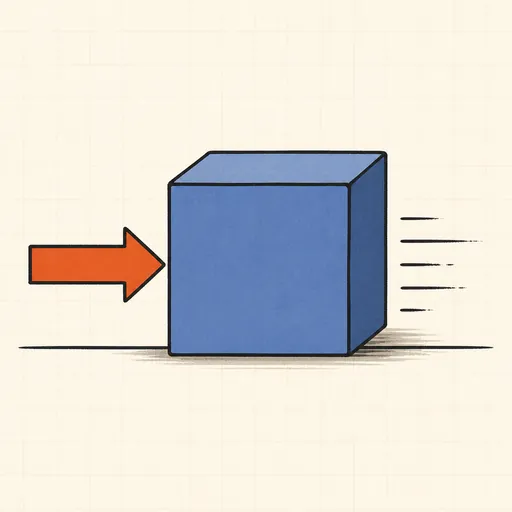
Force Calculator (F = ma)
Solve Newton's second law for force, mass or acceleration.

Kinematics Calculator (SUVAT)
Solve motion problems from any three of u, v, a, t, s.
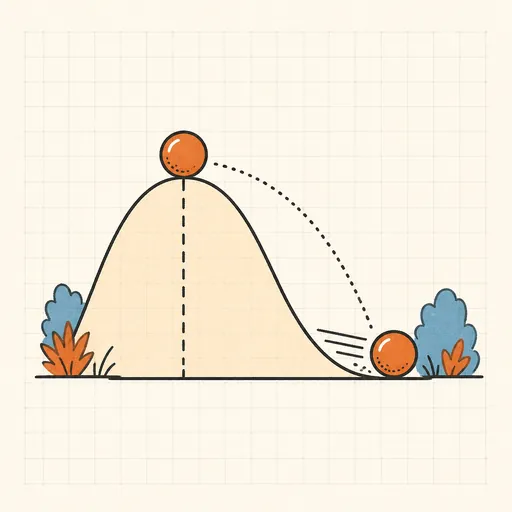
Kinetic & Potential Energy Calculator
KE = ½mv², PE = mgh and total mechanical energy.
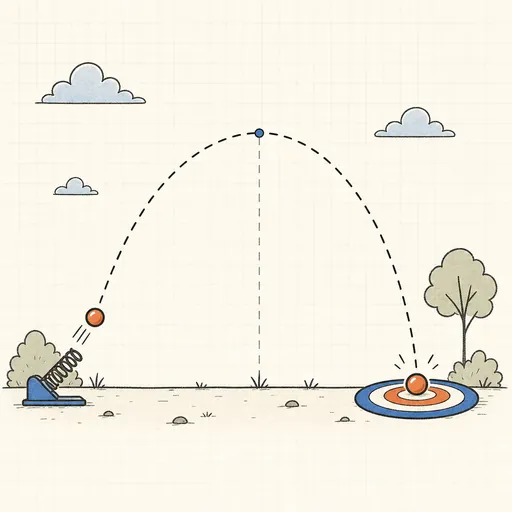
Projectile Motion Calculator
Range, height, flight time and the trajectory curve.
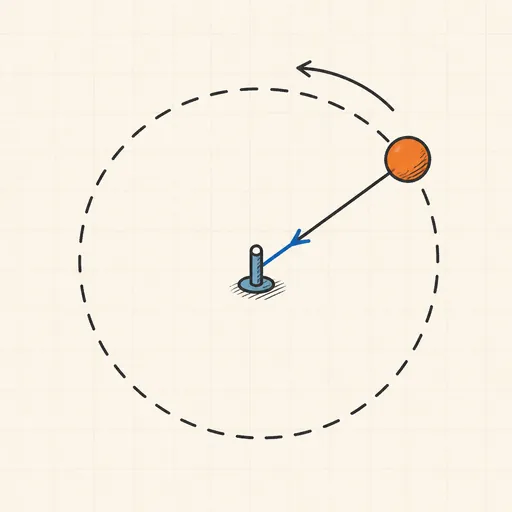
Circular Motion Calculator
Centripetal acceleration, force and angular speed.
Density Calculator (ρ = m/V)
Solve density, mass or volume from the other two.