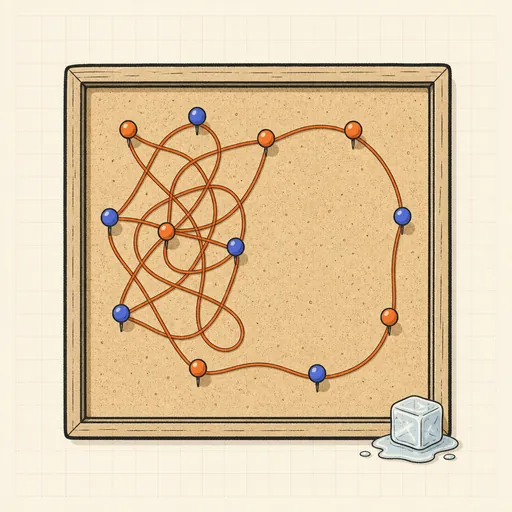
Simulated Annealing TSP
Simulated annealing attacks the travelling salesman problem by proposing random 2-opt moves — reversing a segment of the tour — and accepting each one with the Metropolis rule: improvements always, worsenings with probability exp(−Δ/T) that shrinks as the temperature T cools geometrically. Click cities onto the canvas or generate random, circle, clustered or grid layouts, set the initial temperature and cooling rate, and run thousands of proposals per second while the blue current tour writhes and the orange best-so-far tour settles. Charts track tour length and temperature, the status line reports how often worse moves are still being accepted, and a nearest-neighbour baseline and a Reheat button let you compare and escape local minima.
Runs 100% in your browser — models are trained and computed locally on your device.
Read the full guide to this tool
Notes
- The Metropolis criterion accepts a worsening move of size Δ with probability exp(−Δ/T); at high T the search is nearly random, at T → 0 it becomes pure hill climbing.
- A 2-opt move removes two edges and reconnects the tour reversed in between; its cost change is computed from just four edge lengths in O(1), which is what makes thousands of proposals per frame cheap.
- Convergence to the global optimum is only guaranteed for impractically slow logarithmic cooling; the geometric schedule used here is a heuristic, so reheating can rescue a run that froze too early.
- The circle preset has a known optimum — the cities in hull order — handy for checking how close the annealer gets.
- Runs 100% in your browser — models are trained and computed locally on your device.
Related tools
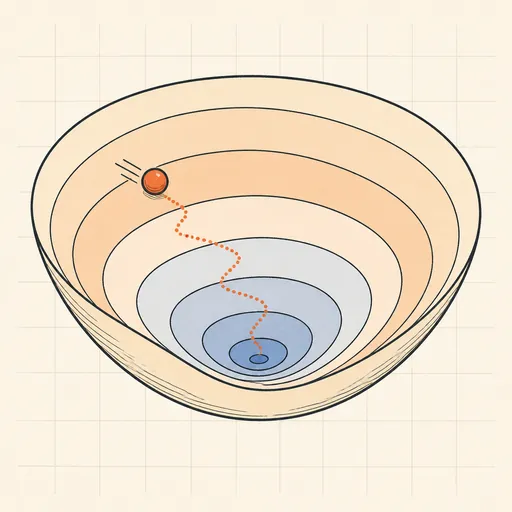
Gradient Descent Visualizer
Race SGD, Momentum, RMSProp and Adam across contour maps of five classic loss landscapes.
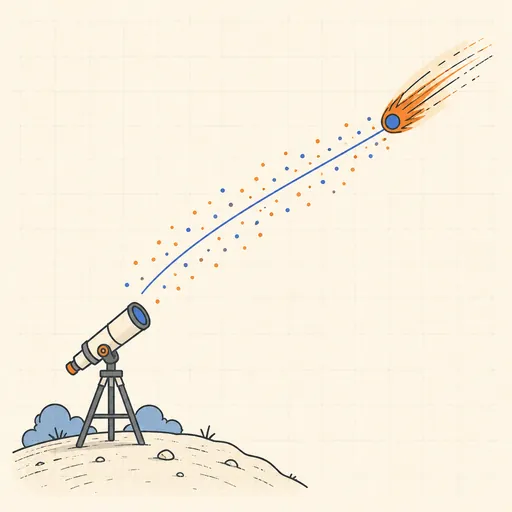
Kalman Filter Visualizer
Track a moving target through noisy measurements with a full linear Kalman filter.
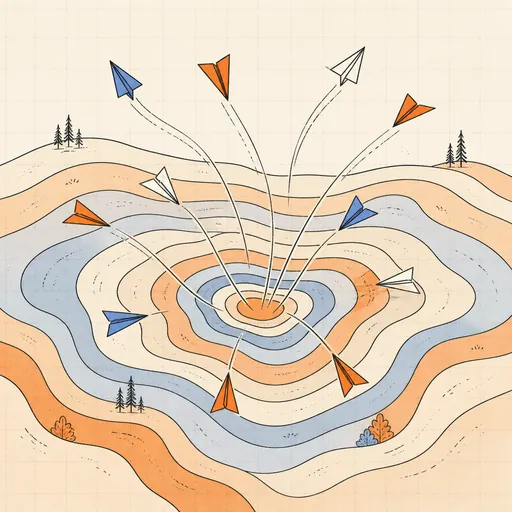
Particle Swarm Optimization
Fly a swarm of particles across classic test functions and watch it converge on the minimum.
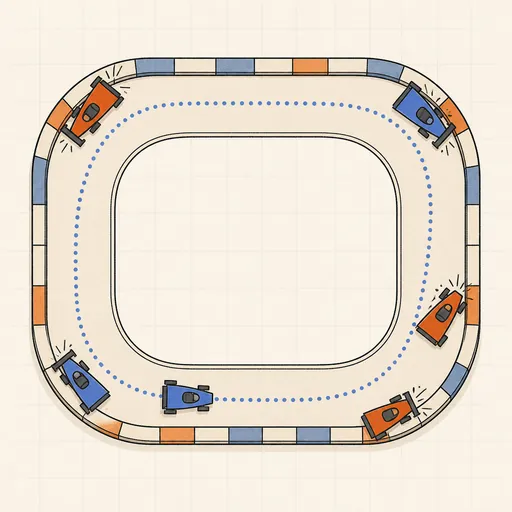
AI Learns to Drive (Neuroevolution)
Watch a population of neural-network cars evolve from crashing into corners to lapping a race track.
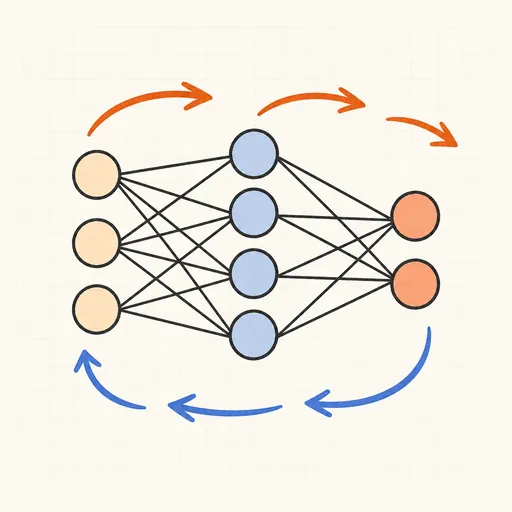
Backpropagation Step-by-Step
Walk through one forward and backward pass of a tiny neural network, number by number.
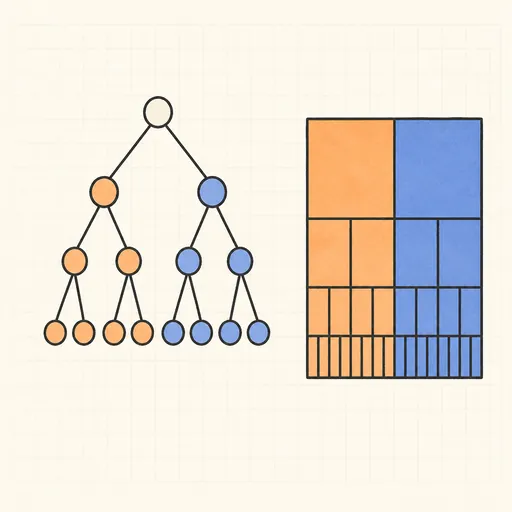
Decision Tree Builder
Grow a CART decision tree split by split and watch the partition map and tree diagram build together.