Remaining Loan Balance, Explained
After reading this you can work out how much you still owe on a loan after any number of payments, split what you have paid into principal and interest, and see why halfway through the term you have cleared far less than half the debt.
What the remaining balance tells you
The remaining balance is the amount you would need to hand over today to close a loan, ignoring any early-payoff penalties. It is the present value of all the payments you have not yet made. Every scheduled payment is fixed, but the split between interest and principal shifts over time, so the balance does not fall in a straight line.
Here is the hook. Take a 20000 loan at 8% for 5 years. The monthly payment is about 405.53. After 24 of the 60 payments (40% of the term) you have paid in 9732.79 total, yet you still owe 13065.99. You have cleared only about 34.7% of the principal despite being 40% of the way through the schedule. That gap is the point of this calculator.
When to use it, and when not
Reach for this when you know the original terms of a loan and want a snapshot partway through: the payoff figure, the principal you have retired, and the interest you have already spent. It works for any fully amortizing loan with fixed payments: car loans, personal loans, standard mortgages.
Do not use it for loans that break the amortizing pattern. A credit card with a shifting minimum payment does not fit; try the Credit Card Payoff Calculator instead. A loan that ends in a large lump sum is a different shape, covered by the Balloon Loan Calculator. If your rate changes partway (a variable-rate loan), the single-rate math here only holds until the rate moves.
The calculator assumes the payment is exactly the amount that pays the loan off over the original term. If your real payment is rounded (say 406.00 instead of 405.53), the true balance will be a little lower than shown, because the extra few cents each month chip at principal.
The formula and why it works
Start with the monthly payment. If the original amount is P, the monthly rate is i (the annual rate divided by 12), and the term is n months, the level payment is:
Here A is the fixed monthly payment, P the starting balance, i the monthly interest rate as a decimal, and n the total number of payments. This is the amount that drives the balance to exactly zero after n payments.
The balance after k payments has two equivalent forms. The intuitive one: grow the original debt at interest for k months, then subtract the future value of the payments you have made.
B_k is the balance remaining after k payments. The first term, P(1+i)^k, is what you would owe with no payments at all. The second term is the accumulated value of your k payments of A each. The difference is what is left.
Once you have B_k, the rest follows by simple bookkeeping. Principal paid so far is P - B_k. Interest paid so far is total payments minus principal retired:
The share of the loan cleared is just the principal retired over the original amount, (P - B_k) / P, expressed as a percentage.
A worked example with the demo numbers
20000 at 8% over 5 years, 24 payments in
- Monthly rate: i = 0.08 / 12 = 0.006667.
- Total payments: n = 5 \times 12 = 60.
- Growth factor over 60 months: (1.006667)^{60} = 1.48985.
- Payment: A = 20000 \cdot \frac{0.006667 \times 1.48985}{0.48985} = 405.53.
- Growth over 24 months: (1.006667)^{24} = 1.17289.
- Balance: B_{24} = 20000 \times 1.17289 - 405.53 \times \frac{0.17289}{0.006667}.
- That is 23457.8 - 405.53 \times 25.933 = 23457.8 - 10391.8 = 13066.0. Rounding through the whole chain gives
13065.99. - Principal retired: 20000 - 13065.99 = 6934.01.
- Total paid: 24 \times 405.53 = 9732.79. Interest paid: 9732.79 - 6934.01 = 2798.78.
- Share cleared: 6934.01 / 20000 = 34.67\%.
So at 40% of the way through the term you have paid in 9732.79, of which 2798.78 (about 29%) went to interest, and you still owe 13065.99.
The chart above is a smooth version of the same math. Notice the curve is not a straight line from 20000 to 0. It sags, meaning the balance stays high longer than a naive reader expects.
Why amortization is front-loaded
Each payment first covers the interest that accrued that month, and only what is left reduces principal. Early on the balance is large, so the interest slice is large and the principal slice is small.
In month 1 of the example, interest is 20000 \times 0.006667 = 133.33, so only 405.53 - 133.33 = 272.20 reduces the debt. In month 60, the balance is tiny, interest is about 2.68, and almost the entire 405.53 retires principal. The principal portion grows every month while the interest portion shrinks.
Reading the four outputs
- Balance remaining
- The payoff figure today,
13065.99in the example. This is what a lender would quote to close the loan, before any penalty. - Principal paid so far
- The debt you have actually retired,
6934.01. This is the part of your payments that built equity, not the part that vanished as interest. - Interest paid so far
- The cost of borrowing to date,
2798.78. This money is gone; it bought you the use of the lender's cash. - Share cleared
- Principal retired divided by the original amount,
34.67%. Compare it to how far you are through the term to see the front-loading directly.
A useful check: at any month, balance remaining plus principal paid so far equals the original amount, always. In the example, 13065.99 + 6934.01 = 20000.
Common mistakes
Do not confuse "half the term" with "half paid off". At month 30 of 60 in the example, the balance is 9613, so you have cleared 10387, which is 51.9% of the loan. You reach the halfway point in principal a little before the halfway point in time, but for most of the first half you are behind. At month 24 you are noticeably behind, at 34.7%.
Two more traps. First, use the monthly rate, not the annual one, inside the powers; forgetting the division by 12 inflates the balance wildly. Second, remember that annual rate divided by 12 is a simplification most consumer loans use, but some products compound differently, so confirm your loan's convention before trusting the last few dollars.
Related tools
To find the payment and full schedule from scratch, use the Loan Calculator. To see how much sooner you finish by overpaying, try the Extra Loan Payment Calculator. If you are weighing whether to refinance the balance you found here, the Refinance Break-Even Calculator shows when the switch pays for itself, and the Loan Comparison Calculator puts two offers side by side. To judge the true yearly cost once fees are added, see the APR from Fees Calculator. If this loan is one of several debts, the Debt Snowball vs Avalanche tool compares payoff orders, the Debt Consolidation Calculator tests folding them into one, the Minimum Payment Trap Calculator shows the cost of paying only the minimum, and the Debt-to-Income Ratio Calculator checks how the payment fits your income.
Frequently asked questions
Why do I still owe so much halfway through my loan?
Because early payments are mostly interest. In the demo loan, the first payment sends 133.33 to interest and only 272.20 to principal. The balance stays high until the interest slice shrinks, which happens toward the end.
Does paying extra change the remaining balance formula?
Yes. This calculator assumes every payment equals the scheduled amount. Any extra payment cuts the balance below what the formula shows, and it does so permanently because you owe interest on a smaller base from then on.
Is the payoff amount the same as the remaining balance?
Usually close, but not always identical. Lenders may add accrued interest since your last payment or an early-payoff fee. The balance here is the principal-plus-interest figure at a clean payment date, before any penalty.
What if my interest rate is variable?
The single-rate math holds only while the rate is unchanged. If your rate resets, treat each rate period separately: use the balance at the reset date as the new starting amount and recompute with the new rate and remaining term.
How do I get the exact balance my lender shows?
Match their conventions: the same rounding on the payment, the same day-count method, and any fees. Small differences in rounding the monthly payment can shift the balance by a few dollars over five years.
This is an educational estimate, not financial advice. Talk to a qualified adviser before making money decisions.
Related tools
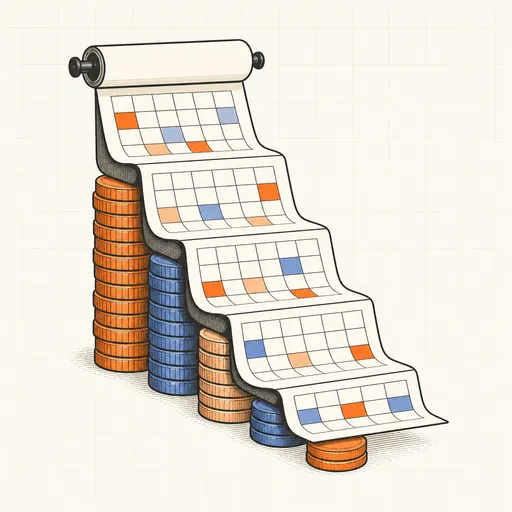
Amortization Schedule Calculator
Full month-by-month loan schedule with CSV export.
Credit Card Payoff Calculator
Months to debt-free at a given monthly payment.

Debt Snowball vs Avalanche
Compare the two payoff strategies on your debts.
Extra Loan Payment Calculator
Interest and years saved by paying extra.
Loan Calculator
Monthly payment, total interest and full schedule.

APR from Fees Calculator
True yearly cost of a loan once fees are counted.