Astronomical Distances, Explained
After reading this you can convert a distance between kilometres, astronomical units, light-years and parsecs by hand, and work out how long light takes to cross it.
Space is mostly empty, and the numbers get large fast. The distance from Earth to the Sun is about 150 million kilometres. Written out that is 150,000,000 km, and it is one of the smaller distances you will meet. The nearest star beyond the Sun, Proxima Centauri, sits about 40 trillion kilometres away. That is 40,000,000,000,000 km. Numbers that long are hard to read and easy to mistype, so astronomers use units sized to the job.
This article explains the four units the converter handles, shows the exact conversion factors, and works through the tool's default value of 4.24 light-years step by step. It also shows how to turn a distance into a light travel time, which tells you how old the light you see actually is.
What the four units mean
Each unit is anchored to a physical fact. Learn the anchor and the conversions follow.
- Astronomical unit (AU)
- The average distance from Earth to the Sun, defined exactly as
149,597,870,700metres, or about 1.496 \times 10^{8} km. Handy for distances inside a planetary system. - Light-year (ly)
- The distance light travels in one year in a vacuum. Light moves at c = 299{,}792{,}458 m/s, and a Julian year is
365.25days, so one light-year is about 9.461 \times 10^{12} km. Good for distances between stars. - Parsec (pc)
- The distance at which one AU subtends an angle of one arcsecond. This works out to about 3.086 \times 10^{13} km, or
3.262light-years. It comes straight from how astronomers measure distance by parallax. - Kilometre (km)
- The everyday metric unit. Useful for spacecraft and solar-system geometry, hopeless past that because the digit count explodes.
The word parsec is short for "parallax of one arcsecond." When Earth moves from one side of its orbit to the other, a distance of two AU, a nearby star appears to shift slightly against the background. Half of that shift is the parallax angle. A star one parsec away shows a parallax of exactly one arcsecond. That definition is why the parsec, not the light-year, is the working unit in professional catalogues.
When to use each unit, and when not to
Match the unit to the scale. Inside the solar system, use AU. Pluto orbits at about 39 AU, comfortable to write. Quote the same distance as 5.9 \times 10^{9} km and you lose the intuition.
Between stars, use light-years or parsecs. Proxima Centauri is 4.24 ly or 1.30 pc. Across the Milky Way, still parsecs, but now kiloparsecs: the galaxy is roughly 30 kpc across. For other galaxies you move to megaparsecs.
A light-year is a distance, not a time. "The star is 4 light-years away" means the light took 4 years to reach you, so you see the star as it was 4 years ago. The unit measures length; the travel time is a consequence you compute separately.
Do not use kilometres past the solar system unless a specific calculation forces it. The converter will happily report Proxima Centauri as 4.01 \times 10^{13} km, but that figure is hard to sanity-check against anything you know.
The conversion factors
Every conversion reduces to multiplying by a fixed ratio. Here are the anchors, all in kilometres, computed from the definitions above.
This is the defined Earth-Sun distance, converted from metres to kilometres.
Here c is the speed of light and t is the number of seconds in a Julian year, which is 365.25 \times 86{,}400 = 31{,}557{,}600 s. Multiply, then divide by 1000 to get kilometres.
To convert between any two units, convert to kilometres first, then divide by the target unit's factor. The table collects the direct ratios so you can skip the intermediate step when it is convenient.
| 1 of this | in km | in AU | in ly | in pc |
|---|---|---|---|---|
| km | 1 | 6.685e-9 | 1.057e-13 | 3.241e-14 |
| AU | 1.496e8 | 1 | 1.581e-5 | 4.848e-6 |
| ly | 9.461e12 | 63240 | 1 | 0.3066 |
| pc | 3.086e13 | 206300 | 3.262 | 1 |
Two ratios worth memorising: one parsec is 3.262 light-years, and one light-year is about 63,240 AU. The second says that light takes over 63,000 times longer to reach the next star than to reach the Sun.
Light travel time
Once a distance is in kilometres, the time for light to cross it is division.
Here d is the distance in metres and c = 299{,}792{,}458 m/s. The result is in seconds. Divide by 60 for minutes, by 3600 for hours, by 31,557,600 for years.
The shortcut for large distances: a light-year of distance is a year of travel time, by definition. So 4.24 light-years is 4.24 years of light travel, no calculation needed. For AU there is a similar shortcut: one AU takes about 499 seconds, or 8.32 minutes, so sunlight you feel now left the Sun about 8 minutes ago.
Worked example: the default 4.24 light-years
The demo button loads 4.24 in light-years, the distance to Proxima Centauri. Reproduce every output.
- Start in kilometres. Multiply by the light-year factor: 4.24 \times 9.461 \times 10^{12} = 4.011 \times 10^{13} km.
- Convert to AU. Divide the km value by 1.496 \times 10^{8}: 4.011 \times 10^{13} \div 1.496 \times 10^{8} = 2.681 \times 10^{5} AU, about 268,100 AU. Check against the table: 4.24 \times 63{,}240 = 268{,}100. Match.
- Convert to parsecs. Divide light-years by 3.262: 4.24 \div 3.262 = 1.300 pc.
- Light travel time. Because the distance is 4.24 light-years, the time is
4.24years exactly. Cross-check through seconds: 4.011 \times 10^{16} \text{ m} \div 2.998 \times 10^{8} \text{ m/s} = 1.338 \times 10^{8} s, and 1.338 \times 10^{8} \div 31{,}557{,}600 = 4.24 years. Match.
So Proxima Centauri is 4.011e13 km, 2.681e5 AU, 1.300 pc away, and its light reaches you 4.24 years after it leaves the star.
Reading and interpreting the results
The four converted values are not four facts. They are one distance written four ways. When one reads as a clean two-digit number and another needs scientific notation, that is your cue for which unit fits the scale.
The light travel time carries a second meaning. It is a look-back time. When you observe a galaxy 100 million light-years away, you see light that left it 100 million years ago, before that light started its trip. For nearby stars the delay is small: Proxima's 4.24 years means the star could have changed slightly since the light you see departed. For distant galaxies the delay is a real limit on what "now" can even mean across cosmic distances.
Common mistakes
Three errors account for most wrong answers.
Treating a light-year as a time. It is a distance. If a question asks how long light takes, you still divide the distance by c, even though for light-years the number happens to equal the year count.
Confusing parsecs and light-years. A parsec is larger, by the factor 3.262. Quoting a distance in the wrong one of these overstates or understates it by more than three times. If a catalogue lists 1.30 and you assume light-years, you are off from the true 4.24 ly by a factor of 3.26.
Mixing the year length. A Julian year of 365.25 days gives the standard light-year of 9.461 \times 10^{12} km. Using 365 days changes the last digits. The difference is small, about 0.07 percent, but it explains why hand calculations sometimes disagree with the tool in the fourth significant figure.
To sanity-check any conversion, remember two anchors: one AU is about 8.3 light-minutes, and one parsec is about 3.26 light-years. If a result contradicts either, you multiplied where you should have divided.
Related tools
Distance sets the stage for the physics that happens across it. Once you know how far a planet sits, the Weight on Other Planets Calculator shows how its gravity would pull on you. The Newton's Law of Gravitation Calculator gives the force between two masses at a chosen separation, and the Escape & Orbital Velocity Calculator turns distance and mass into orbit speeds and periods. If you want to know what aperture you need to resolve a distant object, the Telescope Calculator covers magnification and resolving power.
Frequently asked questions
Why do professional astronomers prefer parsecs over light-years?
The parsec drops straight out of the parallax measurement. A star's distance in parsecs is simply 1 divided by its parallax angle in arcseconds. No speed of light or year length enters the calculation, so parsecs match how the distance is actually measured. The light-year is more intuitive for the public because it ties distance to a familiar time.
How far is one light-second?
Light travels 299{,}792.458 km in one second, so a light-second is just under 300,000 km. The Moon is about 384,000 km away, or 1.28 light-seconds, which is why a radio signal to the Moon and back takes about 2.6 seconds.
Does the converter account for the expansion of the universe?
No. It treats distance as a fixed, flat length. For nearby stars and galaxies that is fine. For very distant objects, cosmological expansion means "distance now," "distance when the light left," and light travel time all differ. Those require a cosmological model, not a unit conversion.
Why is the Earth-Sun distance called one AU if the orbit is an ellipse?
Earth's distance from the Sun varies from about 147.1 to 152.1 million km over a year. The AU is defined as a fixed value, 149,597,870.7 km, close to the orbit's average. It is a defined constant now, not a measurement that changes.
How many kilometres is a megaparsec?
One megaparsec is a million parsecs, so 10^{6} \times 3.086 \times 10^{13} = 3.086 \times 10^{19} km. That is the scale on which distances between galaxies are quoted, and it is why kilometres never appear in that context.
Related tools

Weight on Other Planets Calculator
Your weight across the solar system.

Escape & Orbital Velocity Calculator
Escape speed, orbit speed and period.
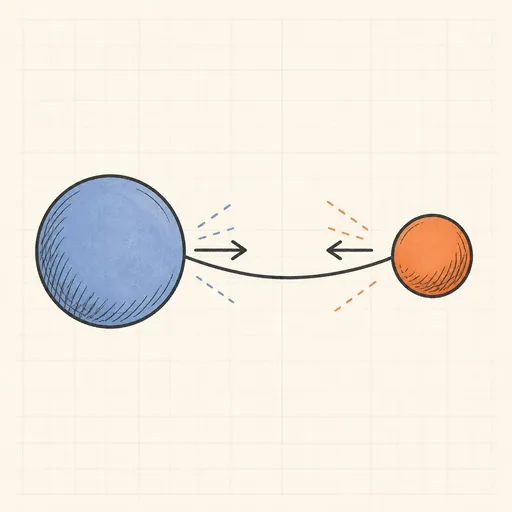
Newton's Law of Gravitation Calculator
Gravitational force between two masses.
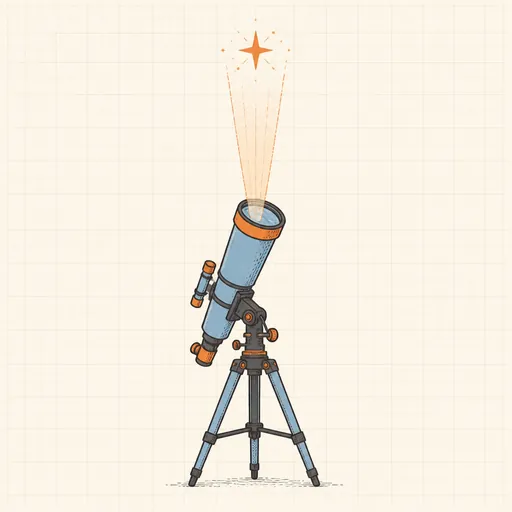
Telescope Calculator
Magnification, f-ratio, resolution and exit pupil.
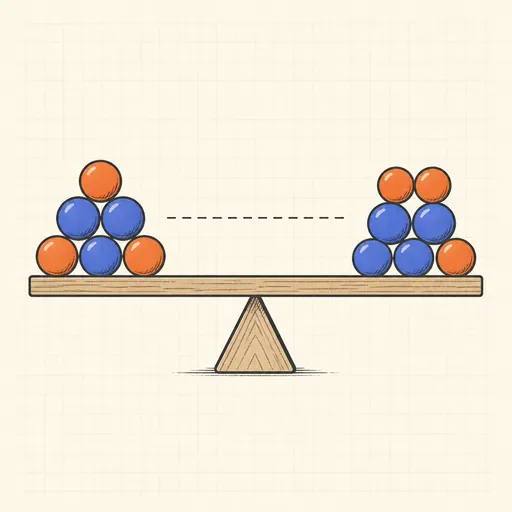
Chemical Equation Balancer
Balance any chemical equation to whole numbers.
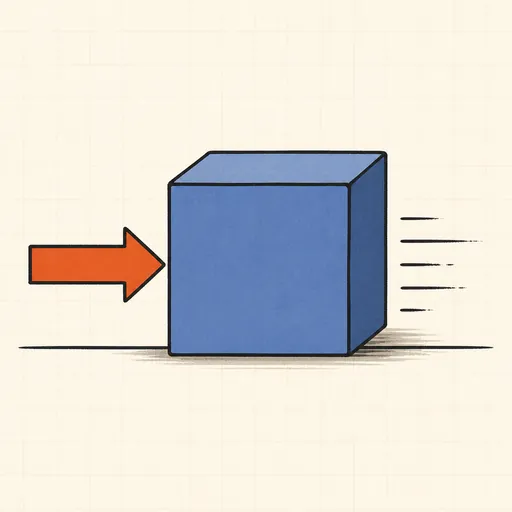
Force Calculator (F = ma)
Solve Newton's second law for force, mass or acceleration.