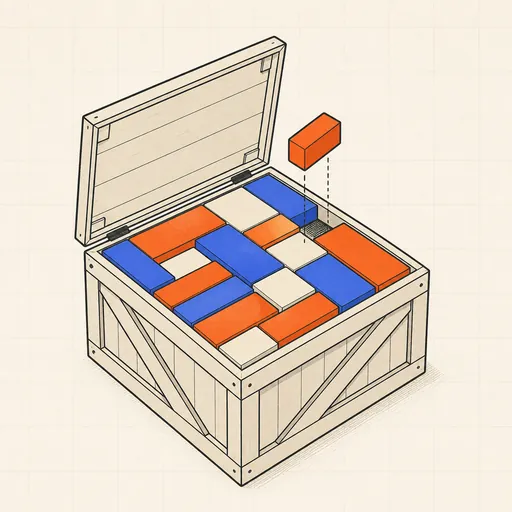
Box & Bin Packing Calculator
Works out how many containers you need and what goes where. In capacity mode each bin holds a weight or volume limit and items are packed by first-fit decreasing — the classic heuristic that is provably within 22% of optimal and usually much closer. In 3D mode you give the inner width × height × depth of a box and the dimensions of each item; the tool checks every item fits with rotation and estimates the box count with a volume-based shelf heuristic. You get the bin count, a per-bin packing list, fill percentages and the theoretical minimum for comparison — handy for moving day, warehouse totes or shipping cartons.
Read the full guide to this tool
Results
Notes
- Bin packing is NP-hard, so the tool uses first-fit decreasing: sort items biggest first, drop each into the first bin with room. Theory guarantees it never needs more than roughly 11/9 of the optimal bin count — in practice it usually matches the optimum on household-sized inputs.
- The 3D mode is a volume-plus-shelf estimate, not a loading plan: real 3D packing with rotations is far beyond any quick calculation. It checks each item genuinely fits the box in some rotation and stacks items in height layers, so the count is realistic but a careful human packer may still beat it.
- "Theoretical minimum" divides the total amount by one bin’s capacity — the gap between it and the actual bin count is the fragmentation cost of awkward item sizes.
Related tools
Critical Path (CPM/PERT) Calculator
Which tasks actually set the deadline — schedule, slack and critical path from a task list.
WIP Limits & Little’s Law Simulator
Watch a kanban board run: raise the WIP limit and see cycle time explode while throughput stalls.
Weighted Decision Matrix
Score your options against weighted criteria — with a sensitivity check on the winner.
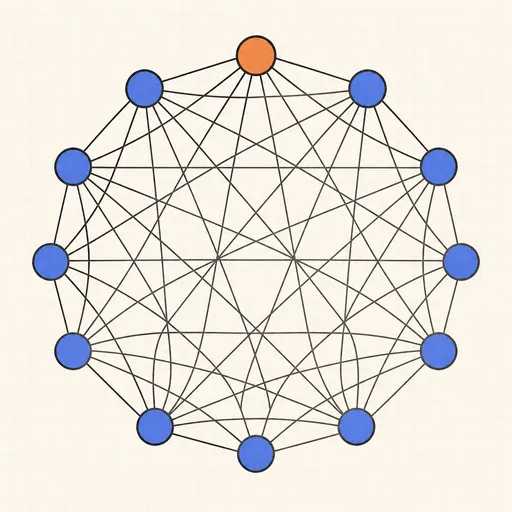
Round-Robin Schedule Generator
Everyone plays everyone: fixtures by the circle method, byes included.
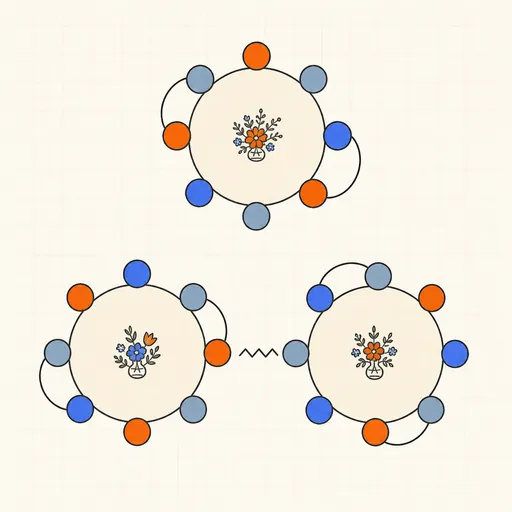
Seating Chart Optimizer
Assign guests to tables around keep-together and keep-apart rules.
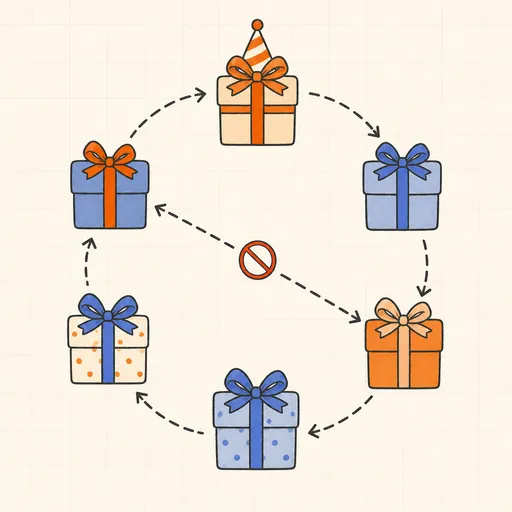
Secret Santa Generator
Draw gift-exchange pairs with exclusions, no self-draws guaranteed.