Expected Value of a Bet, Explained
After reading this you can take any bookmaker price, compare it with your own estimate of the win probability, and say in money terms whether the bet is worth making.
What expected value tells you
Expected value (EV) is the average profit or loss per bet if you could repeat the exact same wager many times. It is not what happens on one bet. One bet returns either a profit or the loss of your stake. EV is the long-run average of those outcomes, weighted by how likely each one is.
Here is the hook. A bookmaker offers decimal odds of 2.10 on a coin flip. You believe the true chance of winning is exactly 50%. Stake 100. Half the time you win 110 profit, half the time you lose 100. The average is (0.5 × 110) + (0.5 × -100) = 5. Every such bet is worth +5 on average, even though no single bet ever returns exactly 5.
That number, +5 on a 100 stake, is a positive EV. It is the whole point of betting math: find prices where your probability beats the price the bookmaker is charging.
When to use EV, and when not to
EV is the right tool when you have an independent estimate of the true probability that you trust more than the bookmaker's implied probability. That estimate might come from a model, from a closing-line comparison, or from a market you think is mispriced.
EV is the wrong tool when your probability is just the bookmaker's own number dressed up. If you take the implied probability, round it, and call it your estimate, EV will always come out near zero minus the margin. You will only be measuring the vig, not an edge.
A positive EV number is only as good as the probability you feed it. Overconfidence in your estimate is the most common way to turn a losing strategy into one that looks profitable on paper. Treat your probability as the assumption under test, not a fact.
The formula and the intuition
For a single bet with stake S, decimal odds d, and your win probability p (as a fraction), the expected value is:
The first term is your gain when you win: the profit per unit staked is d - 1, so a winning bet returns S(d-1) profit, and that happens with probability p. The second term is your loss when you lose: you forfeit the stake S with probability 1-p.
It is often cleaner to work per unit of stake. Divide through by S and you get the edge, the expected return as a fraction of stake:
Edge is positive exactly when p \cdot d \gt 1. Rearrange that and you get the break-even condition: you need p \gt 1/d. The quantity 1/d is the break-even probability, the win rate at which EV is exactly zero.
- Expected value (EV)
- Average money outcome per bet, in the same units as your stake.
- Edge
- EV divided by stake, expressed as a percentage of the amount risked.
- Break-even probability
- The implied probability of the odds, 1/d. Beat it and your EV is positive.
A worked example using the demo data
Stake 100, odds 2.10, probability 50%
- Convert the probability to a fraction:
50% = 0.50. - Profit if the bet wins:
100 × (2.10 - 1) = 110. - Expected gain from winning:
0.50 × 110 = 55. - Expected loss from losing:
0.50 × 100 = 50. - EV:
55 - 50 = +5. - Edge:
(0.50 × 2.10) - 1 = 1.05 - 1 = 0.05, that is+5%. - Break-even probability:
1 / 2.10 = 0.4762, that is47.62%.
Your estimate of 50% beats the break-even of 47.62%, so the bet is positive. Each 100 staked is worth 5 on average, and your edge is 5% of stake.
How EV moves with your probability
Hold the odds at 2.10 and slide your probability estimate. EV is a straight line in p. At the break-even point of 47.62% it crosses zero. Below it you lose money, above it you gain.
The slope of that line is S \cdot d = 100 \times 2.10 = 210 per unit of probability, so one percentage point (0.01) of extra estimated win chance changes EV by 2.10. If your probability estimate is off by three points, EV shifts by about 6.3, which flips the whole picture on a bet whose true edge is only +5.
Reading and interpreting the results
Three numbers come out of the calculation. Read them together.
| Output | Value | Reading |
|---|---|---|
| EV | +5 | Average money gained per bet at this stake. |
| Edge | +5% | EV as a share of stake, comparable across bet sizes. |
| Break-even probability | 47.62% | The win rate the price demands; you must beat it. |
Edge is the number to compare across bets, because it strips out the stake. A +5% edge is a +5% edge whether you stake 10 or 10,000. EV in money then tells you how much that edge is worth for the stake you actually chose.
Positive EV does not mean you will profit soon. With a 5% edge on 50/50 bets, a losing streak of ten in a row still happens roughly once every 1,024 sequences. Size stakes so that variance cannot ruin you before the edge shows up.
Common mistakes
Watch for these, because each one quietly breaks the calculation.
- Confusing odds formats. The formula needs decimal odds. American
+110is decimal2.10; fractional11/10is also2.10. Feed the wrong format and every number is wrong. The Odds Converter handles the conversion. - Using the bookmaker's implied probability as your own. That guarantees a negative EV equal to the margin. Your probability must be independent.
- Ignoring the vig. A market's prices add up to more than 100% implied probability. Strip that out first with the Vig Remover to see the fair price before you judge your edge.
- Treating one bet as the EV. EV is a long-run average. A single
+5EV bet returns either+110or-100, never+5. - Forgetting the stake is returned. With decimal odds, profit per unit is d-1, not d. Using d overstates every gain by one stake.
Related tools
EV covers one selection at one price. These calculators handle the situations around it.
- Combine selections and check the true combined probability with the Parlay Calculator.
- Split one stake across selections for equal profit using the Dutching Calculator.
- Lock in a guaranteed return across two books with the Arbitrage Calculator.
- Protect an open position with the Hedging Calculator.
- Work out win and place returns for each-way markets with the Each-Way Bet Calculator.
Frequently asked questions
What does a positive EV bet actually pay?
On average, EV per bet, but never on a single bet. At stake 100, odds 2.10, probability 50%, the EV is +5. Any one bet returns +110 or -100. Over 1,000 such bets the total tends toward +5,000, though real results scatter around that.
How do I find the break-even probability?
Take one divided by the decimal odds. For 2.10 that is 1 / 2.10 = 0.4762, or 47.62%. If your estimated win probability is above that, the bet is positive EV.
Is edge the same as EV?
No. Edge is EV divided by stake, written as a percentage. EV of +5 on a 100 stake is a 5% edge. The edge lets you compare bets of different sizes; the EV tells you the money at a chosen stake.
Why is my EV negative when the odds look generous?
Because the break-even probability the odds imply is higher than your estimated win chance. At odds 1.80 the break-even is 55.56%. A 50% estimate gives EV of (0.50 × 80) - (0.50 × 100) = -10 per 100 staked, negative despite the tidy-looking price.
Should I bet whenever EV is positive?
Only if you trust the probability and can survive the variance. A thin edge with a tiny bankroll can still bust you through an ordinary losing run. Positive EV is necessary for a good bet, but sensible stake sizing is what keeps you in the game long enough to collect it.
Related tools

Odds Converter
Decimal, American, fractional, HK, Malay, Indonesian and implied probability.

Parlay Calculator
Combined odds, payout and true probability of accumulators.

Arbitrage Calculator
Stake split for a guaranteed profit across bookmakers.

Hedging Calculator
Lock in profit on an open bet, or convert a free bet.
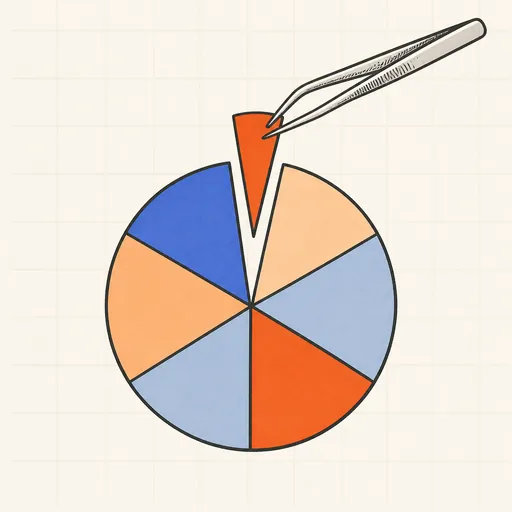
Vig Remover
Overround, bookmaker margin and fair odds of a market.
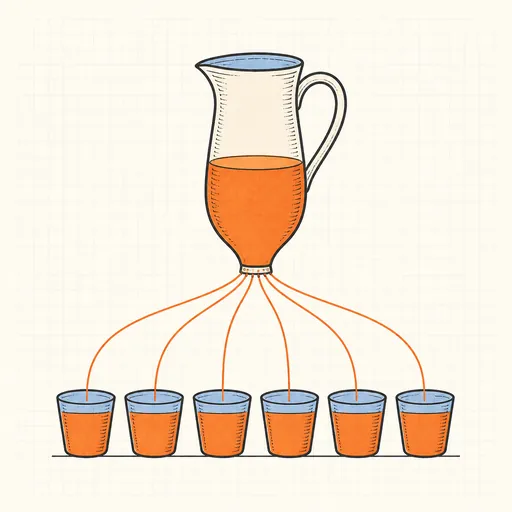
Dutching Calculator
Spread one stake over several selections for equal profit.