Karnaugh Map Minimizer
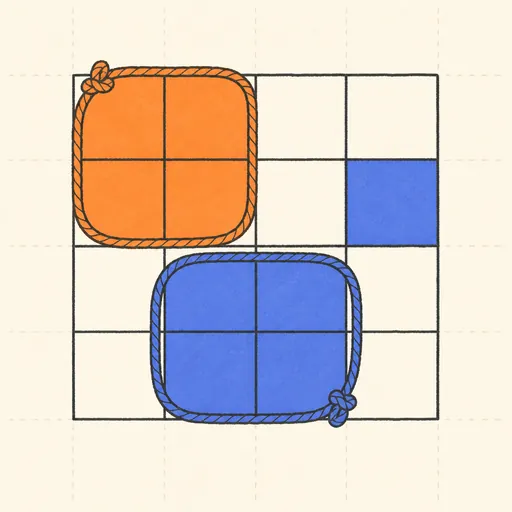
Enter a boolean function of 2 to 5 variables — click truth-table rows, toggle cells directly on the Karnaugh map, or paste a minterm list — and the tool computes the minimal sum-of-products using the Quine–McCluskey algorithm with full don't-care support, then picks a guaranteed minimal cover with Petrick's method. Each chosen group is drawn on the map as a colored outline, including the wrap-around groups that make K-maps confusing on paper, and essential prime implicants are called out separately. A product-of-sums view minimizes the zeros instead, and a literal/gate count shows what the simplification saves in actual hardware.
Runs 100% in your browser — nothing you paste leaves your device.
Read the full guide to this tool
Notes
- The map axes use Gray code ordering (00 01 11 10) so that any two adjacent cells — including edges that wrap around — differ in exactly one variable. That is the whole trick: adjacent 1s can merge.
- Don't-care cells (X) are free wildcards: the minimizer uses them as 1s when that grows a group, and ignores them otherwise. They come from input combinations that can never occur, like BCD codes 10-15.
- Essential prime implicants cover at least one minterm no other prime implicant covers, so every minimal solution must contain them. Petrick's method handles whatever they leave uncovered.
- Groups must be power-of-two sized rectangles (1, 2, 4, 8, 16 cells): each doubling eliminates one variable from the term.
- Runs 100% in your browser — nothing you paste leaves your device.
Related tools
Bloom Filter Playground
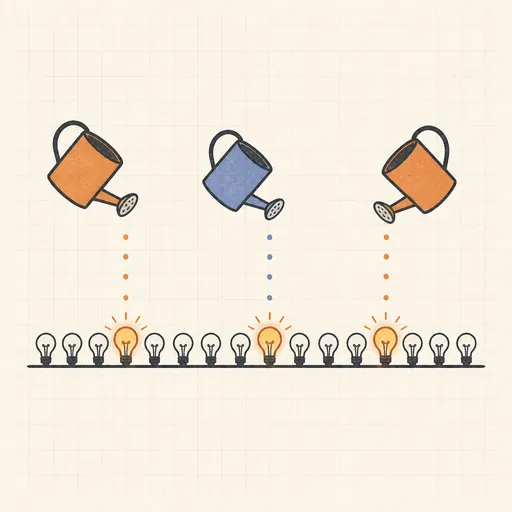
Add items, watch bits light up, measure the false positive rate.
Cache Replacement Simulator
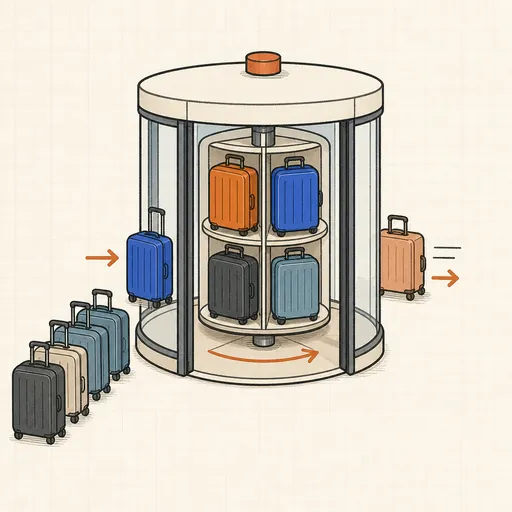
Animate FIFO, LRU, LFU, CLOCK, ARC and Bélády's OPT on any access sequence.
Consistent Hashing Ring
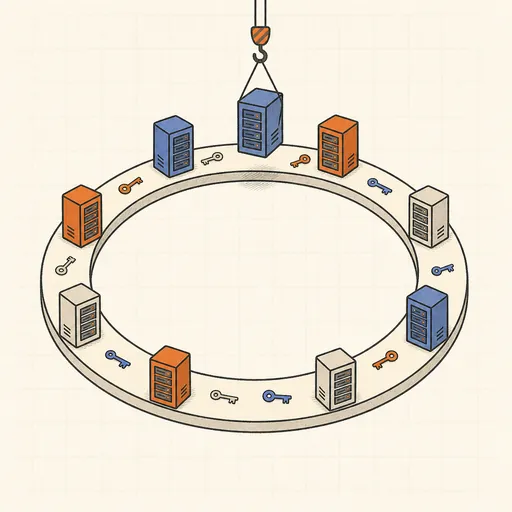
See why adding a server moves 1/N of the keys, not all of them.
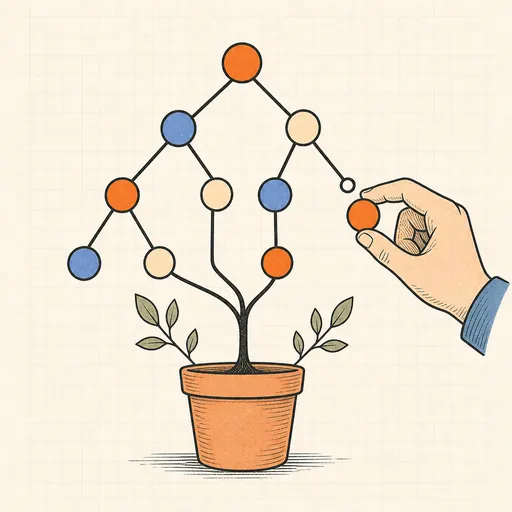
Data Structure Visualizer
Watch BST, AVL, red-black trees, heaps, hash tables, tries and union-find work, step by step.
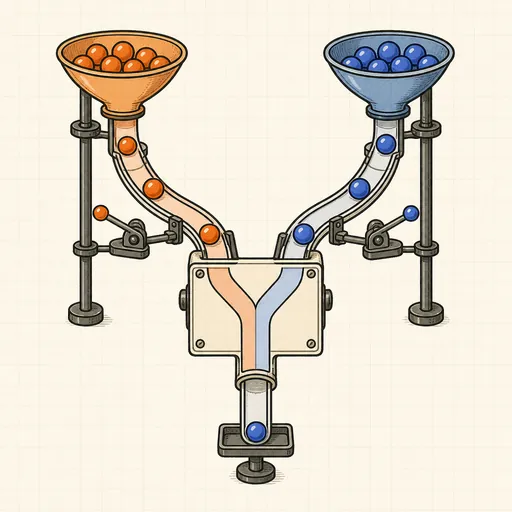
Digital Logic Gate Simulator
Build circuits from gates and flip-flops, wire them up, and watch the signals flow live.
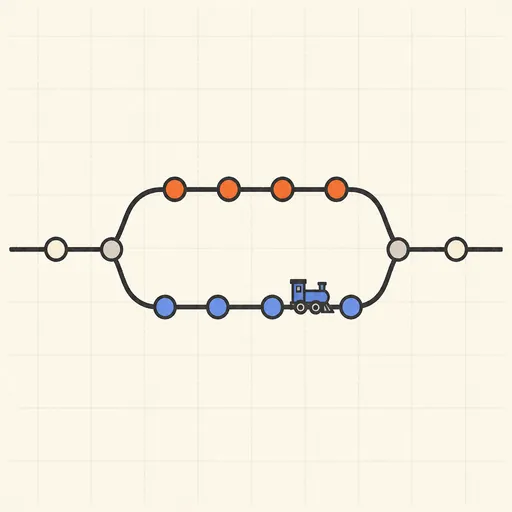
Git Branching Sandbox
Type git commands and watch the commit DAG, branches and HEAD move — with levels, remotes, undo, and merge-vs-rebase contrast.