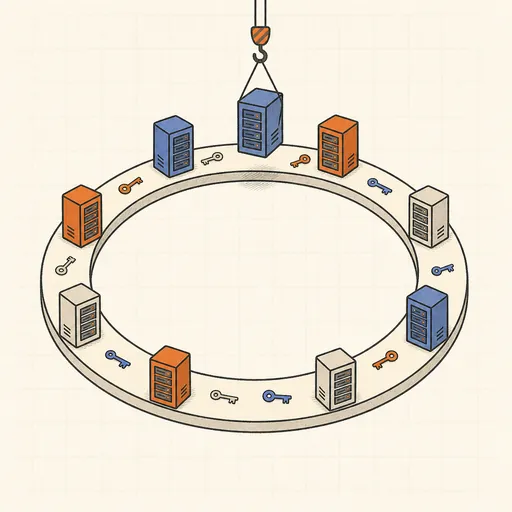
Consistent Hashing Ring
Draws the consistent hashing ring used by memcached clients, Cassandra and DynamoDB: servers are hashed onto a circle of 2³² positions, and every key belongs to the first server clockwise from it. Add and remove servers and the tool highlights exactly which keys moved — roughly 1/N of them — while a side-by-side "hash mod N" comparison shows the naive approach remapping almost everything on the same change. A virtual-nodes slider demonstrates the second half of the trick: one point per server makes a lumpy, unfair ring, but 20–50 virtual nodes per server smooth the load out, which you can verify in the live load histogram and the stats table (keys per node, % of keys, % of ring). Type any key and watch the lookup walk clockwise to its owner; switch to rendezvous (HRW) or Maglev hashing to compare the tradeoffs; and copy a scenario link that restores your exact nodes, vnode count, key count and algorithm.
Runs 100% in your browser — nothing you paste leaves your device.
Read the full guide to this tool
Notes
- With plain "hash mod N", going from 4 to 5 servers remaps about 80% of all keys — every cache behind it goes cold at once.
- Consistent hashing moves only the keys that fall between the new node and its predecessor: about K/N keys, no matter how many servers exist.
- Virtual nodes fix load imbalance: a single point per server can leave one server owning half the ring; dozens of points per server even it out statistically.
- Amazon's Dynamo paper popularized this exact design; the ring metaphor survives in Cassandra's "token ring" terminology.
- Runs 100% in your browser — nothing you paste leaves your device.
Related tools
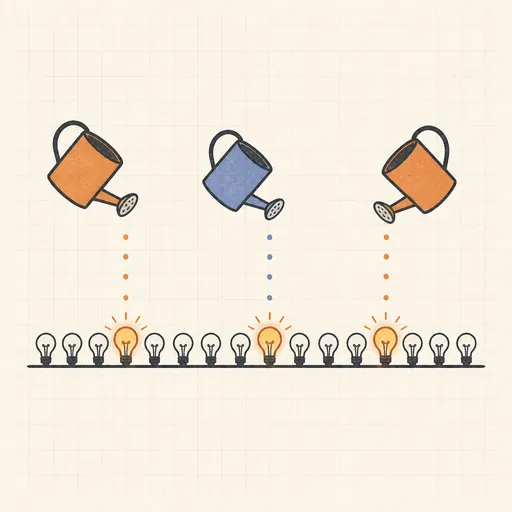
Bloom Filter Playground
Add items, watch bits light up, measure the false positive rate.
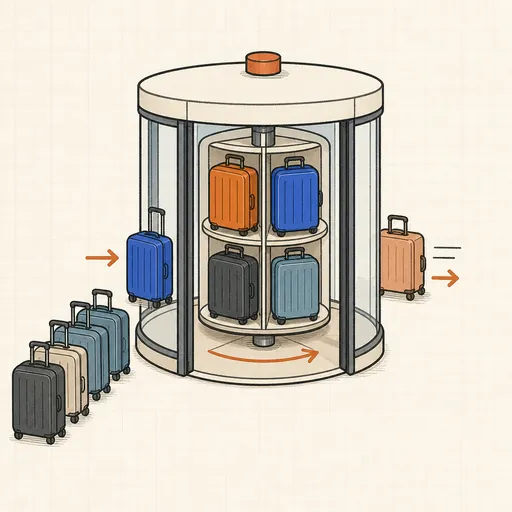
Cache Replacement Simulator
Animate FIFO, LRU, LFU, CLOCK, ARC and Bélády's OPT on any access sequence.

Data Structure Visualizer
Watch BST, AVL, red-black trees, heaps, hash tables, tries and union-find work, step by step.
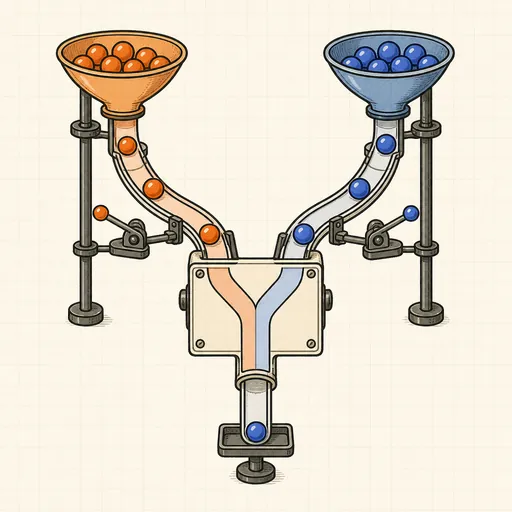
Digital Logic Gate Simulator
Build circuits from gates and flip-flops, wire them up, and watch the signals flow live.
Git Branching Sandbox
Type git commands and watch the commit DAG, branches and HEAD move — with levels, remotes, undo, and merge-vs-rebase contrast.

IEEE-754 Floating Point Explorer
Flip the bits of a float and see why 0.1 + 0.2 ≠ 0.3.