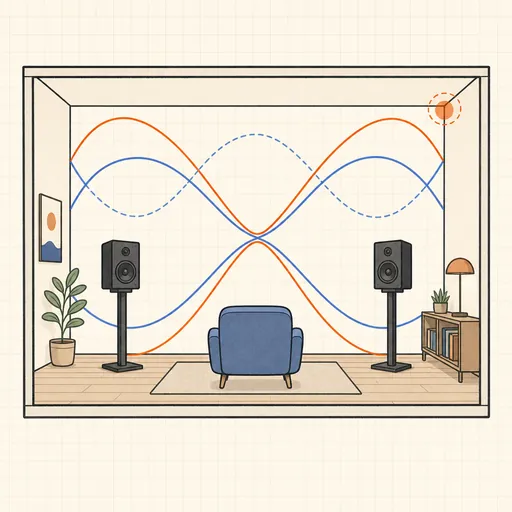
Room Modes & Speaker Placement
Every rectangular room reinforces certain bass frequencies: sound bouncing between parallel walls forms standing waves (room modes) at f = c/2 × n/L for each dimension. This calculator lists the first four axial modes per axis plus the first-order tangential ones, flags pileups where modes from different axes land within 5% of each other — the frequencies that boom — and the gaps where bass support is thin. It estimates the Schroeder frequency below which modes dominate the sound, then turns the geometry into concrete placement advice: the listening position at 38% of the room length, speaker spacing for an equilateral stereo triangle, and where a subwoofer helps or dies.
Read the full guide to this tool
Results
Notes
- Axial modes (two parallel surfaces) are the strongest; tangential ones involve four surfaces and are already several dB weaker, which is why only the first-order tangentials are listed.
- Cubes and rooms with dimensions in integer ratios are the worst offenders — their modes from different axes stack on the same frequencies. Classic recommended proportions are around 1 : 1.4 : 1.9 (height : width : length).
- The 38% rule keeps the listener out of the strongest nulls and peaks of the length modes; halfway (50%) is the single worst spot, sitting in the null of every odd-order mode.
- Above the Schroeder frequency (≈ 2000 × √(RT60/V)) the room behaves statistically and placement matters far less than absorption.
Related tools
Ohm's Law Calculator
Any two of V, I, R, P — get all four.
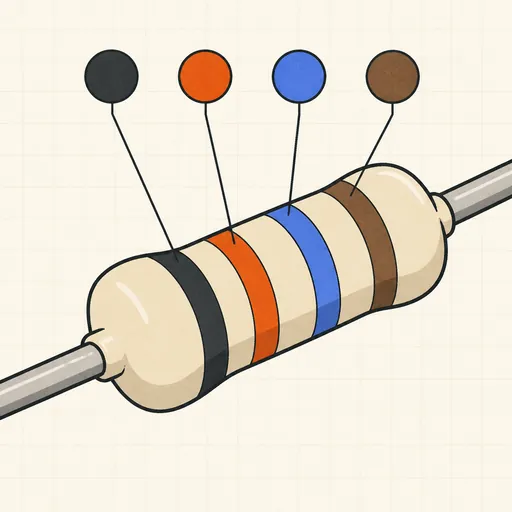
Resistor Color Code Calculator
4- and 5-band colors → value, or value → colors.
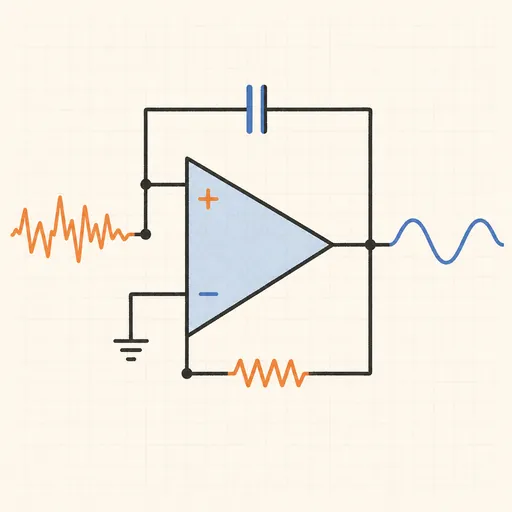
Active Filter Designer (Sallen-Key)
Butterworth, Chebyshev or Bessel — component values and Bode plot.
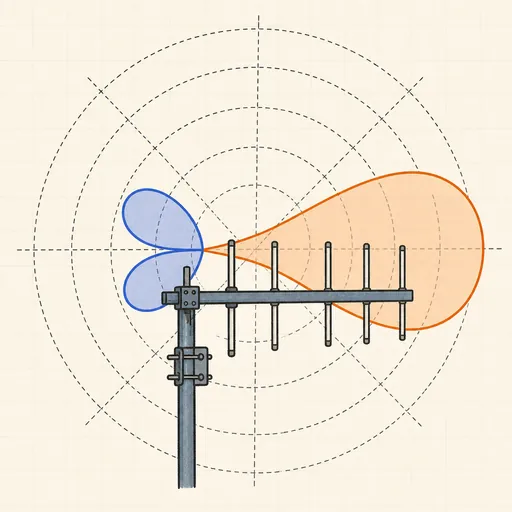
Antenna Radiation Pattern Explorer
Polar plots of dipoles, Yagis and phased pairs — see why more elements mean a narrower beam.

Capacitor Charge Calculator
RC time constant, charge curve and stored energy.

E-Series Resistor Solver
Best E12–E96 resistor or pair for any value or ratio.